Insect Feeding Strategy
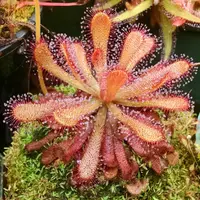
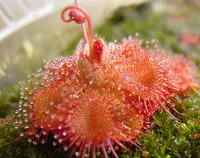
Offer small, soft-bodied insects like fruit flies or fungus gnats sparingly during active growth, and avoid large or hard-shelled prey that can rot on the leaves and invite fungal problems.

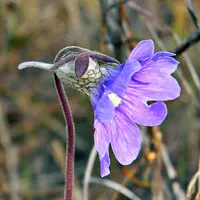
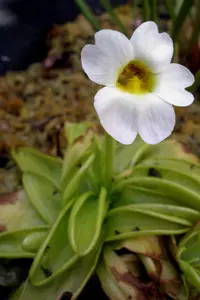
Blueflower butterwort, Pinguicula caerulea, is a small carnivorous plant that forms low rosettes of soft, sticky leaves. These leaves trap tiny insects, which supply extra nutrients. It typically grows in moist, nutrient-poor habitats such as wet pine savannas and boggy areas in the southeastern United States.
Plants produce delicate blue to violet flowers on slender stalks above the leaves, giving them an airy, refined look. The combination of constant moisture needs and sensitivity to mineral-rich water makes it moderately challenging for beginners. Anyone learning how to care for blueflower butterwort should focus on bright light, evenly damp conditions, and a very open, low-nutrient medium.

Care Difficulty
Hard Care

Light Preference
Partial Sun

Water Requirements
Keep Soil Moist

Temperature Preference
Tropical / Frost Sensitive

Hardiness Zone
8–10

Soil Texture
Sandy, Peaty, Organic-rich

Soil pH
Strongly acidic (4.5–5.5)

Soil Drainage
Waterlogged tolerant

Fertilization
Minimal (feed rarely)
Scan your plant to receive care tips personalized for your specific plant
Available on iOS and Android
This temperate carnivorous species needs strong but not scorching light to form effective insect-trapping leaves and flowers.
Watering for this bog-dwelling species must balance constant moisture with protection from stagnant, oxygen-poor conditions.
This species prefers mild, frost-free conditions that mimic its native southeastern U.S. wetlands.
This carnivorous species prefers moderately humid air but adapts to many home environments if extremes are avoided.
Pinguicula caerulea needs an airy, nutrient-poor, consistently moist medium rather than standard potting soil.
This species suits container growing when the pot supports stable, evenly moist conditions without flooding.
This carnivorous species gains most nutrients from captured insects, so fertilizer use for blueflower butterwort should stay very conservative.
Pinguicula caerulea needs minimal pruning, focused on hygiene rather than shaping.
This species prefers stable, low-nutrient conditions, so repotting or transplanting should be infrequent and gentle.
Pinguicula caerulea is commonly propagated by leaf pullings and seed, both needing stable moisture and bright, indirect light.
This species is not very frost tolerant and benefits from careful winter management, especially in containers.

Plant Health Check
Not sure what's wrong with your plant? Check your plant's health inside the app.
This species is native almost exclusively to the wet pine savannas and seepage slopes of the southeastern coastal plain, with its core range in peninsular Florida, where it grows in nutrient-poor, seasonally saturated sandy soils.
In cooler months it forms tight overwintering rosettes of noncarnivorous or weakly carnivorous leaves, allowing the plant to survive mild winter conditions in its native habitats before resuming stronger carnivory in the growing season.
Its pale to violet-blue flowers are carried singly on slender stalks and have a distinctly narrow corolla compared with many related butterworts, a feature that helps distinguish it from other North American Pinguicula species in the field.

This species was first formally described in 1813 by the American botanist Henry Muhlenberg, making it one of the earlier documented North American carnivorous plants in botanical literature.
This species performs best outdoors in humid, bog-like conditions, especially in mild, frost-free climates. It can be grown indoors under bright lights and high humidity, but long-term success indoors is more challenging than outside.
Keep your plants happy and healthy with plant identification, disease detection, and easy care guidance.