


Encourage Dense Mats
Lightly pinch back the tips of longer shoots in early spring to promote side branching and create a tighter groundcover instead of long, straggly stems.

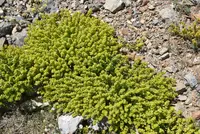
Cruciata taurica is a small, low-growing herb in the coffee family (Rubiaceae), forming dense, square-stemmed mats with whorled leaves and tiny yellowish flowers. It is native to parts of Eastern Europe and Western Asia, often found in dry grasslands, rocky slopes, and open woodland edges.
This species spreads slowly by creeping stems and can act as a groundcover in suitable climates. It generally prefers sun to light shade, moderately dry to fresh soils, and good drainage.
Once established, it is relatively undemanding, which makes it simpler to care for Cruciata taurica in low-maintenance plantings or naturalistic gardens.

Care Difficulty
Moderate Care

Light Preference
Partial Shade

Water Requirements
Moderate Water

Temperature Preference
Warm Climate

Hardiness Zone
Unknown

Soil Texture
Loamy

Soil pH
Slightly acidic (6.5–7.0)

Soil Drainage
Well-drained

Fertilization
Minimal (feed rarely)
Scan your plant to receive care tips personalized for your specific plant
Available on iOS and Android
This low perennial prefers bright, gentle light rather than harsh, all-day sun.
This species prefers consistently slightly moist soil but is sensitive to waterlogging.
This plant performs best in mild, temperate conditions without extremes of heat or cold.
This species prefers moderate air moisture but usually adapts to typical indoor humidity if extremes are avoided.
Cruciata taurica prefers a loose, well-drained mineral-rich substrate that never stays waterlogged.
This species can be grown successfully in containers when attention is paid to drainage and root space.
This species usually manages in average garden soil but benefits from light feeding in poor or very lean sites.
Pruning needs for Cruciata taurica are minimal and focus on keeping the plant tidy and healthy.
This species is more often grown in the ground, so focus on careful transplanting rather than frequent repotting.
Propagation of this plant is straightforward and usually done by division or seed under suitable conditions.
Cruciata taurica is generally cold hardy in temperate climates and needs only modest winter attention in the ground.

Plant Health Check
Not sure what's wrong with your plant? Check your plant's health inside the app.
This small herb is naturally distributed from the Crimean Peninsula through parts of Turkey and the eastern Mediterranean, where it grows in dry, open habitats such as rocky slopes and steppe-like grasslands.
Its leaves are arranged in distinct whorls around the stem, a structural pattern that helps maximize light capture in exposed, sunny sites while keeping the plant compact and close to the ground.
The plant produces small, yellowish flowers in spring to early summer, providing an early-season nectar and pollen source for local insects in its native range.
This species spreads slowly by short creeping stems and self-seeding, but it is not usually aggressive. In average garden conditions it forms small patches that are easy to control with hand-pulling or light edging.
Keep your plants happy and healthy with plant identification, disease detection, and easy care guidance.

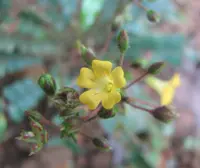
Little Tree Plant
Biophytum sensitivum
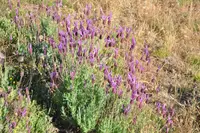
spanish lavender
Lavandula pedunculata
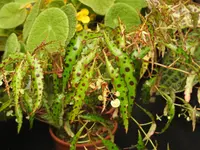 POPULAR
Begonia amphioxus
Begonia amphioxus
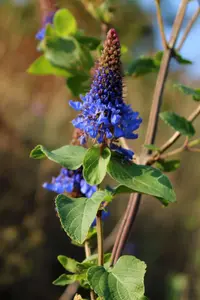
Large Hedgehog-Flower
Coleus livingstonei

Busy lizzie
Impatiens walleriana
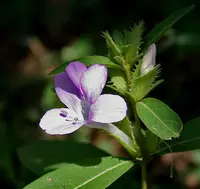
crested Philippine violet
Barleria cristata
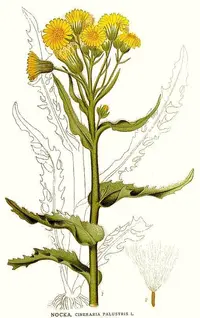
marsh fleabane
Tephroseris palustris
 POPULAR
Bolivian begonia
Begonia boliviensis