spanish lavender Care (Lavandula pedunculata)

spanish lavender

About spanish lavender

Spanish lavender (Lavandula pedunculata) is a compact, woody shrub from the Mediterranean region, especially Spain and Portugal. It belongs to the mint family and is grown mainly for its fragrant foliage and distinctive flower spikes.

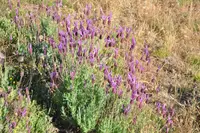
Plants form dense mounds of narrow, gray-green leaves topped with short spikes crowned by showy, tufted bracts that resemble rabbit ears. This flower shape gives it a strong ornamental value in borders and containers.

Lavandula pedunculata prefers sunny, dry, open sites with well-drained, low to moderately fertile soil. It suits gardeners looking to care for spanish lavender in relatively warm, low-humidity climates, as it dislikes heavy, wet conditions and prolonged frost.

Main Plant Requirements

Care Difficulty

Moderate Care

Light Preference

Full Sun

Water Requirements

Low Water

Temperature Preference

Warm Climate

Hardiness Zone

7–10

Soil Texture

Sandy, Loamy, Rocky

Soil pH

Slightly acidic (6.5–7.0), Slightly alkaline (7.0–7.5)

Soil Drainage

Well-drained

Fertilization

Minimal (feed rarely)

Get Personalized Care Plan

Scan your plant to receive care tips personalized for your specific plant

Available on iOS and Android

How to Care for the spanish lavender

This Mediterranean shrub needs strong sun exposure to stay compact, aromatic, and free-flowering.

  • Provide 6–8 hours of direct sun daily; morning and early afternoon sun are ideal for spanish lavender in most temperate climates.
  • It tolerates light partial shade (3–4 hours sun), but growth becomes looser, flowering declines, and foliage may lose its silvery tone.
  • In very hot regions, protect from intense late-afternoon sun with light shade; watch for leaf scorch, while weak, leggy stems indicate insufficient light.

This species prefers drier conditions and suffers more from excess moisture than from short dry spells.

  • Water only when the top 3–5 cm of soil are completely dry; for in-ground plants, this often means deep but infrequent watering based on weather, not a fixed schedule.
  • Ensure sharply drained, gritty soil so water runs through within seconds; Lavandula pedunculata is prone to root rot in compact or waterlogged sites.
  • Reduce watering in cool seasons, and watch for yellowing, mushy stems as overwatering signs, or drooping, brittle foliage as underwatering signs.

This lavender is adapted to warm, dry climates and dislikes prolonged cold or damp conditions.

  • Aim for 65–80°F (18–27°C) during active growth; short hot spells up to 90°F (32°C) are tolerated if soil is well drained and roots are not waterlogged.
  • It generally survives brief drops to about 20–25°F (-6 to -4°C) once established but young plants are more vulnerable to cold damage.
  • In areas with hard freezes, use mulch around the root zone in winter, and avoid frost pockets or low spots where cold air lingers.

This species prefers dry air and usually thrives in 30–40% humidity without special adjustment.

  • Tolerates typical indoor 30–50% humidity but performs best at the drier end of this range.
  • High humidity combined with poor air flow encourages leaf spotting and gray mold on stems and flower spikes.
  • If humidity stays above 60%, space plants farther apart and use a small fan to keep foliage dry.

This plant needs lean, very free-draining soil that dries quickly after watering.

  • Use a gritty mix such as 50% coarse sand or horticultural grit, 30% loam-based compost, and 20% perlite to mimic rocky slopes.
  • Aim for slightly alkaline to neutral pH, around 6.5–7.5, avoiding strongly acidic mixes that can limit nutrient availability.
  • Improve aeration by avoiding peat-heavy or dense organic substrates, which hold excess water around the root zone.
  • Lavandula pedunculata is prone to root rot in compacted or waterlogged soils, so always prioritize sharp drainage over fertility.

This species grows very well in containers when drainage and stability are carefully managed.

  • Choose a wide, heavy terracotta pot to balance the top growth and allow faster moisture loss from the sides.
  • Fill the lower 2–3 cm with coarse gravel to speed water exit through drainage holes on rainy or heavy watering days.
  • Raise the pot on feet or bricks outdoors so runoff clears quickly and the base does not sit in puddled water.

This Mediterranean shrub needs only light feeding, as excessive nutrients reduce essential oil concentration and flowering.

  • Use a low-dose balanced NPK or a thin layer of compost in spring for spanish lavender, focusing on poor, well-drained soils.
  • Apply fertilizer once at the start of the growing season; further feeding is usually unnecessary in-ground.
  • For container plants, use a diluted balanced liquid feed at 1/4–1/2 strength every 4–6 weeks through summer.
  • Stop feeding in late summer so growth can harden off before winter dormancy.

Pruning supports compact growth and longer-lived flowering on Lavandula pedunculata.

  • Carry out main pruning just after peak flowering in late spring or early summer.
  • Remove spent flower spikes, dead, damaged, or very woody stems with clean bypass pruners or sharp shears.
  • Shape the plant into a low dome by trimming soft green growth, leaving some leafy shoots on each stem.
  • Avoid cutting into bare, old wood with no leaves, as this rarely resprouts well.

This lavender prefers stable, open ground sites but can be transplanted or potted on when growth becomes constrained.

  • Look for roots circling the container drainage holes, quick drying soil, or stalled growth as signs it needs more space.
  • Plan transplanting or repotting for early spring or early fall, avoiding extreme heat or freezing conditions.
  • Repot every 2–3 years into a pot only 2–5 cm wider, using a sharply drained mix with added grit or sand.
  • Handle the root ball gently, loosen only lightly, water once to settle soil, then keep on the dry side while roots recover.

New plants are most reliable from semi-ripe cuttings, though seeds and layering are also possible for Lavandula pedunculata.

  • Take 7–10 cm semi-ripe stem cuttings in late spring to mid-summer from non-flowering shoots.
  • Remove lower leaves, optionally dip in rooting hormone, and insert into a free-draining mix of sand and peat-free compost.
  • Maintain bright, indirect light, 65–75°F, and lightly moist but not wet substrate until roots form.
  • Sow seeds on the surface of gritty compost, keep cool to mild, and provide good light for slow, even germination.

Winter care needs depend strongly on climate and whether the plant grows in-ground or in containers.

  • Lavandula pedunculata is only moderately frost tolerant; in cold regions it suits USDA zones with mild winters.
  • Apply a light, dry mulch of gravel or coarse bark around the root zone, keeping material off the woody crown.
  • In areas with freezing, wet winters, grow plants in containers and move them indoors to a cool, bright, frost-free spot.
  • Reduce watering in winter, allowing the soil to dry between waterings to limit root rot risk in cold, damp conditions.

Care Tips

Improve air circulation

Space plants so foliage does not touch and avoid dense mixed plantings, which reduces fungal problems and keeps the woody framework drier after rain or overhead irrigation.

Use mineral mulch

Apply a 2–3 cm layer of gravel or small stones around the base instead of organic mulch to keep the crown dry, reflect light, and reduce rot around the woody base.

Summer shear shaping

Right after the main flowering flush, lightly shear back spent flower stalks and a small amount of soft growth to maintain a compact dome and encourage a second, lighter bloom.

Periodic woody renewal

Every 3–4 years, replace the oldest plants by striking semi-ripe cuttings in late summer, which maintains a vigorous planting and avoids gaps when mature shrubs become too woody or sparse.

Container root management

For container plants, slip the root ball out of the pot once a year to check for circling roots and, if present, prune and repot into fresh gritty mix to keep the plant productive when growing spanish lavender.

Everything About spanish lavender

Common Pests and Diseases

Phytophthora crown rot

This disease attacks the crown and lower stems under prolonged soil moisture or poor drainage. Symptoms include sudden wilting, blackened stem bases, and plant collapse even when the soil is still damp.

Solution

Remove and discard affected plants and any badly rotted roots, and avoid replanting lavender in the same saturated location. Improve drainage with raised beds or coarse grit, water only when the soil has dried well, and avoid overhead watering to reduce conditions that favor Phytophthora.

Septoria leaf spot

This disease causes small, tan to brown spots on older leaves, often starting in denser parts of the plant where humidity stays high. Over time, affected foliage yellows and drops, giving the plant a thin, bare appearance from the base upward.

Solution

Prune out and discard the most affected stems to improve airflow, and avoid wetting the foliage when watering. Space plants generously, thin congested growth after flowering, and remove fallen plant debris around the base to limit reinfection.

spittlebugs

These insects produce white, frothy masses on stems and flower spikes, often in spring and early summer. This pest usually causes only mild distortion or stunting but can make flower stems look messy and reduce plant vigor when populations are high.

Solution

Crush or wash off the foam masses by hand or with a firm stream of water, focusing on young stems and flower spikes. Encourage natural predators by avoiding broad-spectrum insecticides, and keep plants healthy with full sun and well-drained soil so light feeding does minimal damage.

four-lined plant bug

This pest feeds on soft green growth in late spring, leaving small round sunken spots that later turn tan or brown on leaves and tender stems. Damage can be cosmetic but may weaken new shoots if feeding is heavy.

Solution

Monitor new growth in spring and remove heavily damaged tips to stimulate fresh shoots. Handpick bugs when seen early in the day, use row covers where infestations are recurrent, and favor light, targeted insecticidal soap sprays only if damage is extensive.

gray mold (Botrytis)

This disease develops in cool, damp weather on dense, poorly ventilated plants, especially around aging flowers. Symptoms include soft, brown patches on stems and flower spikes, often covered with fuzzy gray mold.

Solution

Cut off and discard infected flower spikes and any soft, moldy stems, sterilizing pruning tools between cuts. Increase sun exposure and airflow by spacing and light pruning, water at the base in the morning, and avoid overhead irrigation to keep foliage and flowers dry.

Interesting Facts

Winged flower bracts

This species is recognized by its prominent, wing-like sterile bracts at the top of the flower spike, which are larger and more upright than in many other lavenders and help attract pollinators in its windy native habitats.

Iberian Peninsula specialist

It is naturally concentrated in the western Mediterranean, especially the Iberian Peninsula and adjacent North Africa, where it occurs on poor, often acidic or stony soils that many other lavender species avoid.

Adapted to fire-prone landscapes

Populations often occur in Mediterranean shrublands that experience periodic wildfires, and the plant shows strong resprouting from woody bases and seeds that establish well in open, post-fire environments.

Botan icon

Did you know?

Genetic and morphological studies have shown that this species forms a distinct lineage within the so‑called butterfly lavenders, and several geographically localized subspecies and forms have been described in Spain and Portugal, reflecting its fine-scale adaptation to different mountain ranges and soil types.

FAQs about spanish lavender

Lack of blooms usually comes from too little light, excessive nitrogen fertilizer, or pruning at the wrong time. Old, woody plants also flower less. Ensure full sun, avoid rich fertilizers, and prune lightly right after flowering.

Grow Healthy Plants with Botan Care

Keep your plants happy and healthy with plant identification, disease detection, and easy care guidance.

Botan plant care app — identify plants on mobile

Explore More Plants