Tray water management
Use a shallow tray with 0.5–1 cm of low-mineral water and let it dry out for a day before refilling to mimic natural wet–dry cycles and reduce risk of root rot.

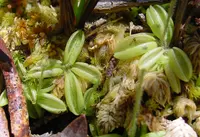
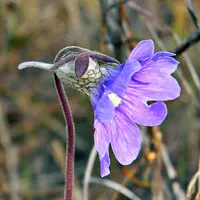
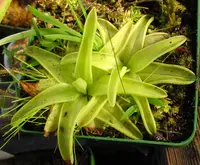
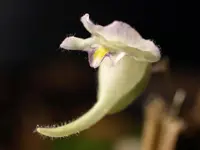
Pale butterwort, Pinguicula lusitanica, is a small carnivorous plant that forms delicate rosettes of pale green, sticky leaves. These leaves trap tiny insects, which supply extra nutrients. It naturally grows in nutrient-poor, wet, acidic habitats such as bogs and damp heaths in western Europe and parts of North Africa. The plant produces slender stems with small, pale lilac to pink flowers that rise above the leaf rosette. It is relatively small and short-lived, which can make it more challenging to maintain long term. To care for Pale Butterwort successfully, growers must provide constant moisture, soft low-mineral water, strong light, and very low-nutrient, airy media.

Care Difficulty
Hard Care

Light Preference
Partial Sun

Water Requirements
Keep Soil Moist

Temperature Preference
Cool Climate

Hardiness Zone
8–10

Soil Texture
Sandy, Peaty, Organic-rich

Soil pH
Strongly acidic (4.5–5.5)

Soil Drainage
Waterlogged tolerant

Fertilization
Minimal (feed rarely)
Scan your plant to receive care tips personalized for your specific plant
Available on iOS and Android
This small carnivorous species needs bright, gentle light that mimics open, wet habitats.
This species prefers consistently damp to wet conditions without stagnant, foul water.
This carnivorous plant prefers mild, frost-free conditions with limited temperature swings.
This species benefits from consistently moist air to keep leaf traps active and sticky.
This carnivorous species needs a very low-nutrient, airy, and constantly moist medium.
This small carnivorous plant is well suited to container growing when moisture and drainage are carefully managed.
This small carnivorous species gains most nutrients from captured insects, so fertilizer use must be minimal and very dilute.
Pinguicula lusitanica needs only light grooming rather than structural pruning.
Container-grown plants appreciate infrequent, careful repotting into fresh low-mineral substrate.
This species is most often propagated from seed, with leaf pullings sometimes used by experienced growers.
This delicate carnivorous plant is not strongly frost hardy and benefits from simple but consistent winter protection.

Plant Health Check
Not sure what's wrong with your plant? Check your plant's health inside the app.
This species is among the tiniest carnivorous butterworts, with individual rosettes often only 1–2 cm across, adapted to life in very low-nutrient, wet sandy or peaty soils in Atlantic Europe.
In many populations, adult plants are short-lived and the species persists mainly through a persistent seed bank and continuous new seedlings, rather than through long-lived rosettes or winter buds like several other temperate Pinguicula species.
It is tightly associated with exposed, wet, acidic habitats such as Atlantic wet heaths, bog margins, and seepage slopes, often growing with Sphagnum mosses where constant moisture and very low mineral nutrients favor carnivory.

Unlike many other butterworts that form resting winter buds called hibernacula, this species typically relies on a near-continuous cycle of germination, growth, flowering, and seed set, which allows rapid recolonization of disturbed patches in its unstable wet heath and bog-edge habitats.
This species is usually short-lived and behaves as a perennial in mild, wet climates, but often functions as a facultative annual. Individual rosettes may live 1–3 years, replaced by self-sown seedlings maintaining the population.
Keep your plants happy and healthy with plant identification, disease detection, and easy care guidance.