Encourage Dense Mats
Lightly pinch back flower stems after blooming to encourage tighter, denser groundcover and reduce gaps where weeds can establish.

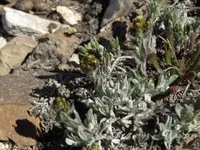
Rocky Mountain pussytoes (Antennaria media) is a low-growing, mat-forming perennial native to high-elevation regions of western North America. It often forms dense, silvery-green carpets that stay attractive through much of the year.
The plant produces small, fuzzy flower clusters that resemble a cat’s paw, held just above the foliage on short stems. Its compact size and spreading habit make it useful for rock gardens, edging, and filling gaps between stones.
This species is adapted to harsh, open mountain sites, so it tends to be tough, drought tolerant, and slow to spread. Light, well-drained soil and full sun suit it best, and understanding these natural conditions helps when learning how to care for Rocky Mountain pussytoes.

Care Difficulty
Easy Care

Light Preference
Full Sun

Water Requirements
Low Water

Temperature Preference
Cold Hardy

Hardiness Zone
3–7

Soil Texture
Sandy, Loamy, Rocky

Soil pH
Acidic (5.5–6.5), Slightly acidic (6.5–7.0)

Soil Drainage
Well-drained

Fertilization
Minimal (feed rarely)
Scan your plant to receive care tips personalized for your specific plant
Available on iOS and Android
This alpine perennial prefers bright, open conditions similar to its native mountain habitats.
This species is drought tolerant and prefers slightly dry, well-drained soil.
This cold-hardy groundcover thrives in cool to moderate climates with strong seasonal changes.
This alpine perennial handles low humidity well, so moisture in the air is rarely a limiting factor.
Antennaria media prefers lean, sharply drained soil that mimics rocky alpine slopes.
This species can be grown in containers, especially shallow, free-draining troughs.
This low-growing native needs only light feeding to perform well in average garden soil.
Pruning Antennaria media is minimal and mainly keeps the mat tidy and healthy.
This species is usually grown as a groundcover, so transplanting in the garden is more common than container repotting.
Antennaria media is commonly propagated by division or seed to expand groundcover patches.
This alpine-type perennial is cold hardy and usually needs little winter care in the ground.

Plant Health Check
Not sure what's wrong with your plant? Check your plant's health inside the app.
This species is naturally restricted to high-elevation alpine and subalpine habitats of the central Rocky Mountains and nearby ranges, where it survives short growing seasons, intense sun, and strong winds close to the snowline.
Plants are dioecious, meaning individual plants bear only male or only female flower heads, so sexual reproduction depends on pollen transfer between separate male and female individuals.
Leaves and stems are covered in fine, woolly hairs that reflect sunlight, reduce water loss, and insulate the plant against cold, a typical adaptation of alpine cushion and mat-forming species.

Antennaria media frequently forms natural hybrid swarms with closely related pussytoes species where their ranges overlap, and these hybrids can be difficult to distinguish morphologically, which has made its taxonomy and species boundaries a recurring subject of botanical research.
This species spreads slowly to moderately by short stolons, forming tight mats rather than invasive patches. It can edge outward over time, but is usually easy to contain with edging or occasional division of clumps.
Keep your plants happy and healthy with plant identification, disease detection, and easy care guidance.