Spring clump division
Every 4–5 years, lift and divide crowded clumps in early spring while shoots are under 5 cm tall, replanting divisions at the same depth to renew vigor and create more plants.

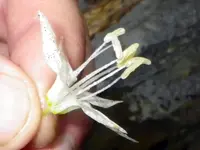
Yellow mandarin, Prosartes maculata, is a woodland perennial native to eastern North America. It typically grows in shaded forests and along moist, rocky slopes. The plant forms upright, arching stems with soft green leaves and discreet, nodding yellow flowers that develop into speckled, orange-red berries. Its natural habit is delicate but quietly ornamental in spring. Prosartes maculata prefers cool, humus-rich, consistently moist soil and dappled light, which makes it best suited to woodland or shade gardens. Gardeners who learn how to care for yellow mandarin will find it moderately easy to grow when its need for shade and moisture is respected.

Care Difficulty
Moderate Care

Light Preference
Partial Shade

Water Requirements
Regular Water

Temperature Preference
Cold Hardy

Hardiness Zone
4–8

Soil Texture
Loamy, Silty, Organic-rich

Soil pH
Acidic (5.5–6.5), Slightly acidic (6.5–7.0)

Soil Drainage
Moist but well-drained

Fertilization
Minimal (feed rarely)
Scan your plant to receive care tips personalized for your specific plant
Available on iOS and Android
This woodland perennial prefers cool, dappled conditions rather than direct, open sun.
This species prefers steadily moist, cool soil that never stays saturated for long periods.
This woodland plant is hardy and adapted to cool to mild temperate conditions across many gardens.
This woodland perennial prefers moderately moist air but usually adapts to typical home humidity.
This species prefers cool, moist, humus-rich soil that mimics a deciduous forest floor.
This plant can be grown in containers, but it performs best when the pot closely replicates its cool, shaded woodland conditions.
Prosartes maculata is a woodland perennial that needs only light feeding in typical garden soil.
Prosartes maculata requires minimal pruning, mainly for cleanliness and to maintain a natural woodland form.
This species is usually grown in the ground and responds best to infrequent, careful transplanting.
Prosartes maculata propagation is possible but slow, mainly through division and seeds under cool woodland conditions.
This woodland perennial is hardy in most temperate climates and generally needs little specific winter care.

Plant Health Check
Not sure what's wrong with your plant? Check your plant's health inside the app.
The drooping, bell-shaped flowers have pale yellow to cream petals covered with distinct purple or reddish-brown spots, which give rise to the common name spotted mandarin and help guide pollinators toward the nectar.
This species is native to rich, mesic deciduous forests of eastern North America, where it grows in deep leaf litter on shaded, north- or east-facing slopes with cool, moist, well-drained soil.
Its fruits contain lipid-rich structures called elaiosomes that attract ants, which carry the seeds away from the parent plant, aiding in dispersal and reducing competition.

Spotted mandarin is considered uncommon or of conservation concern in several parts of its range, largely because it depends on intact, mature hardwood forests with little disturbance and does not readily colonize secondary or heavily managed woodlands.
This woodland perennial forms loose clumps and spreads slowly by rhizomes and seed. It is not considered aggressive. In rich, moist soils, seedlings may appear nearby, but it rarely overwhelms other shade-loving natives.
Keep your plants happy and healthy with plant identification, disease detection, and easy care guidance.