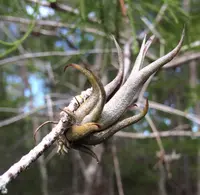
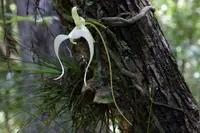
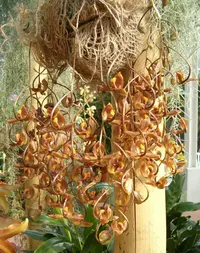
Bulbophyllum ngoyense Care

About Bulbophyllum ngoyense

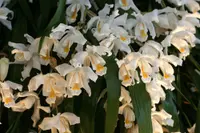
Bulbophyllum ngoyense is a small to medium epiphytic orchid that usually grows on trees, forming compact clumps of pseudobulbs and narrow leaves. It produces distinctive, often intricate flowers that can appear in clusters, giving the plant a delicate but unusual look.

This species is native to tropical forest habitats in parts of Africa, where it experiences warm temperatures, high humidity, and good air movement. It can be moderately challenging for beginners because it dislikes drying out completely yet also resents stagnant, soggy conditions.

Those who want to learn how to care for Bulbophyllum ngoyense should know it generally prefers bright, filtered light, consistent moisture, and an open, fast-draining orchid medium.

Main Plant Requirements

Care Difficulty

Hard Care

Light Preference

Bright Indirect Light

Water Requirements

Keep Soil Moist

Temperature Preference

Tropical / Frost Sensitive

Hardiness Zone

12–13

Soil Texture

Peaty, Organic-rich, Loamy

Soil pH

Acidic (5.5–6.5)

Soil Drainage

Moist but well-drained

Fertilization

Moderate (every 2–4 weeks)

Get Personalized Care Plan

Scan your plant to receive care tips personalized for your specific plant

Available on iOS and Android

How to Care for the Bulbophyllum ngoyense

This orchid favors bright, filtered conditions that mimic light under a forest canopy.

  • Provide 6–8 hours of bright, indirect light each day, such as dappled shade or light under 30–50% shade cloth.
  • Allow soft morning sun but protect from direct midday and afternoon sun, which can scorch leaves and cause yellowing or brown patches.
  • In winter, move Bulbophyllum ngoyense slightly closer to the light source or to a brighter spot to compensate for shorter days.

This species prefers constant, light moisture around its roots without becoming waterlogged.

  • Water when the surface layer feels just barely dry, avoiding a fully dry pot or mount; in warm weather this may mean watering most days.
  • Use a very free-draining orchid mix or mount so excess water runs off quickly, reducing the risk of root rot or a sour smell from the medium.
  • In cooler months, let the surface dry a bit more between waterings and watch for wrinkling pseudobulbs as an early sign of underwatering.

This orchid grows best in warm to intermediate temperatures with minimal sudden swings.

  • Aim for 70–80°F (21–27°C) by day and 60–68°F (16–20°C) at night, which supports steady growth and flowering.
  • Protect the plant from temperatures below 55°F (13°C), as extended exposure near this level can slow growth and stress roots; it is not frost tolerant.
  • During hot spells above 85°F (29°C), increase air movement and humidity and shade more strongly to reduce leaf stress and prevent overheating.

This species needs consistently high humidity to perform well in cultivation.

  • Aim for 70–90% humidity, using a humidifier or enclosed growing case rather than open-room air.
  • Dry air causes shriveled pseudobulbs, dull leaves, and stalled new growth within days.
  • Increase humidity with fine misting fans, wet pads, or humidity trays, but keep leaves well ventilated to prevent fungal issues.

Bulbophyllum ngoyense prefers a very airy, fast-draining epiphytic medium rather than conventional potting soil.

  • Use a mix of medium orchid bark, chopped sphagnum moss, and perlite or pumice to create a loose, fibrous structure.
  • Ensure rapid drainage; water should flow through in seconds and the mix should feel just slightly damp, not wet, between waterings.
  • Keep pH slightly acidic to neutral (pH 5.5–7.0), which suits most orchid bark-based mixes and supports nutrient uptake.
  • Avoid dense peat-based soils, fine compost, or unmodified garden soil, which collapse around roots, reduce aeration, and promote rot.

This species is well suited to container or basket growing when moisture and airflow are carefully balanced.

  • Choose shallow orchid pots or slatted baskets that spread the fine roots horizontally and expose them to air movement.
  • Use side-slotted containers so roots can wander out, which stabilizes the plant and reduces wobble from tall growths.
  • Select plastic for higher moisture retention or clay for faster drying, matching the material to your local humidity and watering habits.

This orchid benefits from light, consistent feeding rather than heavy fertilization.

  • Use a balanced, water‑soluble orchid fertilizer (around 20‑20‑20) diluted to 1/4–1/2 strength for Bulbophyllum ngoyense.
  • Feed every 2–3 weeks during active growth in spring and summer, alternating with plain water to flush salts.
  • Reduce feeding to once per month or stop entirely in winter when growth slows.
  • Avoid compost or slow‑release granules that can burn fine roots in tight mounts or airy bark mixes.

Pruning needs for Bulbophyllum ngoyense are minimal and focus on hygiene rather than shaping.

  • Remove faded flower spikes at the base after blooming to redirect energy to new growths.
  • Trim dead, yellowed, or damaged leaves with sterilized scissors or pruners to limit disease spread.
  • Leave healthy pseudobulbs and leaves intact, as they store water and nutrients for future flowering.
  • Inspect mounts or baskets during grooming and cut away any rotting rhizome sections with clean tools.

This species prefers stable conditions, so repotting Bulbophyllum ngoyense is done only when clearly needed.

  • Repot every 2–3 years, or when roots circle the basket, media breaks down, or growth slows despite good care.
  • Choose late winter to early spring, just before new root tips appear, to help the plant reestablish quickly.
  • Use a shallow basket or mount with very airy orchid bark and sphagnum, spreading rhizomes without bending them.
  • Handle roots gently, keep old firm media around them where possible, and shade the plant with slightly higher humidity for 1–2 weeks after repotting.

Propagation is possible but should be done cautiously, as division can set Bulbophyllum ngoyense back if overdone.

  • Divide mature clumps in late winter or early spring, when new growths or roots start to emerge.
  • Use a sterile knife to cut the rhizome, keeping at least 3–4 healthy pseudobulbs per division for stability.
  • Replant divisions on mounts or in baskets with fresh, airy orchid mix, securing them so they do not wobble.
  • Maintain high humidity, gentle air movement, and moderate warmth to encourage new root growth after division.

This warmth‑loving orchid is not frost tolerant and needs indoor or greenhouse care in cold climates.

  • Keep temperatures around 60–75°F in winter, avoiding exposure below 50°F for Bulbophyllum ngoyense.
  • Move container plants indoors or into a heated greenhouse before night temperatures drop near 50°F.
  • Provide bright, filtered light and slightly drier conditions, but do not let the mount or medium dry out completely.

Care Tips

Mounting substrate choice

Use long-fiber sphagnum on a cork or hardwood slab rather than soft wood so roots anchor securely and the mount does not decompose quickly in the constantly moist conditions this species prefers.

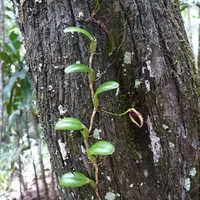
Horizontal rhizome space

Position the plant so the rhizome can creep across the mount or basket surface, leaving at least 5–8 cm of open, moss-covered area in the direction of growth to avoid frequent, stressful divisions.

Targeted air movement

Aim a gentle fan to move air across, not directly at, the plant to dry the root zone between waterings and reduce fungal spotting on the fleshy pseudobulbs and leaves.

High-frequency flushing

Once a week, water heavily with low-mineral water until it runs clear from the mount or basket to remove accumulated fertilizer salts that can burn the fine roots when growing Bulbophyllum ngoyense.

Proactive pest scouting

Inspect leaf bases, under pseudobulbs, and rhizome junctions every 1–2 weeks with a hand lens, and remove any early mealybugs or scale with cotton swabs and alcohol before they lodge deep into the tight crevices.

Common Pests and Diseases

Spider mites

This pest thrives on Bulbophyllum foliage kept in warm, dry, stagnant air, causing fine stippling, dull leaves, and webbing on the undersides. Symptoms include slowed growth and leaves that lose their glossy, firm texture.

Solution

Increase humidity to 60–80% while improving gentle air movement, then rinse plants thoroughly under lukewarm water, focusing on leaf undersides and pseudobulbs. Follow with repeated applications of insecticidal soap or horticultural oil every 5–7 days until no new damage appears, and avoid letting the growing area become hot and dry again when caring for Bulbophyllum ngoyense.

Scale insects

These insects appear as small, fixed bumps on pseudobulbs, leaf bases, and under sheaths, where they suck sap and excrete sticky honeydew. Symptoms include yellowing patches, shriveled pseudobulbs, and sometimes sooty mold growing on the honeydew.

Solution

Manually remove visible insects with a cotton swab dipped in isopropyl alcohol, paying attention to old leaf sheaths and crevices. After mechanical removal, use repeated applications of horticultural oil or insecticidal soap and isolate the plant from other orchids until no new scale is seen for several weeks.

Mealybugs

These insects hide in tight leaf axils, around rhizomes, and under dry sheaths, where they form white, cottony clusters and weaken the plant. Symptoms include distorted new growth, sticky residue, and eventual shriveling of roots and pseudobulbs.

Solution

Inspect all hidden areas, peel away loose, dry sheaths, and wipe infested spots with alcohol-soaked cotton swabs. For heavier infestations, combine a thorough warm-water rinse with several rounds of insecticidal soap or systemic insect treatment, and keep newly acquired orchids quarantined before placing them near established plants.

Bacterial soft rot

This disease causes rapidly spreading, foul-smelling, water-soaked spots on pseudobulbs and leaves, which turn mushy and collapse in warm, wet conditions. Symptoms include a strong odor and tissue that breaks down easily when touched.

Solution

Immediately remove and discard all affected tissue with a sterile tool, cutting well into healthy, firm tissue, then dust or swab cut surfaces with a bactericidal product or powdered cinnamon. Reduce watering, keep foliage dry, increase airflow, and avoid overhead misting onto the plant crown or between tightly clustered pseudobulbs.

Leaf spot fungus

This disease appears as small, dark, sunken spots on leaves that may coalesce into larger lesions, often starting where water sits on the leaf surface. Symptoms include slow-spreading patches that may cause premature leaf drop if humidity is high and air is stagnant.

Solution

Prune affected leaves or sections with sterile scissors and dispose of them, then space plants to improve air circulation and avoid wetting foliage late in the day. If spots continue to spread, apply a labeled orchid-safe fungicide according to directions and keep leaves dry between waterings to limit reinfection.

Interesting Facts

Central African origin

This orchid is known from humid forest habitats in the Democratic Republic of the Congo, where it grows as an epiphyte on trees rather than in soil.

Section-level uniqueness

Bulbophyllum ngoyense was described as a distinct species based on its specific floral morphology, including the shape and proportions of the lip and column, which separate it from closely related Central African Bulbophyllum species.

Specialized pollination traits

The flowers show the intricate structure typical for Bulbophyllum, with a mobile lip adapted to precise insect positioning during pollination, although the exact pollinators of this species have not yet been clearly documented.

FAQs about Bulbophyllum ngoyense

This species can bloom several times a year when kept stable. Many plants flower in flushes, often after a growth has matured. Consistent moisture, high humidity, and moderate feeding support repeated blooming cycles and longer-lasting displays.

Grow Healthy Plants with Botan Care

Keep your plants happy and healthy with plant identification, disease detection, and easy care guidance.

Botan plant care app — identify plants on mobile

Explore More Plants