Basket-style mounting
Grow this orchid in a slatted basket or mesh pot with coarse, airy medium so the long, pendent flower spikes can hang freely without kinking or bruising against the pot rim.

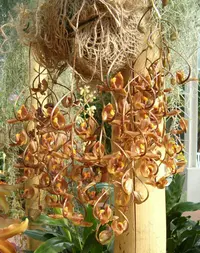
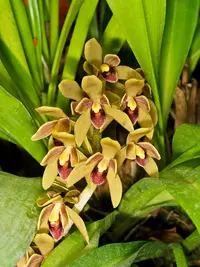
Gongora galeata is an epiphytic orchid, typically found hanging from trees with graceful, arching flower spikes. It grows from pseudobulbs that produce narrow, pleated leaves. The plant is native to tropical forests of Central and South America, where it experiences warm, humid, and shaded conditions. Its distinctive flowers often have complex shapes and a waxy texture, and may carry a noticeable fragrance. This species suits growers who can provide stable humidity and good air movement, as it dislikes drying out completely or sitting in stagnant, hot air. Those who care for Gongora galeata often grow it in baskets or open orchid mixes that allow the roots to breathe.

Care Difficulty
Hard Care

Light Preference
Bright Indirect Light

Water Requirements
Keep Soil Moist

Temperature Preference
Tropical / Frost Sensitive

Hardiness Zone
Unknown

Soil Texture
Peaty, Organic-rich

Soil pH
Acidic (5.5–6.5)

Soil Drainage
Moist but well-drained

Fertilization
Moderate (every 2–4 weeks)
Scan your plant to receive care tips personalized for your specific plant
Available on iOS and Android
This orchid prefers bright, filtered conditions that mimic dappled forest light.
This species prefers evenly moist conditions with excellent drainage.
This orchid thrives in warm to intermediate conditions with minimal temperature extremes.
This orchid needs consistently high humidity to grow well indoors.
Gongora galeata grows best mounted or in a very loose, airy orchid medium rather than standard potting soil.
This species is well suited to container culture in hanging baskets or ventilated orchid pots.
This orchid benefits from light, consistent feeding during active growth for balanced Gongora galeata care.
Pruning needs for Gongora galeata are minimal and focus on hygiene rather than shaping.
Repotting Gongora galeata maintains healthy roots and prevents medium breakdown in long-term culture.
Propagation of Gongora galeata is usually done by division rather than from seed in home conditions.
Winter care for Gongora galeata focuses on temperature control and adjusting moisture in cooler months.

Plant Health Check
Not sure what's wrong with your plant? Check your plant's health inside the app.
The species name galeata refers to the distinct helmet-like shape of the flower’s lip, which curves and arches to help position visiting insects for effective pollination.
In nature, this orchid often grows on tree branches where organic debris and sometimes ant nests accumulate around its roots, benefiting from the extra nutrients in this microhabitat.
It produces long, hanging flower spikes lined with many waxy, often sweetly scented flowers that are displayed beneath the foliage, a configuration thought to guide scent-tracking pollinators along the entire inflorescence.
Lack of flowering usually comes from insufficient light, too little fresh air movement, or inadequate seasonal temperature drop at night. Mature pseudobulbs also need enough stored energy, so avoid heavy division or repotting right before the expected blooming season.
Keep your plants happy and healthy with plant identification, disease detection, and easy care guidance.