Staggered planting
Plant corms in small batches 1–2 weeks apart at the start of the planting season so flowering is slightly spread out and you can harvest stigmas over a longer window instead of all at once.

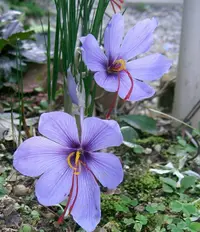
Saffron crocus, Crocus sativus, is a small autumn-flowering bulb grown mainly for its vivid red stigmas used as the spice saffron. It forms low clumps of narrow, grassy leaves and pale purple, veined flowers that appear as the plant goes dormant for winter.
This species is believed to have originated in the Mediterranean and Southwest Asia and is now cultivated in many temperate regions. It is relatively hardy but needs dry, warm summers and well-drained soil, which can make it challenging in wet climates. With suitable drainage, full sun, and careful watering, it is possible to care for saffron crocus successfully in gardens or containers.

Care Difficulty
Moderate Care

Light Preference
Full Sun

Water Requirements
Moderate Water

Temperature Preference
Cool Climate

Hardiness Zone
6–9

Soil Texture
Sandy, Loamy, Organic-rich

Soil pH
Slightly acidic (6.5–7.0), Neutral (7.0)

Soil Drainage
Well-drained

Fertilization
Minimal (feed rarely)
Scan your plant to receive care tips personalized for your specific plant
Available on iOS and Android
This bulb needs strong, direct light to initiate flowering and form quality stigmas.
This geophyte prefers brief moisture while growing and a dry rest while dormant.
This species prefers cool to mild conditions with a marked seasonal temperature shift.
This species tolerates a wide humidity range and rarely needs special humidity management indoors or outdoors.
Crocus sativus grows best in loose, sharply drained, mineral-rich soil that never stays waterlogged.
This species is well suited to container growing when the pot is prepared for fast drainage and firm anchoring of the corms.
Nutrient needs for Crocus sativus are modest but targeted feeding improves flowering and corm renewal.
Pruning needs for Crocus sativus are minimal and focus on hygiene rather than shaping.
Transplanting or lifting Crocus sativus corms is done infrequently and mainly to prevent overcrowding.
Crocus sativus multiplication relies on division of daughter corms, since it is sterile and does not form viable seed.
Winter care for Crocus sativus depends on climate, as corms handle moderate frost but dislike prolonged freezing and wet soils.

Plant Health Check
Not sure what's wrong with your plant? Check your plant's health inside the app.
This species is triploid, meaning it has three sets of chromosomes and is sexually sterile, so it does not produce viable seeds and must be propagated only by dividing its underground corms.
Among crocus species used by humans, it is unique for producing its flowers and harvestable stigmas in autumn rather than spring, which is why saffron harvests are concentrated into a short fall season.
The red stigmas contain intense carotenoid pigments such as crocin, which dissolve in water and give saffron its strong coloring power even at very low amounts.

All known Crocus sativus plants worldwide are considered to descend clonally from a single ancient domestication event in the Mediterranean region, so global saffron production relies on one cultivated genetic lineage rather than multiple wild populations.
Lack of autumn flowering usually comes from bulbs planted too deep, too late, or kept too wet in summer dormancy. Very small or overcrowded corms also reduce blooms. Lifting, dividing, and replanting at correct depth often restores flowering.
Keep your plants happy and healthy with plant identification, disease detection, and easy care guidance.