Support heavy spathes
Install short, discreet stakes or small hoop supports around the clump before flower stalks elongate so the large, heavy spathes stay upright and are less likely to snap in wind or rain.

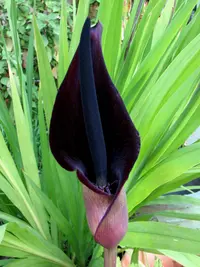
Palestine arum, Arum palaestinum, is a tuberous perennial from the eastern Mediterranean, often grown for its unusual dark spathes and strong scent. It produces arrow-shaped leaves and a hooded flower structure that surrounds a central spike, giving it a distinctive, architectural look in the garden.
This plant naturally occurs in rocky, seasonally dry habitats, where it experiences wet winters and dry summers. It can be moderately challenging, as it dislikes waterlogging, needs a dry rest period, and benefits from careful attention to drainage and watering. A sheltered spot with bright but not scorching light and well-drained soil usually supports healthy growth, and learning how to care for Palestine arum helps it thrive over many seasons.

Care Difficulty
Moderate Care

Light Preference
Partial Shade

Water Requirements
Moderate Water

Temperature Preference
Warm Climate

Hardiness Zone
8–11

Soil Texture
Loamy, Sandy, Organic-rich

Soil pH
Slightly acidic (6.5–7.0), Neutral (7.0)

Soil Drainage
Moist but well-drained

Fertilization
Minimal (feed rarely)
Scan your plant to receive care tips personalized for your specific plant
Available on iOS and Android
This species prefers bright, indirect light with some mild direct sun during cooler hours.
This tuberous plant prefers evenly moist but never waterlogged soil during active growth.
This plant prefers mild, Mediterranean-like temperatures and dislikes both hard frost and extreme heat.
This species grows well in typical indoor humidity if extremes are avoided.
Arum palaestinum prefers loose, humus-rich soil that drains freely yet holds moderate moisture.
This species is suitable for container growing and responds well to a deep, stable pot.
This species grows from nutrient-storing tubers and benefits from modest, controlled feeding rather than heavy fertilization.
Pruning needs for Arum palaestinum are light and focus on hygiene rather than shaping.
This tuberous aroid prefers stable planting and only occasional disturbance when clumps become crowded or containers overfilled.
New plants are most reliably produced by division of mature tubers rather than by seed.
This plant is moderately cold tolerant in mild climates but its tubers dislike prolonged freezing or saturated winter soil.

Plant Health Check
Not sure what's wrong with your plant? Check your plant's health inside the app.
The inflorescence produces a strong scent reminiscent of decaying organic matter, which attracts fly pollinators that are drawn to carrion in its native Eastern Mediterranean habitats.
During anthesis, the central spadix can generate mild heat through increased respiration, helping volatilize its odor and making the scent plume more detectable to insect pollinators.
The spathe forms a dark maroon to nearly black inner surface that visually mimics a cavity of decaying material, guiding flies into the floral chamber where pollination takes place.

In parts of the Levant, the plant has long been collected from the wild and used in traditional diets, with the toxic raw tissues carefully processed by cooking and leaching to reduce acrid compounds before consumption.
Lack of flowering usually comes from insufficient light, overly rich nitrogen fertilizer, or bulbs that have not gone through a cool rest. Crowded clumps may also flower poorly and benefit from lifting, dividing, and replanting every few years.
Keep your plants happy and healthy with plant identification, disease detection, and easy care guidance.