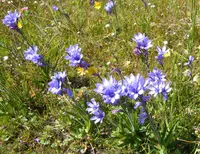
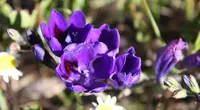
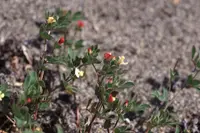
Strict Bobbejaantjie Care (Babiana nervosa)

Strict Bobbejaantjie

About Strict Bobbejaantjie

Babiana nervosa, commonly called strict bobbejaantjie, is a small corm-forming flowering plant from the winter-rainfall regions of South Africa. It belongs to the iris family and grows from underground storage organs that resprout each season.

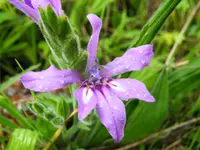
Plants form upright, narrow, pleated leaves and short, stiff flowering stems topped with clusters of tubular, often blue to purple blooms. The flowers are adapted to dry, open habitats and tend to appear in late winter or spring in habitat.

In cultivation, it suits dry, sunny spots with well-drained, sandy or gritty soil. Its need for a dry summer rest and cool, moist winter period makes how to care for Strict Bobbejaantjie slightly more challenging in climates with wet, warm summers.

Main Plant Requirements

Care Difficulty

Moderate Care

Light Preference

Full Sun

Water Requirements

Moderate Water

Temperature Preference

Warm Climate

Hardiness Zone

9–11

Soil Texture

Sandy, Loamy, Organic-rich

Soil pH

Acidic (5.5–6.5), Slightly acidic (6.5–7.0)

Soil Drainage

Well-drained

Fertilization

Minimal (feed rarely)

Get Personalized Care Plan

Scan your plant to receive care tips personalized for your specific plant

Available on iOS and Android

How to Care for the Strict Bobbejaantjie

This South African corm prefers bright, direct light in cool seasons and softer light in hotter climates.

  • Provide 4–6 hours of direct morning sun, with light afternoon shade in hotter regions to protect the narrow leaves and flowers.
  • Tolerates light partial shade, but flowering of Strict Bobbejaantjie declines noticeably if grown in less than 3–4 hours of direct sun.
  • In summer-dry climates, full winter sun is ideal; in very bright, hot areas, use filtered midday light to prevent leaf scorch.

This corm-forming species needs distinct wet and dry phases that follow its natural winter-growing cycle.

  • During active growth, water when the top 3–5 cm of soil feel dry, allowing moisture to reach the root zone without leaving the soil soggy.
  • Use sharply drained, gritty soil so excess water runs off quickly; persistent wetness around Babiana nervosa corms leads to rot and soft, yellowing foliage.
  • Reduce and then stop watering after foliage dies back in late spring; dry, firm corms and shriveling leaves indicate dormancy rather than underwatering.

This species grows best in mild, Mediterranean-type conditions with cool, bright winters and dry summers.

  • Optimal growth occurs around 55–70°F (13–21°C) during the active winter–spring season, promoting strong leaves and flowering spikes.
  • Tolerates brief dips to about 25°F (−4°C) if soil is well drained, but repeated hard frosts and frozen, wet ground can damage or kill corms.
  • Handles dry summer heat up to about 90–95°F (32–35°C) if kept dormant and dry; sustained high heat during active growth can shorten flowering.

This corm-forming species prefers fairly dry air and does not need elevated humidity indoors or outdoors.

  • Aim for 30–50% humidity, similar to most heated homes, to match its native dry-season conditions.
  • Strict Bobbejaantjie tolerates drier air well but may show humidity stress as soft, pale foliage if kept constantly damp and stagnant.
  • If air is extremely dry and leaves tip-burn, raise humidity slightly by grouping plants, not by misting the foliage.

Babiana nervosa needs sharply drained, mineral-rich soil to keep its corms dry between waterings.

  • Use a sandy or gritty loam with 30–50% coarse material such as horticultural sand, fine gravel, or perlite to prevent waterlogging around corms.
  • A slightly acidic to neutral pH around 6.0–7.0 supports nutrient uptake without encouraging excess leaf growth over flowering.
  • Blend a small amount of well-decomposed compost into the top layer only, keeping the lower zone open and free-draining.
  • Avoid heavy clay, peat-heavy, or compacted mixes that hold water for many hours and increase the risk of corm rot.

This species is well suited to container growing in climates with wet winters or cold frosts.

  • Choose a pot at least 20–25 cm deep so the corms can sit 5–8 cm below the surface with space for offsets to form.
  • Select a terracotta or other porous container if outdoor rainfall is frequent, as it speeds evaporation and reduces rot risk.
  • Elevate the pot on feet or bricks so drainage holes stay clear and excess winter rain runs off quickly rather than pooling under the base.

Babiana nervosa grows from nutrient-storing corms and needs only light, targeted feeding during active growth.

  • Apply a dilute balanced liquid fertilizer (around 10-10-10 at 1/2–1/4 strength) every 3–4 weeks in spring while leaves are green.
  • Use a small amount of fine compost or slow-release bulb fertilizer mixed into the topsoil at planting time for Strict Bobbejaantjie.
  • Stop feeding once foliage begins to yellow and the plant enters dormancy, usually in late spring or early summer.
  • Avoid high-nitrogen products and never fertilize dry soil; water lightly before feeding to prevent root burn.

Babiana nervosa needs only light pruning focused on spent growth and hygiene rather than shaping.

  • In late spring, remove faded flower spikes at the base using clean, sharp scissors or hand pruners to prevent seed formation.
  • Allow green leaves to remain until they yellow naturally so corms can recharge through photosynthesis.
  • Gently pull or cut away dead, dry foliage during dormancy to reduce disease risk and keep the clump tidy.
  • Avoid heavy cutting into healthy green tissue, as this can weaken future flowering and reduce corm vigor.

This corm-forming species is usually grown in the ground or shallow containers and prefers minimal disturbance.

  • Transplant or lift and replant corms every 2–3 years if flowering declines, growth slows, or clumps become crowded.
  • Schedule transplanting for late summer to early fall, when corms are fully dormant and foliage has completely died back.
  • Loosen soil carefully and lift corms gently to avoid damage, then replant 5–8 cm deep in well-drained, sandy or gritty soil.
  • Water lightly after transplanting, then keep soil just barely moist until new growth appears to limit root stress and rot.

Babiana nervosa is commonly propagated by corm division and by seed under suitable conditions.

  • Divide offsets from the main corm in late summer or fall after foliage has fully died back, separating firm, healthy cormlets.
  • Replant divisions at the same depth in sharply drained soil, spacing them 5–10 cm apart for good air circulation.
  • Sow fresh seed in fall in a gritty, free-draining mix, barely covering, and keep at 55–65°F with bright light.
  • Maintain lightly moist, not wet, conditions; seedlings may need 2–3 years before reaching flowering size.

This South African bulb is not fully hardy in cold climates and usually needs some winter protection outside mild regions.

  • In USDA zones 9–10, leave corms in the ground, ensuring soil drains well to prevent winter rot.
  • In colder zones, lift corms after foliage dies back, dry them, and store in a cool, frost-free place at 40–50°F.
  • For containers, move pots indoors to a bright, cool, frost-free spot and keep the growing medium almost dry during dormancy.

Care Tips

Staggered Lifting Schedule

In cold climates, lift only a portion of the corms each year and leave some in the ground, which spreads risk and helps identify which spots in your garden reliably overwinter the plant.

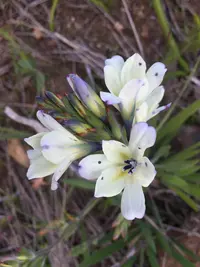
Labeling Dormant Clumps

Mark clumps with durable labels at peak flowering so you can relocate or divide them accurately during dormancy when the foliage has completely disappeared.

Mesh Basket Planting

Plant corms in shallow plastic or wire mesh baskets sunk into the soil to make lifting, dividing, and replanting easier while protecting them from rodents that dig for bulbs.

Targeted Support For Stems

In windy sites, place low, unobtrusive peony rings or short looped canes around clumps just before flowering so the slender stems stay upright without breaking or flopping.

Controlled Clump Division

Divide dense clumps only when flowering performance drops, and replant offsets at a consistent spacing of 5–8 cm to maintain good air movement and more uniform flowering when growing Strict Bobbejaantjie.

Common Pests and Diseases

Mealybugs

This pest feeds on sap in leaf bases and along flowering stems, often hiding in tight crevices of the corms and foliage. Symptoms include white cottony clusters, sticky honeydew, and weak, distorted growth.

Solution

Isolate affected plants, then dab visible insects with cotton swabs dipped in 70% isopropyl alcohol and gently wipe away residues. Repeat weekly and, for larger outbreaks, use a systemic insecticide labeled for ornamental bulbs, making sure to treat the corm area thoroughly while maintaining good air movement and avoiding overhead wetting of foliage.

Narcissus bulb fly

This pest lays eggs at the base of leaves or near the corm, and the larvae tunnel inside and eat the storage tissue, causing sudden collapse of shoots. Symptoms include stunted or yellowing foliage, hollow or mushy corms, and poor flowering or failure to emerge.

Solution

Discard any soft, tunneled corms and do not compost them. In areas where bulb flies are common, plant corms a bit deeper, cover planting sites with fine mesh during flight periods, and lift and inspect corms during dormancy, keeping only firm, undamaged ones for replanting as part of Babiana nervosa care.

Corm nematodes

These microscopic roundworms invade corm tissue, causing swelling, brown patches, and distorted or weak shoots. Symptoms include poor sprouting, twisted leaves, and corms with dry brown or corky areas.

Solution

Remove and destroy severely affected corms and any attached offsets. Before storage or replanting, hot-water treat healthy-appearing corms if possible (for example 100–113°F for a carefully timed soak according to label instructions), then dry them well and rotate planting areas to reduce nematode buildup in the soil.

Botrytis blight

This disease is caused by a grey mold fungus that thrives in cool, humid conditions and overcrowded plantings. Symptoms include water-soaked spots on leaves and flower stalks that turn brown and develop fuzzy grey mold, often leading to collapse of soft tissues.

Solution

Promptly remove and discard infected leaves, stems, and spent flowers, and avoid overhead watering so foliage stays dry. Improve spacing and airflow, and during prolonged wet periods consider applying a bulb-safe fungicide labeled for botrytis on ornamental bulbs according to package directions.

Corm fusarium rot

This disease affects stored or growing corms, leading to dry, brown, sunken lesions and gradual decline in vigor. Symptoms include weak shoots, yellowing leaves, and corms that show reddish-brown or tan rot with a dry, sometimes powdery texture.

Solution

Inspect corms before planting and discard any with discoloration or dry rot. Store corms in a dry, cool, well-ventilated place, plant only into well-drained soil, and avoid injuring corms during lifting and handling, since wounds increase susceptibility to fusarium infections.

Interesting Facts

Seasonal geophyte strategy

This species survives the dry South African summer as a corm, then rapidly produces leaves and flowers after autumn–winter rains in its native Western Cape habitat.

Distinctive inflorescence structure

Its compact, spike-like flower head holds several funnel-shaped blooms that open in sequence, an arrangement thought to improve pollinator efficiency in its fynbos environment.

Sandplain and shale specialist

Wild populations typically occur on sandstone or shale-derived soils in lowland renosterveld and fynbos, showing a preference for well-drained, winter-rainfall habitats rather than moist, shaded sites.

Botan icon

Did you know?

Genetic and morphological studies have shown that this species is part of a highly diversified Babiana radiation in the Cape Floristic Region, a global hotspot where many closely related geophytes evolved different flowering times and pollination strategies within a relatively small geographic area.

FAQs about Strict Bobbejaantjie

This species usually flowers in late winter to spring, depending on climate. Blooming often lasts 3–6 weeks, with individual flowers short-lived but produced in succession along the spikes for an extended display.

Grow Healthy Plants with Botan Care

Keep your plants happy and healthy with plant identification, disease detection, and easy care guidance.

Botan plant care app — identify plants on mobile

Explore More Plants