Short-flower Deervetch Care (Acmispon parviflorus)

Also known as: desert deervetch
Short-flower Deervetch

About Short-flower Deervetch

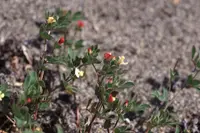
Short-flower deervetch (Acmispon parviflorus) is a small annual legume native to western North America. It often grows in open, dry habitats such as grasslands, roadsides, and disturbed sites.

The plant forms low, branching clumps with slender stems, small divided leaves, and tiny pale yellow to pinkish flowers followed by narrow pods. Its quick life cycle and ability to fix nitrogen, which means converting atmospheric nitrogen into a usable form in the soil, help it thrive in poor, dry soils.

These traits generally make it a low-maintenance species outdoors, especially in sunny, well-drained locations. Gardeners who want to care for Short-flower Deervetch mainly need to provide enough light and avoid consistently wet, heavy soils.

Main Plant Requirements

Care Difficulty

Easy Care

Light Preference

Full Sun

Water Requirements

Low Water

Temperature Preference

Warm Climate

Hardiness Zone

7–10

Soil Texture

Sandy, Loamy, Rocky

Soil pH

Slightly acidic (6.5–7.0), Neutral (7.0)

Soil Drainage

Well-drained

Fertilization

Minimal (feed rarely)

Get Personalized Care Plan

Scan your plant to receive care tips personalized for your specific plant

Available on iOS and Android

How to Care for the Short-flower Deervetch

This species prefers bright, open conditions similar to its native dry slopes and grasslands.

  • Provide 6–8 hours of direct sun daily; morning sun with light afternoon exposure suits Short-flower Deervetch in hotter regions.
  • Tolerates light partial shade (around 3–4 hours direct sun) but flowering and compact growth decline as shade increases.
  • In summer, harsh reflected afternoon sun can scorch foliage on very dry sites; use nearby grasses or rocks as light filters while avoiding full shade.

This drought-adapted legume needs infrequent, light watering once established.

  • Allow the top 3–5 cm of soil to dry completely before watering; soil should feel dry and loose rather than cool and damp.
  • Use sharply drained, sandy or gravelly soil so water runs through within a few seconds; avoid any spots where puddles persist more than 10–15 minutes.
  • In the cool season, reduce or stop supplemental water; pale, swollen stems signal overwatering, while limp, folding leaflets suggest it stayed dry too long.

This annual native is adapted to mild, Mediterranean-type climates with cool, moist winters and warm, dry summers.

  • Optimal growth occurs around 55–75°F (13–24°C), especially during cool, moist spring conditions when stems and flowers develop.
  • Plants usually tolerate down to about 25–28°F (-4 to -2°C) once hardened, but repeated hard frosts or colder snaps can kill foliage and seedlings.
  • Heat tolerance is good up to about 90–95°F (32–35°C) if soil is not waterlogged; in very hot, dry spells the plant may complete its life cycle and set seed earlier.

This species tolerates a wide humidity range and usually does not need special humidity management indoors or outdoors.

  • Aim for 30–60% relative humidity, similar to typical indoor air or dry summer conditions.
  • Plants tolerate dry air well; humidity stress is rare unless combined with high heat and missed watering.
  • Low humidity stress may show as slight leaf tip browning and slower growth; increase local humidity with grouped pots or a nearby water tray if needed.

This plant prefers lean, well-drained, often sandy soil that does not stay wet after rainfall or watering.

  • Use a mix of roughly 50–70% coarse sand or fine gravel with 30–50% low-organic potting mix to mimic naturally poor, open sites.
  • Ensure very rapid drainage; water should drain through within seconds and the surface should dry within 1–2 days.
  • Acmispon parviflorus grows best in slightly acidic to neutral soil, around pH 6.0–7.5, and does not need rich fertilized substrates.
  • Avoid heavy clay, compacted areas, or peat-heavy mixes that hold water and reduce oxygen around the roots, and amend with grit or perlite to improve aeration.

This species can be grown in containers if the pot and substrate are chosen to keep roots dry and well aerated.

  • Choose a pot at least 20–25 cm wide but not overly deep, allowing the shallow root system to spread rather than sit in a water column.
  • Select unglazed terracotta if possible, since its porous walls help excess moisture evaporate faster than plastic or glazed containers.
  • Raise the container on pot feet or bricks so drainage holes stay clear and runoff leaves the pot quickly, preventing water from pooling at the base.

This native legume generally needs little feeding, especially in lean, well-drained soils.

Acmispon parviflorus benefits from light, timely pruning to keep plants compact and flowering well.

  • Prune in late winter or immediately after flowering to avoid removing new buds.
  • Remove dead, damaged, or crossing stems first to maintain plant health and airflow.
  • Shorten overly long, lax shoots to refine shape and encourage bushier growth.
  • Use clean, sharp scissors or hand pruners, making cuts just above a leaf node.

This species is more often transplanted outdoors than kept long term in containers.

  • Transplant in early spring or fall when temperatures are mild and soil is workable.
  • Move plants when growth slows, roots circle the pot, or the plant becomes unstable.
  • Shift to a slightly larger container or ground site with sharply drained, low-fertility soil.
  • Water thoroughly after transplanting, then keep soil lightly moist until new growth resumes to limit root stress.

New plants are most reliably produced from seed under suitable conditions.

  • Sow fresh seed in late fall or early spring to match natural germination cycles.
  • Scarify hard seed coats lightly with sandpaper, then soak 12–24 hours to improve uptake of water.
  • Use a well-drained, low-nutrient mix and keep it just moist in bright, indirect light.
  • Maintain cool to mild temperatures (50–65°F) until seedlings establish, then thin crowded plants.

In its native range, this annual or short-lived perennial usually needs no special winter care.

Care Tips

Encourage nitrogen fixing

Inoculate seeds or planting holes with a compatible rhizobium legume inoculant so the roots form active nodules, which improves soil nitrogen and reduces the need for added fertilizer when growing Short-flower Deervetch.

Minimize root disturbance

Use plug trays, soil blocks, or small pots and transplant seedlings only once, handling by the leaves and keeping the root ball intact to avoid set-back in this fine-rooted annual.

Support self-seeding

Allow some mature pods to dry and shatter in place, or collect and scatter seed in late summer or fall on the same site, to maintain a self-renewing patch without yearly replanting.

Companion groundcover use

Plant it at the edges of low-growing, open perennials or bunchgrasses where its sparse canopy can weave through without heavy competition, creating a stabilizing groundcover that also benefits nearby plants via nitrogen enrichment.

Low-input weed control

Prepare a clean, weed-reduced seedbed before sowing, then use a single early pass of shallow hoeing or flame weeding before seedlings emerge to reduce later hand-weeding around this relatively small, non-competitive species.

Common Pests and Diseases

Bruchid beetles

These insects develop inside the seeds and can significantly reduce seed viability in wild or garden populations. Symptoms include small exit holes in dry pods and powdery frass in stored seed.

Solution

Collect and dry seed pods promptly, then freeze fully dry seeds for 3–7 days to kill internal larvae. Remove and destroy infested pods and avoid storing seed in warm, humid conditions to reduce future beetle buildup when growing Short-flower Deervetch from collected seed.

Pea aphids

This pest feeds on young shoots and flower stalks, causing leaf curling, sticky honeydew, and reduced flowering. Ant activity and clusters of soft green insects on stems are common signs.

Solution

Rinse colonies off with a firm stream of water and encourage natural predators such as lady beetles by avoiding broad-spectrum insecticides nearby. On small plantings, pinch off heavily infested tips or use an insecticidal soap spray directed only at the affected stems, repeating weekly until populations collapse.

Powdery mildew

This disease forms a white, powdery coating on leaves and young stems, which can lead to premature leaf drop in dense stands or in sheltered plantings. Symptoms include dull, gray-green foliage that later shows chalky patches.

Solution

Thin nearby vegetation to improve air movement and avoid frequent overhead watering that keeps foliage humid in the evening. Remove and dispose of the most affected stems, and if needed apply a light horticultural oil or potassium bicarbonate spray early in the outbreak, coating both upper and lower leaf surfaces.

Rust

This disease produces small orange to brown pustules on the undersides of leaves, often with yellowing on the upper surface. Symptoms include early leaf drop in crowded, moist sites.

Solution

Cut back and discard infected foliage and nearby plant debris to remove the main source of spores. Provide good spacing and sun exposure, irrigate at soil level rather than overhead, and in persistent cases rotate plantings or rest the site from legumes for a season to reduce inoculum buildup.

Interesting Facts

Short-lived annual legume

This species is a small, fast-growing annual in the pea family that completes its entire life cycle within a single growing season, often disappearing completely from view outside of its brief spring window.

Tiny, inconspicuous flowers

Its pale yellow to cream flowers are only a few millimeters long and are often overlooked in the field, which is why the species epithet parviflorus literally refers to its very small flowers.

Early-spring nitrogen fixer

As a nitrogen-fixing legume, it forms symbioses with root bacteria that convert atmospheric nitrogen into plant-usable forms, helping enrich soils in open, often nutrient-poor habitats early in the growing season.

Botan icon

Did you know?

This species is regarded as an important early-season forage plant for native pollinators and small herbivores in its western North American range, because it emerges and flowers quickly after winter moisture when few other herbaceous plants are available.

FAQs about Short-flower Deervetch

This species is usually an annual or short-lived perennial, depending on climate. In many regions it germinates in cool, moist seasons, flowers once, sets seed, then dies back, relying on its seedbank to persist.

Grow Healthy Plants with Botan Care

Keep your plants happy and healthy with plant identification, disease detection, and easy care guidance.

Botan plant care app — identify plants on mobile

Explore More Plants