Shear For Rebloom
Right after the main flush of flowers fades, shear back all spent flower spikes and the top 5–8 cm of foliage to encourage a denser plant and a strong second bloom later in the season.

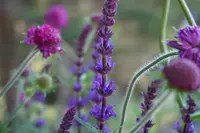
Salvia nemorosa 'Caradonna' is a compact, clump-forming perennial sage grown mainly for its deep violet flower spikes and dark purple stems. It is commonly used in borders, pollinator gardens, and mixed perennial beds.
This plant typically forms neat mounds of aromatic foliage with upright flowering stems that bloom over a long season. It attracts bees and butterflies and fits well in sunny, low-maintenance plantings.
In the wild, its species relatives occur in Europe and western Asia, where they grow in open, sunny habitats with well-drained soils. Its drought tolerance and general toughness make it relatively easy to care for Sage in typical home gardens.
It grows best in full sun with moderately moist, well-draining soil and benefits from occasional deadheading to extend flowering.

Care Difficulty
Easy Care

Light Preference
Full Sun

Water Requirements
Low Water

Temperature Preference
Cold Hardy

Hardiness Zone
4–9

Soil Texture
Sandy, Loamy, Rocky

Soil pH
Slightly acidic (6.5–7.0), Slightly alkaline (7.0–7.5)

Soil Drainage
Well-drained

Fertilization
Minimal (feed rarely)
Scan your plant to receive care tips personalized for your specific plant
Available on iOS and Android
Salvia nemorosa 'Caradonna' needs strong light to flower heavily and maintain upright growth.
Salvia nemorosa 'Caradonna' prefers evenly drained, slightly dry soil rather than constant moisture.
This perennial handles a wide temperature range but grows best in moderate conditions.
This plant thrives in typical outdoor humidity and rarely needs special humidity management.
Salvia nemorosa 'Caradonna' prefers lean, well-drained mineral-based soil that never stays waterlogged.
This species is well-suited to container growing outdoors when given a stable, free-draining setup.
Salvia nemorosa 'Caradonna' grows best in moderately fertile soil and benefits from light, controlled feeding.
Pruning keeps Salvia nemorosa 'Caradonna' compact and encourages long flowering.
This perennial is usually grown in garden beds, with transplanting more common than repotting.
Salvia nemorosa 'Caradonna' is commonly propagated by division and softwood cuttings.
This hardy perennial tolerates typical winters in much of the US with minimal intervention.

Plant Health Check
Not sure what's wrong with your plant? Check your plant's health inside the app.
This cultivar is known for its unusually dark purple, almost black, square stems that create a strong contrast with the violet-blue flowers, making the vertical flower spikes appear more vivid in the landscape.
With regular deadheading, this plant can flower from late spring well into summer, often reblooming more reliably than many other seed-propagated meadow sage types.
Its dense, upright flower spikes provide numerous small nectar-rich blossoms in close succession, which supports frequent visits from bees and other pollinators in mixed perennial plantings.

Salvia nemorosa 'Caradonna' was selected and introduced by the German breeding company Ernst Benary Samenzucht, and has since become a benchmark cultivar in perennial trials, receiving awards in Europe and North America for consistent garden performance and ornamental value.
Poor flowering usually comes from too little light, excess shade from nearby plants, or nutrient-rich soil encouraging leaves instead of flowers. Avoid heavy fertilizing, deadhead spent spikes, and divide crowded clumps every few years to restore bloom.
Keep your plants happy and healthy with plant identification, disease detection, and easy care guidance.