


Mandatory protective gear
Always wear nitrile gloves and long sleeves when handling this plant, and wash tools and hands afterward to reduce exposure to its toxic sap when caring for yellow monkshood.

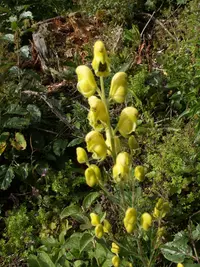
Yellow monkshood (Aconitum anthora) is a perennial herbaceous plant grown mainly for its tall spikes of soft yellow, hooded flowers and divided green foliage. It usually forms upright clumps and brings a refined, slightly wild look to temperate gardens and naturalistic borders.
In nature it occurs in mountainous and rocky regions of Europe and parts of Asia, often on well-drained, stony soils. It is not a beginner plant, since it needs cool conditions, steady moisture without waterlogging, and careful handling due to its toxicity.
Gardeners who learn how to care for yellow monkshood tend to value it as a long-lived, architectural accent in cooler climates with reliably moist but free-draining soil.

Care Difficulty
Moderate Care

Light Preference
Partial Shade

Water Requirements
Moderate Water

Temperature Preference
Cool Climate

Hardiness Zone
4–7

Soil Texture
Loamy, Sandy, Organic-rich

Soil pH
Acidic (5.5–6.5), Slightly acidic (6.5–7.0)

Soil Drainage
Moist but well-drained

Fertilization
Minimal (feed rarely)
Scan your plant to receive care tips personalized for your specific plant
Available on iOS and Android
This mountain perennial prefers cool, bright conditions rather than intense heat or harsh exposure.
This species prefers evenly moist, cool soil without long periods of drought or saturation.
This hardy perennial is adapted to cool climates and tolerates significant winter cold once established outdoors.
Humidity is usually not a critical factor for Aconitum anthora in typical outdoor garden conditions.
Aconitum anthora prefers cool, moist but sharply drained soil with a stable structure.
This species can be grown in containers if given a deep, stable pot and careful moisture control.
Aconitum anthora benefits from modest feeding in lean soils but does not need heavy fertilization.
Pruning Aconitum anthora is mainly done to maintain plant health and neat appearance rather than to control size.
Yellow monkshood is typically grown in the ground and dislikes frequent disturbance, so transplant only when necessary.
Propagation of Aconitum anthora is possible but requires care because of its toxicity and dislike of disturbance.
Aconitum anthora is a cold-hardy perennial that usually needs minimal winter care in temperate climates.

Plant Health Check
Not sure what's wrong with your plant? Check your plant's health inside the app.
This species is naturally found in dry, rocky slopes of the eastern Alps and parts of central and southeastern Europe, where it grows in subalpine grasslands and open coniferous woods rather than wet habitats typical for many other monkshoods.
Unlike the more commonly blue Aconitum species, this plant bears pale yellow to greenish-yellow hooded flowers that often appear in loose, upright clusters from mid to late summer.
Compared with several other members of the genus, this species contains lower levels of aconitine-type alkaloids, although all parts of the plant remain toxic if ingested or if sap contacts broken skin.

Historically, roots of this plant were sometimes mistaken for those of other medicinal species in European herbal practice, which led early botanists and apothecaries to stress careful morphological identification of its tuberous roots and flowering stems to avoid dangerous confusion.
All parts of this species are highly toxic to humans and animals if eaten, and sap can irritate skin. Always wear gloves when handling, keep plants away from children and pets, and never use it medicinally at home.
Keep your plants happy and healthy with plant identification, disease detection, and easy care guidance.

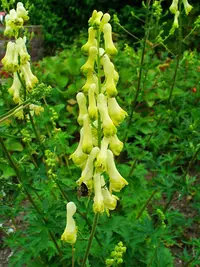
Yellow-flowered Monkshood
Aconitum lycoctonum
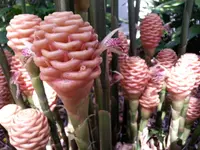
beehive ginger
Zingiber spectabile
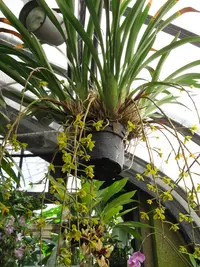
Giant boat-lip orchid
Cymbidium madidum
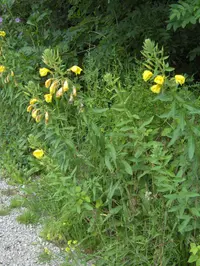
intermediate evening-primrose
Oenothera × fallax

Marsh Spurge
Euphorbia palustris
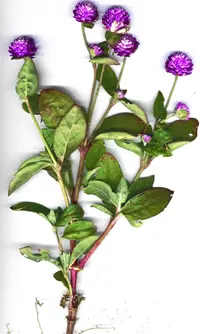
Globe amaranth
Gomphrena globosa
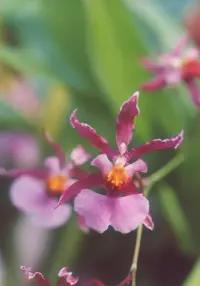
Oncidium ornithorhynchum
Oncidium ornithorhynchum
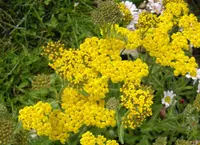
Yellow Milfoil
Achillea tomentosa