


Stolon management
Inspect plants every 1–2 weeks during active growth and gently thin or redirect stolons so that new offsets have 5–10 cm of open space, which reduces crowding and improves air flow around the crowns.

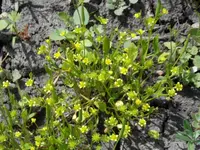
Ranunculus lateriflorus, commonly called lateral-flowered buttercup, is a small herbaceous perennial from the buttercup family. It produces delicate, branching stems with small, pale yellow flowers that often appear along the sides of the stems rather than at the tips.
This species is typically found in moist meadows, stream edges, and open woodland clearings in its native range, where soils stay consistently damp but not stagnant. It prefers cool to mild conditions, good light, and humus-rich, well-drained but moist soil.
Once established in a suitable spot, it forms modest clumps and can slowly spread, but it is not usually aggressive. Basic knowledge of how to care for Lateral-flowered Buttercup helps keep it healthy in garden or naturalistic plantings.

Care Difficulty
Moderate Care

Light Preference
Partial Shade

Water Requirements
Regular Water

Temperature Preference
Cool Climate

Hardiness Zone
5–8

Soil Texture
Loamy, Silty, Organic-rich

Soil pH
Acidic (5.5–6.5), Slightly acidic (6.5–7.0)

Soil Drainage
Moist but well-drained

Fertilization
Minimal (feed rarely)
Scan your plant to receive care tips personalized for your specific plant
Available on iOS and Android
This species prefers bright conditions but suffers in intense, drying sun.
This plant needs steady moisture around the roots without remaining waterlogged.
This cool-season perennial prefers mild temperatures and dislikes extremes of heat or frost.
This species prefers moderately moist air but usually adapts to typical household humidity.
Ranunculus lateriflorus grows best in loose, moist, and sharply drained soil.
This species is suitable for container growing when given enough root depth and careful moisture control.
This woodland perennial needs only light feeding in average garden soil, so focus on supporting steady growth rather than pushing heavy blooms in Lateral-flowered Buttercup.
Pruning Ranunculus lateriflorus is mainly about tidying and supporting flowering rather than reshaping the plant.
This species is usually grown in the ground, so transplanting clumps is more common than repotting container plants.
Ranunculus lateriflorus is most often propagated by division, with seed used when increasing numbers more broadly.
This hardy perennial usually tolerates typical temperate winters with minimal intervention once established.

Plant Health Check
Not sure what's wrong with your plant? Check your plant's health inside the app.
This species bears its small white flowers on short side branches rather than at the stem tips, giving the flowering shoots a somewhat zigzag or branched look that distinguishes it from many other buttercups.
It typically grows in damp, partially shaded habitats such as wet meadows, stream margins, and light woodlands, where cool soils and consistent moisture favor its fine, branching growth.
The leaves are deeply divided into narrow segments, creating a delicate, feathery appearance that contrasts with the simple, broader leaves of many related buttercups.
All buttercups contain irritant compounds called ranunculin derivatives. Fresh plant parts can cause mouth irritation, drooling, digestive upset, or skin redness in pets and people if chewed or handled excessively, so keep it out of reach and avoid ingestion.
Keep your plants happy and healthy with plant identification, disease detection, and easy care guidance.

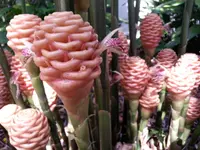
beehive ginger
Zingiber spectabile
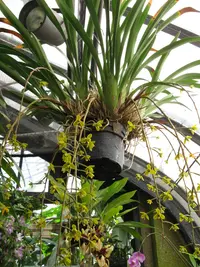
Giant boat-lip orchid
Cymbidium madidum
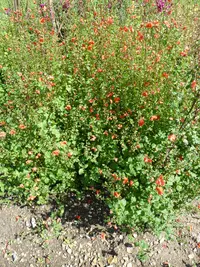
Mask Flower
Alonsoa meridionalis
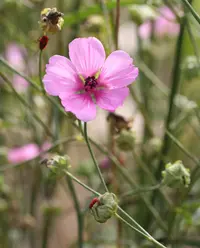
palm-leaf marshmallow
Althaea cannabina
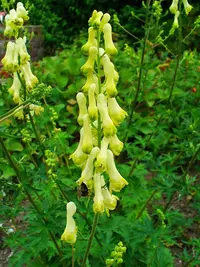
Yellow-flowered Monkshood
Aconitum lycoctonum
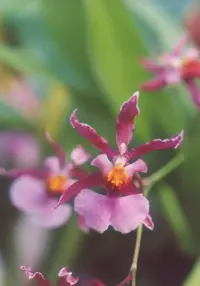
Oncidium ornithorhynchum
Oncidium ornithorhynchum
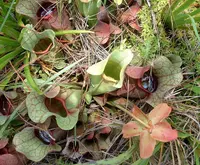
Burk's southern pitcher plant
Sarracenia rosea

Oeoniella polystachys
Oeoniella polystachys