Oeoniella polystachys Care

Oeoniella polystachys

About Oeoniella polystachys

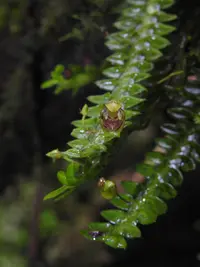
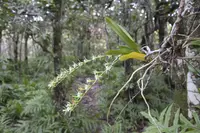
Oeoniella polystachys is a small epiphytic orchid, usually found growing on trees rather than in soil. It forms compact clumps of narrow, leathery leaves and many arching flower spikes.

The plant is native to islands of the western Indian Ocean, including Madagascar and the Seychelles, where it grows in warm, humid coastal forests. Its numerous white, night-scented flowers are the main attraction and a key reason enthusiasts seek it out.

This orchid is considered moderately challenging, as it reacts quickly to poor air movement, low humidity, or erratic watering. Those who learn how to care for Oeoniella polystachys usually provide bright filtered light, regular moisture, and a very free-draining orchid medium or mount.

Main Plant Requirements

Care Difficulty

Hard Care

Light Preference

Partial Shade

Water Requirements

Keep Soil Moist

Temperature Preference

Tropical / Frost Sensitive

Hardiness Zone

12–13

Soil Texture

Sandy, Organic-rich

Soil pH

Acidic (5.5–6.5)

Soil Drainage

Moist but well-drained

Fertilization

Light (every 4–6 weeks)

Get Personalized Care Plan

Scan your plant to receive care tips personalized for your specific plant

Available on iOS and Android

How to Care for the Oeoniella polystachys

This epiphytic orchid needs bright, filtered light that mimics dappled tropical sun.

  • Provide 6–8 hours of bright, indirect light daily, with soft morning sun and protection from harsh midday rays.
  • Tolerates light partial shade, but flowering of Oeoniella polystachys declines if grown in consistently dim positions.
  • Watch leaves for feedback: yellowed, scorched patches indicate too much direct sun, while dark, limp growth and very long, thin leaves suggest insufficient light.

This species prefers consistent moisture around the roots but dries slightly between thorough waterings.

  • Water when the root zone or mounting material feels just barely dry on the surface, not crisp or bone dry underneath.
  • Reduce watering in cooler months when growth slows, but never allow prolonged saturation that leaves roots wet and airless for more than 1–2 days.
  • Early signs of overwatering include dull, mushy roots and leaf yellowing from the base; underwatering shows as wrinkled, folded leaves and brittle roots.

This orchid thrives in warm, stable conditions with no exposure to frost.

  • Aim for daytime temperatures of 70–85°F (21–29°C) and nights of 60–70°F (16–21°C) for steady growth and flowering.
  • Avoid temperatures below 55°F (13°C); brief drops to 50°F (10°C) may be tolerated but can slow growth and increase rot risk.
  • In hot spells above 90°F (32°C), increase air movement and humidity and shade slightly to prevent heat stress and leaf scorch.

This orchid prefers warm, moderately humid air and reacts quickly to very dry conditions.

  • Aim for 50–70% humidity, with some daily air movement to prevent fungal issues on roots and leaves.
  • Dry air causes limp, wrinkled leaves, slow root growth, and buds that dry up before opening.
  • Increase humidity with a nearby humidifier, grouped plants, or a pebble tray, but keep roots from standing water.

This epiphytic orchid grows best in a very loose, airy medium rather than dense potting soil.

  • Use a chunky mix of medium orchid bark, a little sphagnum moss, and perlite to keep roots aerated and lightly moist.
  • Ensure extremely fast drainage so water runs through in seconds, mimicking how roots dry quickly on tree bark.
  • Keep pH around slightly acidic to neutral (about 5.5–7.0), which suits most orchid bark-based media.
  • Avoid standard garden soil or compact peat mixes, which hold water around roots and lead to suffocation and rot in Oeoniella polystachys.

This species is well suited to container culture, especially in shallow orchid pots or mounted baskets.

  • Choose a pot with many side slits or mesh to let air reach the roots and encourage quick surface drying after watering.
  • Use a slightly undersized pot to keep the root zone snug, which stabilizes the plant and reduces stagnant moisture pockets.
  • Opt for a heavier clay or ceramic container if the plant becomes top-heavy so the pot does not tip when flower spikes develop.

Feeding should be light, as this orchid is adapted to nutrient-poor conditions and is sensitive to excess salts.

  • During spring–early fall, apply a balanced orchid fertilizer (for example 20-20-20) at 1/4–1/2 strength every 2–4 weeks after watering.
  • Use a liquid formulation rather than slow-release pellets to avoid fertilizer burn on the roots.
  • Skip feeding in winter or apply at most once a month if Oeoniella polystachys is kept in warm, bright conditions with active growth.
  • Flush the pot or mount with plain water monthly to remove accumulated mineral salts.

Pruning needs for Oeoniella polystachys are minimal and focus on hygiene, not shaping.

  • Best time to trim is after flowering, when spent spikes and clearly dead tissue are easy to see.
  • Remove only dead or yellowed leaves, dried roots, and finished flower spikes with clean, sharp scissors or pruning snips.
  • Cut flower spikes back to the base once they are fully brown and dry to channel energy into new growth.
  • Avoid cutting healthy green roots or leaves, as this weakens the plant and may reduce future flowering.

This species prefers stability and should be repotted or remounted only when clearly necessary.

  • Check for roots circling a small pot, pushing the plant up, or decomposed medium that stays soggy as signs it needs attention.
  • Plan to repot or remount every 2–3 years, ideally in late winter to early spring just before active growth.
  • Use a free-draining orchid mix or mount, and gently tease away old, rotten medium while preserving as many healthy roots as possible.
  • Water lightly for the first 7–10 days after repotting to limit rot and allow damaged roots to heal before resuming normal care.

Propagation of this orchid is specialized and usually left to experienced growers or tissue-culture labs.

This warm-growing orchid has low cold tolerance and needs protected winter conditions in most climates.

  • Keep temperatures above 55–60°F; prolonged exposure below this range can damage leaves and roots.
  • Grow Oeoniella polystachys indoors or in a heated greenhouse in regions with frost or freezing nights.
  • Provide bright light and good air movement while slightly reducing watering to match slower winter growth.
  • Avoid cold drafts and sudden temperature drops around windows, doors, or vents during the coldest months.

Care Tips

Mounting technique

Mount the plant on cork, hardwood, or tree fern with a thin pad of long-fiber sphagnum around the roots, securing it gently with fishing line or soft ties so roots can attach firmly without being strangled.

Air movement management

Provide a small, gentle fan aimed past rather than directly at the plant to keep air moving around the roots and leaves, which reduces fungal problems and helps exposed roots dry predictably between waterings.

Night temperature drop

Maintain a regular 5–10°F night drop compared with daytime temperatures by slightly lowering room heat or moving the plant to a cooler spot at night to support flowering and overall vigor.

Seasonal watering shift

In late autumn and winter, keep the plant a bit drier by shortening misting sessions or skipping 1–2 waterings per week while still preventing the roots from staying completely dry for more than a day or two.

Flower spike support

When flower spikes begin to extend, guide them along a slim bamboo skewer or orchid stake and secure them loosely with soft clips so the inflorescences remain upright and do not snap under their own weight.

Common Pests and Diseases

Scale insects

This pest feeds on sap along the thin stems and leaf bases, weakening the orchid and causing yellowing and poor flowering.

Solution

Remove visible scales with a cotton swab dipped in isopropyl alcohol, then rinse the plant with lukewarm water and increase air movement. For heavier infestations, use a light horticultural oil or insecticidal soap, applied carefully to stems and leaf bases every 7–10 days until no new scales appear.

Mealybugs

These insects hide in leaf axils and around roots, sucking sap and leaving cottony masses that can lead to stunted growth and flower loss.

Solution

Inspect leaf joints, roots, and mount or pot crevices, then dab visible mealybugs with isopropyl alcohol and rinse thoroughly. Repeat inspections weekly and, if needed, use insecticidal soap or systemic granular treatment suitable for orchids, keeping the plant isolated from others until pests are gone.

Spider mites

This pest thrives in warm, dry indoor conditions, causing fine stippling on leaves, dull color, and sometimes fine webbing on the narrow foliage.

Solution

Increase humidity to around 50–70%, rinse foliage thoroughly under a gentle shower, and improve air circulation, which supports Oeoniella polystachys care in dry homes. For persistent mites, apply a miticide or insecticidal soap labeled for mites, repeating treatments according to label directions while keeping leaves well hydrated.

Bacterial soft rot

This disease causes rapidly spreading, soft, water-soaked lesions on leaves or pseudobase areas, often with a foul odor.

Solution

Immediately cut out all affected tissue with a sterile blade, keeping cuts well into healthy tissue, and dust wounds with powdered cinnamon or a commercial bactericide. Reduce watering, dry the plant quickly after each watering, and increase airflow and spacing to prevent water sitting on leaves or in tight leaf bases.

Leaf spot fungus

Symptoms include small, dark, often circular spots on leaves that may enlarge and coalesce under humid, stagnant air conditions.

Solution

Remove and discard heavily spotted leaves, then ensure strong but gentle airflow and avoid overhead watering late in the day. If new spots continue to appear, use a fungicide labeled for ornamental orchids and keep foliage as dry as possible between waterings while maintaining adequate humidity around the roots.

Interesting Facts

Nocturnal moth pollination

This orchid is pollinated mainly by night-flying hawk moths that are attracted by its pale, tubular flowers and evening fragrance along the coasts of the western Indian Ocean islands.

Mangrove and coastal specialist

In the wild it often grows as an epiphyte on mangrove and seaside trees in Madagascar, Réunion, and the Seychelles, tolerating salty air and strong coastal winds better than many orchids.

Many-flowered inflorescences

Each slender flower spike can carry numerous small white to greenish-white blossoms at once, forming the multi-spiked display that inspired the species name polystachys, meaning many spikes.

Botan icon

Did you know?

This species is one of the few orchids native to both Madagascar and several western Indian Ocean islands that has adapted to hot, bright, seasonally dry littoral habitats, making it an important model for understanding how epiphytic orchids cope with coastal environmental stress.

FAQs about Oeoniella polystachys

Lack of flowering usually comes from insufficient light intensity, too-warm nights, or irregular fertilizing. Provide bright conditions, a slight day–night temperature drop, and a balanced orchid fertilizer during active growth. Avoid frequent disturbance of the roots and mounting surface.

Grow Healthy Plants with Botan Care

Keep your plants happy and healthy with plant identification, disease detection, and easy care guidance.

Botan plant care app — identify plants on mobile

Explore More Plants