Mask Flower Care (Alonsoa meridionalis)

Also known as: Maskman
Mask Flower

About Mask Flower

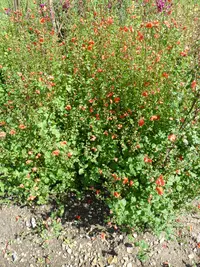
Mask flower, Alonsoa meridionalis, is a compact, fast-growing annual or short-lived perennial grown mainly for its masses of small, brightly colored blooms. It typically forms a bushy mound with many branching stems covered in soft green leaves and clusters of orange, red, or coral flowers.

This species is native to parts of South America, including Chile, where it grows in open, sunny spots with good drainage. It is considered moderately easy to grow but can be short-lived and dislikes waterlogged soil or extreme heat.

Gardeners who care for Mask Flower usually provide plenty of light, regular but not excessive moisture, and a fertile, well-drained substrate to keep it flowering well.

Main Plant Requirements

Care Difficulty

Moderate Care

Light Preference

Full Sun

Water Requirements

Regular Water

Temperature Preference

Tropical / Frost Sensitive

Hardiness Zone

9–11

Soil Texture

Sandy, Loamy, Organic-rich

Soil pH

Acidic (5.5–6.5), Slightly acidic (6.5–7.0)

Soil Drainage

Moist but well-drained

Fertilization

Light (every 4–6 weeks)

Get Personalized Care Plan

Scan your plant to receive care tips personalized for your specific plant

Available on iOS and Android

How to Care for the Mask Flower

Alonsoa meridionalis needs bright outdoor light to flower well without scorching the foliage.

  • Provide 6–8 hours of sun daily, with morning sun and light afternoon shade ideal, especially in hot climates.
  • Accepts light partial shade (3–4 hours direct sun), but flowering of Mask Flower may decrease and stems can become spindly.
  • In summer, protect from harsh afternoon sun that can bleach or crisp leaves; in shorter winter days, avoid deep shade from buildings or trees.

This plant prefers evenly moist but not saturated soil, especially during active growth and flowering.

  • Water when the top 2–3 cm of soil feels dry, aiming for a thorough soak that drains out rather than frequent light splashes.
  • Use well-drained soil to prevent root rot; persistent wetness, yellowing leaves, or a sour smell signal overwatering issues.
  • In cooler seasons reduce watering as growth slows; wilting, dry leaf edges, and very light soil indicate it needs water, particularly in hot, windy weather.

This species grows best in mild, frost-free conditions and declines quickly in prolonged cold.

  • Aim for 60–75°F (16–24°C) for strong growth and flowering; brief peaks to 80–85°F (27–29°C) are usually tolerated if soil moisture is stable.
  • Avoid temperatures below 40°F (4°C); light frost can damage foliage, and hard frost often kills the plant outright.
  • In hot summers, provide afternoon shade and consistent moisture; in cooler seasons, choose a warm, sheltered site protected from cold winds.

Alonsoa meridionalis prefers moderately dry air and usually adapts well to typical indoor humidity.

  • Aim for 40–50% humidity; it tolerates brief dips lower if watered consistently.
  • Crisping leaf edges and flower bud drop can signal air that is too dry or inconsistent watering.
  • Increase local humidity by grouping pots or placing the Mask Flower near, but not above, a tray of water and pebbles.

Alonsoa meridionalis grows best in light, free-draining, moderately fertile soil.

  • Use a loose loam-based mix with 50–60% potting soil, 20–30% compost, and 20–30% coarse sand or perlite for structure.
  • Ensure fast drainage so water clears the pot or bed within a few minutes after thorough watering.
  • Aim for slightly acidic to neutral pH, roughly 6.0–7.0, to support balanced nutrient uptake.
  • Avoid heavy clay, compacted areas, or peat-only mixes that hold water and reduce root aeration.

This species is well suited to container growing outdoors on patios, balconies, or small gardens.

  • Select a pot slightly deeper than wide to anchor the upright, somewhat brittle stems against wind movement.
  • Use a heavier material such as ceramic or clay if the container sits in exposed sites to prevent tipping.
  • Raise the pot on feet or bricks so drainage holes clear quickly and the lower root zone does not remain waterlogged.

Alonsoa meridionalis responds well to light, consistent feeding during its active growing season.

  • Use a balanced liquid fertilizer (around 10-10-10 or 20-20-20) diluted to 1/2 strength for caring for Mask Flower.
  • Feed every 2–3 weeks from spring through early fall when growth and flowering are strongest.
  • Skip or reduce feeding to once every 6–8 weeks in winter or dormancy to avoid soft, weak growth.
  • Compost or a slow-release balanced fertilizer in spring can replace some liquid feedings in fertile soils.

Alonsoa meridionalis benefits from thoughtful pruning to keep plants compact and flowering well.

  • Best time is early to mid-spring, then light touch-ups after each main flush of flowers.
  • Remove dead, damaged, or crossing stems back to healthy tissue with clean, sharp scissors or hand pruners.
  • Pinch or trim soft tips by 2–5 cm to encourage branching and a fuller, bushier shape.
  • Cut back leggy or overgrown stems by up to 1/3 to renew growth and improve flowering density.

This plant is often grown as a short-lived bedding or container annual, so transplanting timing matters more than pot size changes.

  • Transplant outdoors in spring after frost risk has passed, when seedlings have several true leaves.
  • Shift container plants only when roots circle the pot, drainage slows, or growth stalls.
  • Move up just 1 pot size, using a light, well-draining mix, and firm gently around the root ball.
  • Water thoroughly after transplanting, shade for 2–3 days if sun is intense, and avoid heavy feeding until new growth appears.

Alonsoa meridionalis is commonly renewed each year from seed or soft cuttings.

  • Sow seeds indoors in late winter to early spring on the surface of moist, fine seed mix; light aids germination.
  • Keep trays at 65–70°F with bright, indirect light and even moisture until seedlings establish.
  • Take 7–10 cm softwood cuttings in late spring or summer, removing lower leaves.
  • Insert cuttings into moist, free-draining mix, maintain high humidity and gentle bottom warmth for reliable rooting.

In most climates this plant is treated as a frost-tender annual and does not overwinter outdoors well.

  • Alonsoa meridionalis is sensitive to freezing; even light frost can kill top growth.
  • In mild zones, apply a light mulch around the base to buffer short cool spells above freezing.
  • For containers, grow as a seasonal plant or move pots indoors to a bright, cool room before first frost.
  • Discard spent plants after hard frost and restart from seed or cuttings the following season.

Care Tips

Pinch For Bushiness

Pinch out the soft shoot tips once plants reach 10–15 cm to encourage dense branching and more flower-bearing stems instead of tall, weak growth.

Staggered Succession Sowing

Sow small batches every 3–4 weeks in spring and early summer so flowering continues over a longer period instead of peaking all at once.

Light Wind Hardening

Before planting outdoors, expose young plants to increasing air movement over 7–10 days so stems toughen and are less likely to lodge or snap in summer breezes.

Minimal Support Netting

In windy or exposed beds, run a low, wide-mesh support net or soft string grid 15–20 cm above the soil so stems can grow through and stay upright without individual staking.

Spent Flower Shearing

When flowering becomes patchy and many stems are spent, lightly shear back the whole plant by about one-third, then water and feed so fresh growth and a new flush of blooms can develop, which is especially effective when growing Mask Flower in seasonal containers.

Common Pests and Diseases

Aphids

This pest often clusters on soft new growth, sucking sap and causing curling or distortion of stems and flower spikes.

Solution

Rinse shoots thoroughly with a strong but controlled stream of water, then treat remaining colonies with insecticidal soap or a light horticultural oil, repeating every 5–7 days until numbers drop. Encourage natural predators outdoors and avoid excess nitrogen fertilizer, which promotes the very soft growth aphids prefer.

Whiteflies

These insects gather on the undersides of leaves, causing yellowing, sticky honeydew, and reduced flowering, especially in warm, sheltered spots.

Solution

Shake or tap plants to check for the characteristic white cloud, then use yellow sticky traps to monitor and reduce adults while spraying leaf undersides with insecticidal soap. Improve airflow around plants and, for indoor or greenhouse specimens, repeat treatments weekly until new adults are no longer appearing.

Botrytis blight

This disease produces soft, water-soaked spots on leaves and flowers that quickly develop a grey, fuzzy mold in cool, humid conditions.

Solution

Remove and discard all affected flowers and foliage, improve spacing and airflow, and avoid wetting the leaves or watering late in the day. In persistent cases, apply a fungicide labeled for botrytis on ornamentals and rotate products if treatments are needed repeatedly, which is a core part of Alonsoa meridionalis care.

Powdery mildew

This disease appears as a white, powdery coating on leaves and stems, often leading to leaf distortion and reduced vigor in crowded or shaded plantings.

Solution

Thin dense growth and increase light and airflow, then remove badly affected leaves to reduce spore load. If needed, apply a sulfur-based or potassium bicarbonate fungicide according to label directions, starting at the first sign of the white film and repeating at intervals while conditions remain humid.

Interesting Facts

Short-lived shrubby annual

This species naturally behaves as a quick-growing annual subshrub, forming many short, branching stems that flower heavily in a single season rather than persisting for many years.

Cool-season flowering pattern

In its native range and in mild climates, it tends to flower best in cool, bright conditions and can decline rapidly once exposed to sustained heat, reflecting its adaptation to cooler montane environments of South America.

Specialized floral structure

The small, bright orange to red flowers have a slightly zygomorphic form (bilaterally symmetrical), which guides visiting insects toward the reproductive structures and improves pollination efficiency.

FAQs about Mask Flower

Lack of flowers usually comes from insufficient light, depleted nutrients, or old, spent stems. Provide strong light, feed regularly during the growing season, and trim back lanky growth to stimulate new flowering shoots and buds.

Grow Healthy Plants with Botan Care

Keep your plants happy and healthy with plant identification, disease detection, and easy care guidance.

Botan plant care app — identify plants on mobile

Explore More Plants