Deep staking support
Install sturdy, deep-set stakes or a low wire hoop around the clump in early spring so the tall, heavy flower stalks have support before they elongate and are less likely to snap in wind or heavy rain.

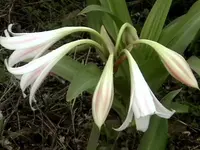
Crinum latifolium is a bulb-forming perennial from the amaryllis family, known for its large strappy leaves and tall stalks carrying clusters of fragrant, lily-like flowers. It forms substantial clumps over time, giving it a bold, architectural look in gardens or large containers.
This species is native to tropical and subtropical regions of Asia, where it grows in warm, humid conditions with distinct wet and dry seasons. It tends to be moderately demanding, mainly because it needs consistent warmth, sun, and a well-drained but moisture-retentive soil. Understanding how to care for Crinum latifolium helps prevent rot and supports regular flowering.

Care Difficulty
Moderate Care

Light Preference
Full Sun

Water Requirements
Regular Water

Temperature Preference
Tropical / Frost Sensitive

Hardiness Zone
9–11

Soil Texture
Sandy, Loamy, Organic-rich

Soil pH
Acidic (5.5–6.5), Slightly acidic (6.5–7.0)

Soil Drainage
Moist but well-drained

Fertilization
Light (every 4–6 weeks)
Scan your plant to receive care tips personalized for your specific plant
Available on iOS and Android
This bulb prefers bright outdoor conditions with some protection from intense midday sun.
This species prefers evenly moist soil but dislikes standing water around the bulb.
This plant grows best in warm, frost-free conditions with mild seasonal variation.
This species handles typical indoor humidity but benefits from moderately moist air.
Crinum latifolium prefers deep, airy, moisture-retentive but free-draining soil.
This species can be grown in containers if the pot is large and deep enough for the bulb and roots.
Nutrient inputs support strong growth and flowering in Crinum latifolium, but overfeeding should be avoided.
Pruning needs are low and focus on hygiene and maintaining a tidy clump for Crinum latifolium.
Large bulbs dislike frequent disturbance, so transplant Crinum latifolium only when necessary.
Division of mature bulbs is the most practical method for Crinum latifolium propagation in home gardens.
Cold tolerance is moderate, so winter care for Crinum latifolium depends strongly on climate.

Plant Health Check
Not sure what's wrong with your plant? Check your plant's health inside the app.
This species often forms very large bulbs that can sit partly above the soil surface in its native coastal and riverine habitats of Southeast Asia, helping it tolerate periodic waterlogging and fluctuating moisture.
The white to pale pink, lily-like flowers are strongly fragrant, with scent that becomes more pronounced in the evening and night, which helps attract nocturnal pollinators such as moths.
Mature plants produce numerous bulb offsets around the mother bulb, slowly forming dense clumps that can persist for many years in the same location under suitable conditions.

In parts of Vietnam and surrounding regions, this species has been traditionally cultivated in temple and garden settings as an ornamental symbol of purity and longevity, due to its long-lived bulbs and recurring flushes of showy, scented blooms.
Flowering declines when bulbs are too small, crowded, or recently divided, or when the plant is recovering from stress. Allow several seasons for bulbs to size up, avoid heavy disturbance, and provide a consistent warm growing period to restore blooms.
Keep your plants happy and healthy with plant identification, disease detection, and easy care guidance.