thyme-leaved alison Care (Alyssum serpyllifolium)

thyme-leaved alison

About thyme-leaved alison

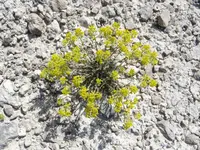
Thyme-leaved alison (Alyssum serpyllifolium) is a low, mat-forming perennial often grown in rock gardens and crevices. It forms dense cushions of tiny, thyme-like leaves. In season, it carries small yellow flowers that create a soft carpet of color close to the ground. The plant stays compact and spreads slowly rather than growing tall. Alyssum serpyllifolium is native to rocky, often limestone-rich slopes in parts of southern Europe. It is adapted to dry, lean, well-drained soils and open, sunny positions. These traits make it relatively undemanding, as long as excess moisture around the roots is avoided. Gardeners who understand how to care for thyme-leaved alison usually find it a reliable, low-maintenance groundcover for challenging spots.

Main Plant Requirements

Care Difficulty

Easy Care

Light Preference

Full Sun

Water Requirements

Low Water

Temperature Preference

Cool Climate

Hardiness Zone

4–8

Soil Texture

Sandy, Loamy, Rocky

Soil pH

Slightly acidic (6.5–7.0), Slightly alkaline (7.0–7.5)

Soil Drainage

Well-drained

Fertilization

Minimal (feed rarely)

Get Personalized Care Plan

Scan your plant to receive care tips personalized for your specific plant

Available on iOS and Android

How to Care for the thyme-leaved alison

This low alpine perennial prefers bright, cool conditions with several hours of direct sun each day.

  • Provide 4–6 hours of direct sun, ideally morning to early afternoon, with light afternoon shade in hotter regions to protect foliage.
  • Plant thyme-leaved alison where it receives full sun in spring and fall, but allow dappled or filtered light during intense summer heat to reduce stress.
  • Watch for leggy, weak growth as a sign of insufficient light, and for scorched, bleached leaves as a sign of excessive, intense sun exposure.

This drought-tolerant perennial prefers infrequent, light watering and sharply drained soil.

  • Allow the top 3–5 cm of soil to dry fully between waterings; in the ground, this often means waiting until the surface looks pale and feels crumbly.
  • In spring and fall, water when foliage just begins to lose slight turgor; in summer heat, check more often but still avoid soaking soils that do not drain quickly.
  • Yellowing lower leaves, soft stems, or a sour smell suggest overwatering, while crisp, curling leaves and very light soil indicate the need for water for Alyssum serpyllifolium.

This species thrives in cool to mild conditions and tolerates some cold once established.

  • Aim for daytime temperatures of 55–70°F (13–21°C) and slightly cooler nights, which support compact growth and abundant flowering.
  • Mature plants can usually handle dips to about 20–25°F (-6 to -4°C) with good drainage, but repeated hard freezes without snow cover can damage crowns.
  • In hot climates, growth slows above 80–85°F (27–29°C); provide afternoon shade and avoid reflected heat from walls or paving to limit stress.

This species handles low atmospheric moisture and does not have specific humidity needs indoors or outdoors.

This species prefers lean, sharply drained mineral soils that do not stay wet.

  • Use a sandy or gritty mix with small gravel to mimic rocky slopes and prevent compaction.
  • Ensure very rapid drainage; water should pass through in seconds, not linger on the surface.
  • Aim for neutral to slightly alkaline pH (around 7.0–8.0), avoiding strongly acidic conditions.
  • For Alyssum serpyllifolium in pots, combine 60–70% coarse sand or grit with the rest light compost to maintain aeration.

This plant is well suited to containers, especially shallow pots, troughs, and rock-garden planters.

  • Choose a wide, shallow container to match its spreading habit and keep the root zone evenly aerated.
  • Use a heavy or stone-like pot when placed outdoors to prevent wind from tipping over the spreading mat.
  • Raise the pot slightly on feet or blocks so drainage holes clear quickly after rain and the mix never stays waterlogged.

This alpine species needs only light feeding, as overly rich soil reduces its compact habit and flowering.

  • Use a low-dose balanced NPK fertilizer or a thin layer of fine compost in spring to support growing thyme-leaved alison.
  • Apply once at the start of the main growing season; a second light feed in midseason is enough in poor soils.
  • Dilute liquid feeds to 1/2–1/4 strength to avoid soft, weak growth and reduced drought tolerance.
  • Do not feed in late fall or winter, as the plant is semi-dormant and excess nutrients can stress roots.

Thoughtful pruning keeps Alyssum serpyllifolium dense, tidy, and floriferous.

  • Shear lightly after the main flowering flush in late spring or early summer to encourage a compact mound and repeat bloom.
  • Remove dead, damaged, or leggy stems with clean scissors or hand pruners, cutting back to healthy, leafy growth.
  • Thin crowded shoots slightly to improve air flow, which lowers the risk of fungal issues in humid or wet climates.
  • Avoid cutting into old, woody bases; leave some leafy growth on each stem so plants regrow reliably.

This species is most often grown in the ground or rock gardens, where it dislikes frequent disturbance.

  • Transplant in early spring or early fall, when weather is cool and soil moisture is steady.
  • Shift container plants only when roots circle the pot, drainage slows, or growth stalls, typically every 2–3 years.
  • Move into a slightly larger container with gritty, sharply drained mix to reduce waterlogging and root rot.
  • Handle the root ball gently, keep the original planting depth, and water once, then allow the soil to dry slightly between waterings to limit stress.

Alyssum serpyllifolium is commonly multiplied by seed or soft cuttings under simple conditions.

  • Sow fresh seed in late winter–spring on well-drained, gritty mix, barely covering, and keep at 60–70°F with even moisture.
  • Take 5–8 cm soft to semi-ripe stem cuttings in late spring–summer, removing lower leaves.
  • Insert cuttings into a sandy, free-draining medium; provide bright, indirect light and high humidity until rooted.
  • Division is possible but should be done sparingly in early spring to avoid excessive disturbance of mature clumps.

This low alpine plant is generally cold hardy in temperate climates and needs minimal winter attention.

  • In regions with wet winters, ensure very sharp drainage so crowns do not sit in saturated soil.
  • Apply a light gravel or grit mulch around the base to keep foliage off damp soil and reduce rot.
  • Container plants in colder zones can be overwintered in a cold frame or unheated, bright shelter to avoid repeated freeze–thaw cycles.

Care Tips

Rock crevice planting

Tuck plants into shallow rock crevices or between paving stones with gritty mix packed firmly around the roots to keep crowns dry and reduce winter rot.

Crown protection strategy

When mulching nearby plants, stop mulch 3–5 cm away from the crowns to prevent trapped moisture, which this species is particularly sensitive to in cool, wet weather.

Summer longevity support

After flowering, shear back the spent stems by about one-third and lightly top-dress with fine grit so the plant can re-root at the edges and maintain a dense mat.

Drainage stress test

Before planting in the ground, fill the prepared hole with water and confirm it drains within 15–20 minutes; if it does not, raise the planting area into a small mound or berm for better survival when growing thyme-leaved alison.

Winter wet management

In climates with wet winters, place plants on a slight slope or in a raised trough so excess water runs off rather than pooling around the root zone.

Common Pests and Diseases

Flea beetles

This pest chews numerous tiny round holes in the leaves, giving foliage a shot‑hole or lace-like appearance and sometimes stunting young plants.

Solution

Use floating row covers to protect young plants, keep surrounding areas free of weedy Brassicaceae that harbor beetles, and, if needed, apply targeted spinosad or pyrethrin products in the evening when pollinators are less active.

Cabbage aphids

These insects cluster on tender shoots and undersides of leaves, sucking sap and causing curling, distortion, and sticky honeydew that can support sooty mold growth.

Solution

Dislodge colonies with a strong stream of water, remove and destroy heavily infested stems, and, if populations persist, use insecticidal soap or neem oil, ensuring thorough coverage of leaf undersides.

Downy mildew

This disease causes yellow to pale patches on upper leaf surfaces and fuzzy grayish growth on the undersides, often leading to leaf drop in cool, moist conditions.

Solution

Improve air circulation, avoid overhead watering, remove and discard affected foliage, and where downy mildew is recurrent, use a copper-based fungicide preventively during prolonged cool, damp weather.

White rust

Symptoms include small pale spots on upper leaf surfaces and raised white blister-like pustules on the undersides, which can deform leaves and weaken plants.

Solution

Promptly remove and destroy infected leaves, avoid overhead irrigation, increase spacing for airflow, and rotate plantings away from previously infected beds to reduce spore carryover.

Alternaria leaf spot

This disease produces small dark spots that enlarge into circular lesions with concentric rings, which can merge and cause premature leaf drop, especially in warm, humid weather.

Solution

Collect and discard fallen or infected leaves, water at soil level in the morning, and, in persistent cases, apply a labeled fungicide for Brassicaceae while also following general Alyssum serpyllifolium care practices such as good air circulation and moderate watering.

Interesting Facts

Iberian mountain specialist

This species is naturally restricted to rocky slopes and limestone outcrops in the Iberian Peninsula, especially in Spain and Portugal, where it forms low mats in open, sunny sites with very shallow soils.

Serpentine soil tolerance

Populations are often associated with serpentine and other metal-rich substrates, indicating an adaptation to nutrient-poor, high-magnesium soils that many other plants cannot tolerate.

Miniature evergreen cushions

It forms tight, woody-based cushions with tiny, thyme-like evergreen leaves, an alpine growth form that helps it withstand intense sun, wind, and periodic drought in its native habitats.

FAQs about thyme-leaved alison

This species forms a low, spreading mat but is not usually aggressive. It spreads slowly outward from the center, filling gaps between stones or in gravel, and is easy to control with occasional edging or light trimming.

Grow Healthy Plants with Botan Care

Keep your plants happy and healthy with plant identification, disease detection, and easy care guidance.

Botan plant care app — identify plants on mobile

Explore More Plants