Deep root training
During the first growing season, water less often but deeply and avoid frequent shallow watering so roots are encouraged to anchor well below the surface, which greatly improves drought and wind tolerance.

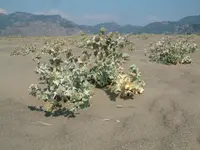
Sea-holly, Eryngium maritimum, is a hardy coastal perennial known for its metallic blue flower heads, spiny bracts, and stiff, thistle-like foliage. It forms clumps with upright, branching stems that create strong architectural accents in sunny borders and dry plantings.
In nature it grows on European and British seashores, where it tolerates wind, salt spray, and shifting sandy soils. These traits make it well suited to dry, poor, or exposed garden sites.
The plant prefers full sun, very free-draining soil, and low to moderate moisture. Once established, it resents disturbance and does best with minimal interference, which simplifies how to care for sea-holly for many gardeners.

Care Difficulty
Easy Care

Light Preference
Full Sun

Water Requirements
Low Water

Temperature Preference
Cold Hardy

Hardiness Zone
4–8

Soil Texture
Sandy, Rocky, Loamy

Soil pH
Slightly acidic (6.5–7.0), Neutral (7.0)

Soil Drainage
Well-drained

Fertilization
Minimal (feed rarely)
Scan your plant to receive care tips personalized for your specific plant
Available on iOS and Android
This coastal perennial thrives in strong sun and open exposures.
This dune species prefers dry, fast-draining conditions and is highly drought tolerant once established.
This hardy coastal perennial copes well with cool, windy sites and summer heat when soil is free draining.
Humidity is rarely a concern for Eryngium maritimum, which is adapted to dry, coastal air.
Eryngium maritimum prefers sharply drained, sandy soil that mimics coastal dunes.
This species can be grown in containers if drainage is excellent and the mix stays lean and airy.
This coastal perennial is adapted to poor, sandy soils and usually needs minimal feeding when grown outdoors.
Pruning Eryngium maritimum is simple and mainly focuses on tidiness and maintaining strong flowering.
This taprooted coastal species dislikes disturbance, so transplanting should be minimal and carefully planned.
Reproduction of Eryngium maritimum is most reliable from seed, as the deep taproot makes division risky.
This dune perennial is cold hardy in much of the US and usually needs little active winter care outdoors.

Plant Health Check
Not sure what's wrong with your plant? Check your plant's health inside the app.
This species grows on shifting coastal sand dunes, where its deep, tough root system helps bind loose sand and reduce erosion, making it an important structural component of fragile dune ecosystems.
Its bluish-silvery leaves and bracts are covered with a waxy coating that reflects intense sunlight and reduces water loss, an adaptation that allows it to tolerate high salt spray and very dry, exposed seaside conditions.
In parts of Europe, this plant became locally rare due to coastal development, dune disturbance, and historical over-collecting for ornamental and culinary use, which has led to legal protection in several countries.

In the 16th and 17th centuries it was cultivated in some European coastal gardens for its edible, candied roots, which were valued as a luxury sweetmeat and sometimes transported inland far from its natural seashore habitat.
The flowers are rich in nectar and pollen, so they reliably attract bees, hoverflies, and many butterflies. In sunny, open sites they function as a strong pollinator magnet throughout the main flowering period of summer.
Keep your plants happy and healthy with plant identification, disease detection, and easy care guidance.