India mustard Care (Brassica juncea)

Also known as: Chinese mustard, brown mustard, leaf mustard, Mustard Greens, Indian Mustarde, Sarepta Mustard
India mustard

About India mustard

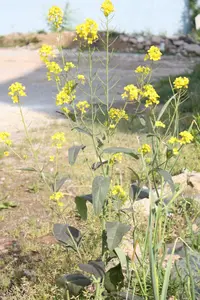
India mustard, Brassica juncea, is a fast-growing leafy vegetable and oilseed crop in the cabbage family. It is commonly grown for its pungent leaves and seeds. The plant usually forms an upright clump of lobed green leaves and sends up flower stalks with small yellow blooms when it matures. It is often grown as a cool-season annual.

Brassica juncea likely originated in Asia and is now cultivated worldwide in home gardens and farms. It is considered easy to grow where temperatures are mild and soil is fertile and well drained. Basic knowledge of how to care for India mustard helps gardeners avoid issues with bolting and poor leaf quality.

Main Plant Requirements

Care Difficulty

Moderate Care

Light Preference

Full Sun

Water Requirements

Regular Water

Temperature Preference

Cool Climate

Hardiness Zone

2–11

Soil Texture

Sandy, Loamy, Organic-rich

Soil pH

Acidic (5.5–6.5), Slightly acidic (6.5–7.0)

Soil Drainage

Moist but well-drained

Fertilization

Moderate (every 2–4 weeks)

Get Personalized Care Plan

Scan your plant to receive care tips personalized for your specific plant

Available on iOS and Android

How to Care for the India mustard

Brassica juncea prefers full sun but can tolerate some light shade, especially in warmer climates.

  • Provide 6–8 hours of direct sun daily, with morning sun and light afternoon shade ideal in hot regions to reduce leaf stress.
  • Allow partial shade (3–4 hours of direct sun) in late spring and summer; India mustard may grow taller and less dense in lower light.
  • Watch for pale, leggy growth as a sign of insufficient light, and scorched, crispy leaf edges as a sign of excessive intense afternoon sun.

Brassica juncea benefits from steady soil moisture without becoming waterlogged.

  • Irrigate when the top 2–3 cm of soil feels dry, aiming for consistently moist but not saturated soil during active growth.
  • Use well-drained, loamy soil or raised beds to prevent standing water, which encourages root rot and yellowing, limp leaves.
  • In cooler seasons or cloudy periods, space out watering as evaporation slows; wilting and dull, curled leaves in dry soil indicate underwatering.

This cool-season crop grows best in moderate temperatures and reacts quickly to heat or hard frost.

  • Aim for 55–70°F (13–21°C) for strongest growth and best leaf quality, especially during early spring and fall.
  • Plants tolerate light frost down to about 28°F (-2°C), but repeated freezes damage leaves; use row covers if late frosts are expected.
  • Growth slows and bitterness increases above 80°F (27°C); provide afternoon shade or plan harvests before sustained summer heat sets in.

Brassica juncea prefers moderate ambient humidity but usually adapts well to typical outdoor and kitchen conditions.

  • Aim for 40–60% humidity; India mustard grown indoors in very dry heated rooms may show slightly curled or crisping leaf edges.
  • Dry air stress can also appear as slower growth and increased susceptibility to pests like aphids on tender leaves.
  • Increase humidity locally by grouping pots, placing trays with water and pebbles nearby, or running a small humidifier in very dry spaces.

Brassica juncea grows best in loose, well-aerated soil that balances moisture retention with fast drainage.

  • Use a loamy structure with roughly equal parts garden soil, compost, and coarse material such as sharp sand or perlite for airflow.
  • Keep pH slightly acidic to neutral, around 6.0–7.0, to support nutrient availability and reduce micronutrient lockout.
  • Incorporate mature compost or well-rotted manure to improve organic content, moisture-holding capacity, and microbial activity.
  • Avoid heavy, compacted clay or waterlogged sites; raise beds or add coarse sand and perlite where drainage is slow.

This species is well suited to container growing for leafy harvests on patios, balconies, or small gardens.

  • Choose a container at least 20–25 cm deep so roots can spread vertically, which helps maintain steady moisture and nutrient uptake.
  • Use a potting mix that drains quickly yet holds some moisture, and elevate the pot so water can exit the drainage holes freely.
  • Opt for heavier clay or ceramic pots in windy spots to prevent tall, leafy plants from tipping as foliage mass increases.

Brassica juncea responds well to moderate feeding during its fast cool-season growth.

  • Use a balanced NPK fertilizer (such as 10-10-10) or well-rotted compost worked into the topsoil before planting India mustard.
  • Apply a diluted liquid balanced fertilizer every 2–3 weeks during active growth, using about half the label strength.
  • Avoid high-nitrogen lawn fertilizers, which can cause lush leaves with weaker tissue or off-flavors.
  • Stop or greatly reduce feeding once plants approach maturity or in hot summer and winter conditions.

Pruning Brassica juncea is mainly about harvest management and plant hygiene rather than shaping.

  • During the cool growing season, snip outer leaves with clean scissors or a sharp knife, leaving the central growing point intact.
  • Remove any yellowing, diseased, or insect-damaged leaves promptly to limit pest and disease spread.
  • Thin crowded seedlings with small scissors at 5–8 cm spacing to improve airflow and leaf size.
  • Cut entire plants at the base when they start to bolt if tender leaves are preferred, preventing further flowering.

Brassica juncea is usually grown as a short-term garden crop, so transplanting timing matters more than long-term repotting.

  • Start seeds in cell trays or small pots, then transplant outdoors when seedlings have 2–3 true leaves and frost risk is low.
  • Move plants before roots circle the container or growth slows, typically 3–4 weeks after sowing.
  • Transplant in cool, overcast weather or late afternoon to limit transplant shock and wilting.
  • Water seedlings well before and after moving, and firm soil gently around roots to remove air pockets.

Propagation of Brassica juncea is straightforward from seed and is usually timed to cool seasons.

  • Sow seeds directly outdoors in early spring or late summer, 0.5–1 cm deep in loose, moist soil.
  • For transplants, start seeds indoors 3–4 weeks before planting out, under bright light at 60–70°F.
  • Keep soil evenly moist, not waterlogged, until germination, which typically occurs in 4–10 days.
  • Thin seedlings to final spacing once they have 1–2 true leaves, choosing the strongest plants to keep.

Brassica juncea is a cool-season annual that tolerates light frost but is damaged by hard freezes.

  • In regions with mild winters, use a light mulch around plants to buffer soil temperature swings.
  • Cover beds with row cover or horticultural fleece during predicted frosts below about 28°F.
  • Grow container plants in cool seasons only, then harvest fully before sustained freezing weather.

Care Tips

Staggered Succession Sowing

Sow small rows every 7–10 days rather than one large planting so harvest stays tender and avoids a sudden flush of oversized, pungent leaves.

Timely Leaf Harvest

Begin cutting outer leaves when they reach 8–12 cm and harvest regularly, which keeps plants in active vegetative growth and delays premature bolting.

Row Covers For Quality

Use lightweight insect netting or floating row covers from emergence to protect leaves from flea beetles and aphids, reducing the need for sprays and preserving clean foliage.

Cool-Season Scheduling

Plan main crops for cool periods by sowing 4–6 weeks before expected last spring frost and again in late summer so plants mature in cooler autumn weather with milder flavor.

Rapid Post-Harvest Cooling

After harvest, rinse leaves in cool water and move them quickly to refrigeration at 34–40°F to slow wilting and maintain quality when growing India mustard for repeated kitchen use.

Common Pests and Diseases

Flea beetles

These insects chew many small round holes in leaves, creating a shot‑hole or sieve-like appearance, especially on young plants. This pest is very common on mustard and can severely stunt seedlings.

Solution

Use floating row covers to physically exclude adults from young plants, and keep nearby areas free of Brassica weeds that host the beetles. For existing infestations, use yellow sticky traps, apply insecticidal soap or spinosad in the evening, and keep plants well watered to help them outgrow moderate damage.

Downy mildew

This disease causes yellow to pale green angular spots on upper leaf surfaces with fuzzy white to gray growth on the undersides in humid conditions. Symptoms include leaf yellowing, distortion, and reduced growth in cool, moist weather.

Solution

Improve air circulation, avoid overhead watering, and water early in the day so foliage dries quickly. Remove and dispose of infected leaves, rotate crops for at least 3 years, and use copper-based fungicides preventively if the disease recurs frequently as part of Brassica juncea care instructions.

White rust

This disease produces small white raised pustules on the undersides of leaves and pale or yellow spots on the upper surfaces. In severe cases, leaves become distorted and growth is reduced.

Solution

Remove and discard infected leaves as soon as pustules appear and keep foliage as dry as possible by watering at soil level. Practice 2–3 year crop rotation with non-Brassica crops, control wild mustard relatives nearby, and use resistant or tolerant varieties when available.

Clubroot

This soilborne disease causes swollen, distorted roots and leads to wilting, stunting, and yellowing, especially on warm sunny days despite adequate watering. Symptoms include slow growth and plants that fail to recover after watering.

Solution

Do not move contaminated soil, remove and destroy affected plants including roots, and avoid planting any Brassica in that bed for at least 4–7 years. Raise soil pH to about 7.0–7.2 with agricultural lime where appropriate, improve drainage, and consider using clean containers and fresh potting mix for growing India mustard in small spaces.

Aphids

These insects cluster on tender stems and leaf undersides, sucking sap and causing curling, yellowing, and sticky honeydew that can attract sooty mold. Infestations often build quickly in mild weather and on dense plantings.

Solution

Dislodge colonies with a strong stream of water, encourage natural predators like lady beetles, and remove heavily infested leaves. For persistent problems, apply insecticidal soap or horticultural oil thoroughly to leaf undersides, repeating every 5–7 days as needed while avoiding treatment in very hot direct sun.

Interesting Facts

Strong leaf pungency

The sharp flavor of India mustard leaves and seeds comes from glucosinolates, sulfur-containing compounds that are enzymatically converted into isothiocyanates when the tissue is crushed or chewed.

Efficient bioaccumulator

Brassica juncea has been widely studied in phytoremediation research because its roots can take up and concentrate certain heavy metals such as lead and cadmium from contaminated soils.

Genetic crop diversity

This species includes many cultivated forms used for leafy greens, oilseed production, and condiments, and has been important in breeding programs aimed at improving disease resistance and stress tolerance in related Brassica crops.

Botan icon

Did you know?

Archaeobotanical evidence indicates that mustard seeds attributed to Brassica juncea were used as a spice in parts of South Asia for more than 2,000 years, making it one of the region’s long-standing cultivated condiments.

FAQs about India mustard

Yes, this species is widely edible. Young leaves are used as salad greens or cooked, older leaves as braising greens, and seeds for mustard condiments, oil, or sprouting. Avoid roadside or contaminated sites due to potential pollutants.

Grow Healthy Plants with Botan Care

Keep your plants happy and healthy with plant identification, disease detection, and easy care guidance.


Botan plant care app — identify plants on mobile

Explore More Plants