Firm Seedbed
Lightly compact the soil surface with a board or roller after sowing so seeds sit in firm contact with moisture, which improves germination uniformity and early root anchoring.


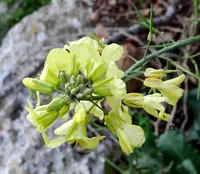
Rape, or oilseed rape, is an annual crop plant grown mainly for its oil-rich seeds and leafy forage. It belongs to the species Brassica napus in the cabbage family. Plants form upright stems with lobed blue-green leaves and dense clusters of small yellow flowers. Fields often appear as bright yellow blocks in spring when the plants bloom. Brassica napus is widely cultivated in temperate regions and is generally fast-growing and robust. It adapts well to fertile, well-drained soils and cool climates, which makes it relatively straightforward for farmers to manage and care for rape on a field scale.

Care Difficulty
Moderate Care

Light Preference
Full Sun

Water Requirements
Regular Water

Temperature Preference
Cool Climate

Hardiness Zone
6–9

Soil Texture
Sandy, Loamy, Clay

Soil pH
Acidic (5.5–6.5), Slightly acidic (6.5–7.0)

Soil Drainage
Moist but well-drained

Fertilization
Moderate (every 2–4 weeks)
Scan your plant to receive care tips personalized for your specific plant
Available on iOS and Android
Brassica napus needs consistent, strong light to build sturdy, productive plants.
Brassica napus prefers evenly moist, well-drained soil that never stays saturated for long periods.
This cool-season crop grows best in mild conditions and is sensitive to both hard frost and extreme heat.
Brassica napus prefers moderately dry to moderately humid air and rarely needs special humidity control outdoors.
Brassica napus grows best in deep, loose, moisture-retentive but well-drained soil.
This species can be grown in containers, though it performs best where roots have ample depth and volume.
This annual crop responds well to moderate, balanced nutrition during active growth.
Pruning Brassica napus is minimal and focuses on plant health and harvest management rather than shaping.
This species is usually field-grown, so care focuses on transplanting seedlings rather than long-term container culture.
Propagation of Brassica napus is almost always done from seed for uniform crops and predictable performance.
Winter care needs depend on whether the crop is grown as spring or winter rape and on local climate.

Plant Health Check
Not sure what's wrong with your plant? Check your plant's health inside the app.
Brassica napus is a natural hybrid species that arose from ancient crosses between Brassica oleracea (wild cabbage relatives) and Brassica rapa (turnip and bok choy relatives), combining genetic traits from both parental species.
This species is one of the world’s major oilseed crops, providing plant oil for cooking, industrial uses like biodiesel, and protein-rich meal for livestock feed.
Large fields of Brassica napus are known for dense displays of vivid yellow flowers, which produce abundant nectar and pollen and serve as a significant early-season food source for bees and other pollinators.

Modern canola is a group of Brassica napus cultivars that were selectively bred to contain very low levels of erucic acid and certain bitter compounds called glucosinolates, making the oil suitable for widespread human consumption and the meal more palatable and safe for animal feed.
Yes, this species is widely edible. The seeds are pressed for canola-type oils, young leaves can be cooked as leafy greens, and tender flower shoots are sometimes eaten. Only use plants not treated with harmful pesticides.
Keep your plants happy and healthy with plant identification, disease detection, and easy care guidance.