Establish deep roots
During the first 3–4 years, give 1 deep soak every 7–14 days in dry periods rather than frequent light watering to encourage a deep, stable root system that will better tolerate drought and wind later.

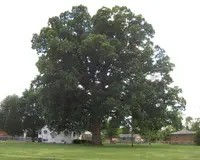
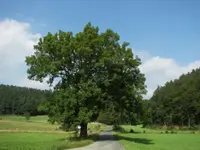
Swamp chestnut oak (Quercus michauxii) is a large, deciduous hardwood tree native to moist bottomlands and floodplains of the southeastern United States. It forms a broad, rounded crown and develops thick, deeply furrowed bark with age.
Leaves are large, coarsely toothed, and turn attractive shades of red to brown in fall, while the tree produces sizable acorns valued by wildlife and livestock. Its strong wood and tolerance of seasonal flooding make it well adapted to wet, heavy soils.
In cultivation, it prefers full sun, consistent soil moisture, and slightly acidic, well-drained yet moisture-retentive substrates. These traits mean it is relatively easy to establish in the right site, and understanding how to care for swamp chestnut oak starts with matching its natural habitat conditions.

Care Difficulty
Moderate Care

Light Preference
Full Sun

Water Requirements
Regular Water

Temperature Preference
Cold Hardy

Hardiness Zone
5–9

Soil Texture
Loamy, Clay, Organic-rich

Soil pH
Acidic (5.5–6.5), Slightly acidic (6.5–7.0)

Soil Drainage
Moist but well-drained

Fertilization
Minimal (feed rarely)
Scan your plant to receive care tips personalized for your specific plant
Available on iOS and Android
This species performs best in bright outdoor conditions that mimic open, moist bottomland forests.
Quercus michauxii prefers consistently moist, deep soils but not prolonged standing water on upland sites.
This oak is a hardy, outdoor tree adapted to warm, humid climates with cool to cold winters.
Humidity is rarely a limiting factor for swamp chestnut oak grown outdoors in its natural range.
Quercus michauxii prefers deep, moist, structured soil that stays aerated but never stagnant.
This species is only moderately suitable for containers and mainly for temporary growth of young trees.
This native oak usually thrives in average soil without heavy feeding, but light fertilization supports young or stressed trees.
Quercus michauxii needs minimal pruning, mainly to maintain structure and safety.
This oak is rarely grown long term in containers and is usually transplanted to a permanent landscape site when young.
This species is mainly propagated from seed, since vegetative methods are unreliable for home growers.
Mature Quercus michauxii is cold hardy in its native range and usually needs little winter care once established.

Plant Health Check
Not sure what's wrong with your plant? Check your plant's health inside the app.
This species produces large, sweet acorns that mature in a single season and are especially abundant in wet bottomland forests, providing a key autumn food source for deer, wild turkeys, wood ducks, and many small mammals.
Swamp chestnut oak is adapted to seasonally flooded alluvial plains and can tolerate prolonged soil saturation that would kill many other upland oaks, thanks to a root system suited to low-oxygen conditions.
The inner bark is fibrous and was historically used in the southeastern United States to make coarse baskets and similar products, taking advantage of its strong, pliable fibers.

Mature swamp chestnut oaks can live for several centuries and develop massive trunks with deeply furrowed bark, becoming keystone habitat structures that support lichens, cavity-nesting birds, invertebrates, and fungi over many human generations.
This species usually grows at a moderate rate, about 30–60 cm per year in good conditions. Growth is faster in deep, moist, slightly acidic soils and slower in dry, compacted, or nutrient-poor sites.
Keep your plants happy and healthy with plant identification, disease detection, and easy care guidance.