Early formative pruning
In the first 2–3 years, selectively remove competing leaders and narrow crotch-angle branches in late winter to develop a single strong trunk and well-spaced scaffold limbs that better tolerate wind.

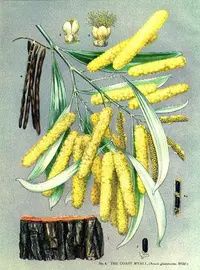
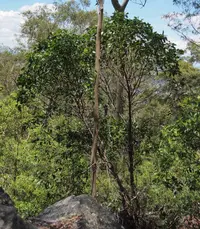
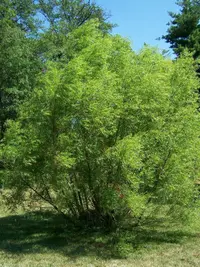
Coastal myall (Acacia binervia) is an evergreen Australian wattle, typically forming a small tree or large shrub with a rounded crown and fine, grey-green foliage. Its narrow, sickle-shaped phyllodes and pale yellow flower clusters give it a soft, feathery look in the landscape. Native to coastal and near-coastal areas of New South Wales and adjacent regions, it often grows on slopes and ridges in dry sclerophyll woodland. This species is generally robust once established, tolerating wind, light coastal exposure, and periods of dryness, which helps simplify how to care for Coastal Myall. It prefers well-drained soil and sunny, open positions for best growth and flowering.

Care Difficulty
Moderate Care

Light Preference
Full Sun

Water Requirements
Low Water

Temperature Preference
Warm Climate

Hardiness Zone
9–11

Soil Texture
Sandy, Loamy, Rocky

Soil pH
Acidic (5.5–6.5), Slightly acidic (6.5–7.0)

Soil Drainage
Well-drained

Fertilization
Minimal (feed rarely)
Scan your plant to receive care tips personalized for your specific plant
Available on iOS and Android
This Australian shrub prefers high light and copes well with open, exposed sites.
This species is drought-tolerant once established and prefers infrequent, deeper watering.
This plant favors mild to warm climates with low frost exposure.
Acacia binervia handles a wide humidity range and usually does not need special humidity management.
Acacia binervia prefers lean, fast-draining mineral soils that do not stay wet after rain or watering.
This species can be grown in containers for the short to medium term, especially in its early years.
Acacia binervia is adapted to low‑nutrient soils, so fertilizer needs are modest when grown in the ground.
Pruning Acacia binervia is mainly done to maintain structure, safety, and plant health.
This species is usually grown in the ground, so focus on careful transplanting of young plants rather than frequent repotting.
Propagation of Acacia binervia is most reliable from seed, which often needs pre‑treatment to break dormancy.
Acacia binervia prefers mild climates and has limited frost tolerance, so some winter attention is helpful in colder areas.

Plant Health Check
Not sure what's wrong with your plant? Check your plant's health inside the app.
The phyllodes of this species show two prominent, almost parallel veins that run the full length of the leaf-like structure, a trait reflected in the species name binervia, meaning two-nerved.
This shrub or small tree typically regenerates from seed after bushfire, relying on a soil seed bank that is stimulated to germinate by post-fire conditions in its native southeastern Australian habitats.
The phyllodes bear small glands that attract ants and other insects, which feed on secretions and in turn can reduce herbivory by deterring some leaf-feeding insects.

In the Sydney region, this species is a characteristic component of dry sclerophyll forest and woodland on shale-influenced or transitional sandstone soils, often helping to indicate underlying geology because of its preference for these specific soil conditions.
Growth is moderately fast under good conditions. Young plants often add 30–60 cm per year, slowing as they mature. Poor drainage, compacted soil, shade, or prolonged drought can reduce growth rate significantly compared with ideal sandy, well-drained sites.
Keep your plants happy and healthy with plant identification, disease detection, and easy care guidance.