Wildlife browsing control
In areas with deer or rabbit pressure, use a low-visibility wire mesh or temporary fencing for the first 2–3 years so young plants can build a dense framework before regular browsing begins.

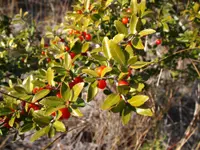
Yaupon holly, Ilex vomitoria, is an evergreen shrub or small tree native to the southeastern United States. It has small, glossy leaves and dense, twiggy branching. Female plants produce bright red berries that persist through winter and attract birds. Many cultivated forms stay compact, while others can grow into taller screening hedges.
This species adapts well to a range of soils and tolerates pruning, heat, and coastal conditions, which makes it useful in landscapes. It generally prefers sun to light shade and moderately moist, well-drained soil. Because it is tough and forgiving, it suits gardeners who want to learn how to care for yaupon holly without demanding maintenance routines.

Care Difficulty
Easy Care

Light Preference
Full Sun

Water Requirements
Moderate Water

Temperature Preference
Cold Hardy

Hardiness Zone
7–10

Soil Texture
Sandy, Loamy, Clay

Soil pH
Acidic (5.5–6.5), Slightly acidic (6.5–7.0)

Soil Drainage
Well-drained

Fertilization
Minimal (feed rarely)
Scan your plant to receive care tips personalized for your specific plant
Available on iOS and Android
This shrub prefers full sun but also adapts well to light shade in most landscapes.
This species is drought-tolerant once established but benefits from thoughtful watering, especially in the first years.
This evergreen holly is naturally adapted to warm-temperate climates with moderate seasonal variation.
This species tolerates a wide humidity range and rarely needs special humidity management outdoors.
Ilex vomitoria adapts to varied soils but performs best in well-drained, moderately fertile ground.
This shrub is suitable for container growing when the pot is chosen and managed for root space and stability.
This native shrub needs only modest feeding but responds well to light nutrition on poor soils when growing yaupon holly in gardens.
Pruning Ilex vomitoria is mainly done to maintain structure, size, and fruiting quality.
This species is usually landscape-grown, so focus on correct transplanting rather than frequent repotting.
Ilex vomitoria is commonly propagated from semi-hardwood cuttings and seeds, though seeds are slower.
This holly is generally cold hardy in much of its range and requires minimal winter care in the ground.

Plant Health Check
Not sure what's wrong with your plant? Check your plant's health inside the app.
The leaves of this North American holly naturally contain caffeine, one of the few woody plant species on the continent with this trait, and were traditionally brewed as a stimulating beverage by several Indigenous cultures.
Its dense evergreen foliage and long-lasting red berries provide year-round cover and winter food for many birds, making it an important structural and nutritional component of coastal and southeastern US ecosystems.
This species evolved in coastal and sandy habitats and shows notable tolerance to salt spray, poor sandy soils, and periodic drought, which helps explain its success in harsh seaside landscapes and pine savannas.

Archaeological and historical records show that several Indigenous groups in the southeastern US used concentrated decoctions of its leaves and stems in ritual contexts as a ceremonial, caffeine-rich drink, which strongly influenced early botanical interest and scientific description of the species.
Yellowing leaves usually come from root stress, poor drainage, or nutrient imbalance, especially iron deficiency in alkaline soil. Check for compacted or waterlogged soil, adjust watering, and consider a soil test before adding fertilizer or amendments.
Keep your plants happy and healthy with plant identification, disease detection, and easy care guidance.