California privet Care (Ligustrum ovalifolium)

Also known as: garden privet, Japanese privet
California privet

About California privet

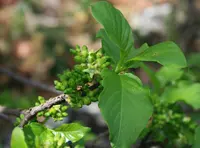
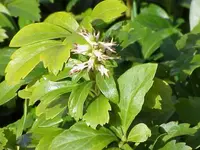
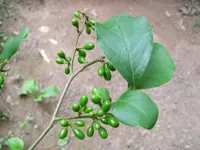
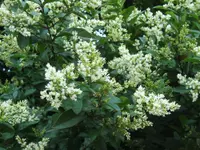
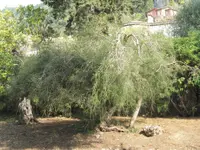
California privet (Ligustrum ovalifolium) is a fast-growing, semi-evergreen shrub widely used for dense hedges and privacy screens. It forms a tight, upright wall of small, oval, glossy green leaves. In late spring to early summer, it produces clusters of small white flowers, followed by dark berries. The species originates from East Asia but is now common in landscape plantings across temperate regions. It is valued for its toughness, tolerance of pruning, and ability to adapt to many soils, which makes it relatively easy to care for California privet. It generally prefers full sun to light shade and evenly moist, well-drained soil.

Main Plant Requirements

Care Difficulty

Easy Care

Light Preference

Full Sun

Water Requirements

Moderate Water

Temperature Preference

Cold Hardy

Hardiness Zone

5–8

Soil Texture

Sandy, Loamy, Clay

Soil pH

Slightly acidic (6.5–7.0), Slightly alkaline (7.0–7.5)

Soil Drainage

Moist but well-drained

Fertilization

Minimal (feed rarely)

Get Personalized Care Plan

Scan your plant to receive care tips personalized for your specific plant

Available on iOS and Android

How to Care for the California privet

Ligustrum ovalifolium grows best with bright, direct light for dense foliage and flowering.

  • Provide 6–8 hours of sun daily; full sun promotes tight hedges, while 4–5 hours plus bright open shade still supports healthy growth.
  • California privet tolerates partial shade, but in less than 4 hours of sun, expect looser growth and reduced flowering.
  • In hot summers, favor morning sun and light afternoon shade to limit leaf scorch, especially on new plants, and avoid strong reflected heat from walls.

Ligustrum ovalifolium prefers evenly moist but not saturated soil once established outdoors.

  • Water when the top 3–5 cm of soil feels dry; for new hedges, this may mean checking every few days in the first growing season.
  • Use well-drained soil so water does not pool around roots; yellowing, soft leaves suggest overwatering, while crisp, browning leaf edges indicate drought stress.
  • Reduce watering frequency in fall and winter, aiming only to prevent deep drying during extended dry, frost-free periods.

This shrub tolerates a wide temperature range but performs best in mild, temperate climates.

  • Optimal growing temperatures are 60–80°F (16–27°C), when shoot growth and foliage density are strongest.
  • Mature plants typically survive down to about 0°F (-18°C), though young or recently planted shrubs can suffer damage below 15°F (-9°C).
  • In summer heat above 90°F (32°C), growth may slow; mulch the root zone and ensure soil moisture is stable to reduce heat stress and leaf drop.

This species grows well in average outdoor humidity and does not usually need special humidity control.

  • Performs reliably at 30–60% humidity, typical of many temperate gardens and urban yards.
  • Tolerates dry air and wind once established, so caring for California privet rarely involves misting or humidifiers.
  • Watch for marginal leaf browning and persistent leaf drop in very hot, dry sites, and improve conditions with mulching and regular watering rather than trying to raise air humidity.

This shrub prefers moderately fertile, well-structured soil that drains freely yet holds some moisture.

  • Use a loamy soil with plenty of organic matter, such as garden soil improved with compost, to support steady growth of Ligustrum ovalifolium.
  • Ensure drainage is reliable; in heavy clay, mix in coarse sand or fine gravel plus compost to reduce waterlogging and improve aeration.
  • Aim for slightly acidic to slightly alkaline conditions, roughly pH 6.0–7.5, which this species tolerates well.
  • Avoid compacted, permanently wet, or extremely sandy soil by loosening the planting area 20–30 cm deep and incorporating organic material before planting.

This species is suitable for container growing, especially for patios, entrances, or small hedges in restricted spaces.

  • Choose a heavy, wide-based pot to stabilize the shrub’s upright, branching growth and reduce tipping in windy positions.
  • Select a container at least 30–40 cm deep so the fibrous root system can spread and anchor the plant securely.
  • Use a free-draining mix, such as 2 parts loam-based compost to 1 part sharp sand or fine grit, to prevent soggy roots after heavy rain or watering.

This shrub responds well to moderate feeding but often grows acceptably in average soil without heavy fertilizer use.

  • Use a balanced slow-release fertilizer (for example 10-10-10) or compost in early spring to support new growth when caring for California privet.
  • Feed every 6–8 weeks during the growing season if growth is weak or soil is poor, skipping doses in rich ground.
  • Apply fertilizers at half the label strength, keeping granules off stems and foliage and watering thoroughly afterward.
  • Stop feeding 6–8 weeks before expected frost and avoid fertilizing in winter to prevent soft, frost-prone growth.

Pruning is important for controlling size, density, and hedge form in Ligustrum ovalifolium.

  • Carry out main pruning in late winter or very early spring before strong new growth starts.
  • Use clean, sharp shears or loppers to remove dead, diseased, crossing, or inward-growing branches first.
  • Shorten long shoots to maintain the desired hedge line, encouraging dense branching and a compact outline.
  • For overgrown plants, reduce height and width in stages over 2–3 years rather than cutting back severely at once.

Most plants are grown in the ground, so focus on transplanting young shrubs rather than frequent repotting.

  • Plan major transplanting for late fall or early spring when the plant is dormant and temperatures are mild.
  • Look for signs such as circling roots in a container, soil drying very fast, or slowed growth as cues to move or up-pot.
  • Dig a wide root ball, keep roots shaded and moist, and replant at the same depth in well-prepared soil to limit stress.
  • Water thoroughly after planting, then maintain steady moisture and apply a light mulch to support root recovery in the first season.

Propagation of this shrub is common and straightforward for hedging and landscape use.

  • Use semi-ripe stem cuttings in late summer, 8–12 cm long, taken from healthy, non-flowering shoots.
  • Remove lower leaves, dip the base in rooting hormone, and place cuttings in a free-draining mix under high humidity and bright, indirect light.
  • Keep the rooting medium just moist at 65–75°F; most cuttings root within several weeks.
  • Alternatively, sow fresh seed outdoors in fall so natural winter chilling breaks dormancy and promotes spring germination.

This shrub is generally cold hardy in much of the US and usually needs minimal winter care once established.

  • In colder zones, apply a 5–8 cm mulch layer around the root zone in late fall, keeping it slightly away from the trunk.
  • For young or container plants, shelter from drying winter winds and extreme freezes using windbreaks or an unheated garage.
  • Move pots against a protected wall or into a cold frame so roots do not experience repeated hard freeze–thaw cycles.

Care Tips

Hedge Density Training

Trim branch tips lightly 2–3 times in the first growing season to encourage multiple side shoots, which creates a much denser hedge line over time than one heavy annual cut.

Staggered Rejuvenation Pruning

For older, bare-bottomed hedges, remove 1 in 3 of the oldest stems at ground level each late winter for 3 years instead of cutting the whole hedge back at once, so the screen function is maintained while new vigorous shoots replace tired wood.

Root Zone Mulch Band

Maintain a 30–60 cm wide mulch band along the hedge line, kept 5–8 cm deep and pulled a few cm away from the stems, to stabilize soil moisture, reduce weed competition, and protect shallow feeder roots from heat.

Windward Side Protection

In exposed sites, install a temporary windbreak net or fence on the windward side for the first 1–2 winters to reduce desiccation and branch damage while the hedge establishes a stronger root system.

Inspection-Friendly Spacing

When growing California privet as a hedge, space plants so you can just reach between them with hand pruners, which makes pest inspection, deadwood removal, and structural thinning much easier over the long term.

Common Pests and Diseases

Privet mite

This pest causes fine leaf speckling, bronzing, and a dull, dusty look, often with very fine webbing on the undersides of leaves. Symptoms include gradual leaf drop and a thin, tired-looking hedge in hot, dry conditions.

Solution

Rinse foliage thoroughly with a strong but gentle stream of water, especially leaf undersides, 2–3 times per week for several weeks, and increase humidity around the hedge if possible. If damage is heavy, apply a horticultural oil or insecticidal soap labeled for mites, repeating as directed, and avoid drought stress, which encourages outbreaks when growing California privet.

Privet rust

This disease causes yellow to orange spots or pustules on leaves, sometimes leading to early leaf drop and a patchy hedge. Symptoms include scattered discolored leaves while stems often remain green.

Solution

Remove and dispose of affected leaves as soon as they appear and keep the base of the hedge free of fallen debris to reduce spores. Improve air circulation by thinning crowded branches and, if the problem is severe and recurring, use a fungicide labeled for rust on ornamental shrubs according to label directions.

Leaf spot

This disease produces small brown, purple, or tan spots on leaves that may merge into larger blotches, making the hedge look uneven or scorched. Symptoms include premature leaf drop on inner, shaded branches where moisture lingers.

Solution

Prune to open the hedge and improve airflow, water at soil level rather than over the foliage, and promptly remove heavily spotted leaves and clippings. In persistent cases, apply a preventative ornamental shrub fungicide in spring when new growth emerges, and avoid high-nitrogen fertilization that promotes very soft, disease-prone foliage.

Whiteflies

These insects are tiny white, moth-like pests that fly up when branches are disturbed and leave sticky honeydew on leaves. This pest weakens plants, causing yellowing, leaf drop, and sooty mold growth on the sugary residue.

Solution

Vacuum adults gently from foliage in the early morning, then spray leaf undersides with insecticidal soap or horticultural oil, repeating weekly until populations decline. Encourage natural predators such as lady beetles by avoiding broad-spectrum insecticides, and reduce plant stress with regular watering during dry, hot weather.

Scale insects

These insects appear as small, rounded or oval bumps along stems and leaf veins and do not move once attached. This pest feeds on sap, causing yellowing leaves, dieback of twigs, and sometimes sticky honeydew and sooty mold.

Solution

Prune out and discard heavily infested twigs, then wipe remaining scales from stems with a cloth dipped in soapy water or alcohol for small plants. For larger hedges or heavier infestations, use a horticultural oil spray during the growing season to smother crawlers and dormant oil during winter, following label instructions carefully.

Interesting Facts

Semi-evergreen behavior

This species often keeps part of its foliage through mild winters in temperate climates, behaving as semi-evergreen rather than fully deciduous, especially in sheltered urban locations.

High pollution tolerance

It shows notable tolerance to urban air pollution, wind, and salt spray, which is why it is widely used as a roadside and coastal hedge in many cities.

Strong response to shearing

Frequent pruning stimulates dense branching and small leaf size in this shrub, creating tight, formal hedges that can be shaped into narrow screens without significant gaps.

Botan icon

Did you know?

In several regions outside its native range, especially parts of the US and New Zealand, this species has naturalized and is considered invasive, forming dense thickets that can outcompete native understory plants if not managed carefully.

FAQs about California privet

Yellowing leaves usually result from water stress, nutrient deficiency, or poor drainage. Check for soggy soil, compacted roots, or prolonged drought. Balanced fertilizer, improved drainage, and adjusting watering typically corrects the problem over several weeks.

Grow Healthy Plants with Botan Care

Keep your plants happy and healthy with plant identification, disease detection, and easy care guidance.

Botan plant care app — identify plants on mobile

Explore More Plants