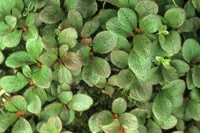
Japanese spurge Care (Pachysandra terminalis)

Also known as: Japanese spurge, carpet box
Japanese spurge

About Japanese spurge

Japanese spurge, Pachysandra terminalis, is a low-growing evergreen groundcover often used under trees and in shaded borders. It forms dense mats of glossy, dark green leaves that help suppress weeds and cover bare soil.

This species is native to Japan and parts of East Asia, where it grows in woodland environments. It spreads by short underground stems, creating a uniform carpet over time.

Pachysandra terminalis is generally easy to grow if planted in shade or part shade, in consistently moist, well-drained soil. Gardeners often choose it when they want to care for Japanese spurge with minimal ongoing effort.

Main Plant Requirements

Care Difficulty

Easy Care

Light Preference

Partial Shade

Water Requirements

Moderate Water

Temperature Preference

Cold Hardy

Hardiness Zone

4–9

Soil Texture

Loamy, Clay, Organic-rich

Soil pH

Strongly acidic (4.5–5.5), Acidic (5.5–6.5)

Soil Drainage

Moist but well-drained

Fertilization

Minimal (feed rarely)

Get Personalized Care Plan

Scan your plant to receive care tips personalized for your specific plant

Available on iOS and Android

How to Care for the Japanese spurge

This shade-loving groundcover prefers cool, filtered light rather than direct sun.

  • Provide dappled or open shade with 1–3 hours of gentle morning sun and no harsh afternoon sun, especially in warmer zones.
  • Plant Japanese spurge under deciduous trees or on the north or east side of buildings where it receives indirect light most of the day.
  • Watch for scorched, yellowed leaves as a sign of too much sun, and sparse, leggy growth as an indicator of insufficient light.

This plant prefers evenly moist, well-drained soil and dislikes extremes of dryness or saturation.

  • Water when the top 2–3 cm of soil feels dry, aiming for soil that stays slightly moist but never waterlogged.
  • Ensure soil drains freely; soggy conditions cause root rot, while very dry soil leads to dull, wilting foliage and slow spread in Pachysandra terminalis.
  • In the first growing season, monitor closely during hot, dry periods; reduce watering in cool, rainy weather and over winter when growth slows.

This evergreen groundcover is cold hardy yet benefits from moderate growing temperatures.

  • Optimal growth occurs around 55–75°F (13–24°C), with strongest establishment in cool spring and fall weather.
  • The plant tolerates winter lows near 0°F (-18°C) once established, though foliage may bronze or burn in exposed, windy sites.
  • Heat tolerance is moderate; in extended periods above 85°F (29°C), provide shade and consistent soil moisture to prevent stress and leaf scorch.

This shade groundcover tolerates a wide humidity range and usually does not need special adjustment outdoors.

  • Aim for 30–60% humidity; typical outdoor and most indoor room levels are acceptable.
  • Japanese spurge handles short dry spells but edges may brown if air stays very dry and hot.
  • Increase humidity slightly by mulching soil and avoiding hot, reflected heat rather than misting foliage.

Pachysandra terminalis prefers consistently moist, organic-rich soil that drains freely yet does not dry out quickly.

  • Use a loose, humus-rich loam with plenty of leaf mold or compost to mimic woodland soil.
  • Ensure drainage is moderate to fast; avoid waterlogged sites, heavy unamended clay, and compacted ground.
  • Target a slightly acidic to neutral pH around 5.5–7.0, avoiding strongly alkaline soils that can reduce vigor.
  • Improve aeration and drainage by working in shredded bark, composted pine fines, and coarse sand before planting.

This species can grow in containers for shaded patios or balconies if moisture and root space are managed carefully.

  • Choose a wide, shallow pot to match its spreading root system and allow clump expansion without crowding.
  • Select a heavier material like ceramic or clay to keep low, spreading foliage stable in wind and prevent tipping.
  • Use a free-draining mix and flush water thoroughly until it runs from the holes, then discard any water collected in saucers promptly.

This shade ground cover needs only light, balanced feeding to maintain steady growth.

  • Apply a balanced slow-release granular fertilizer (for example 10-10-10) once in early spring as new growth starts.
  • Use a low rate or half-strength product, following label directions to avoid salt buildup in the shallow roots of Japanese spurge.
  • Supplement with a thin layer of compost over the root zone 1–2 times during the growing season, keeping it off the stems.
  • Stop feeding by late summer so growth can harden before winter dormancy.

Thoughtful pruning keeps Pachysandra terminalis dense, tidy, and healthy.

  • Cut back winter-burned, yellowed, or diseased stems in early spring before new growth extends.
  • Thin crowded patches by removing older, leggy stems at ground level to improve air flow and reduce fungal problems.
  • Trim lightly across the top with clean shears to even the height and encourage a thicker carpet of foliage.
  • Disinfect tools when working around diseased areas to limit spread between sections of the planting.

This species is usually grown as a perennial ground cover, so transplanting in beds is more common than repotting.

  • Transplant or divide clumps in early spring or early fall when temperatures are mild and soil is moist.
  • Move plants when growth becomes sparse in the center or when stems spread beyond the desired border area.
  • Lift sections with a spade, keeping as many fibrous roots and attached rhizomes intact as possible to limit stress.
  • Replant at the same depth in well-drained soil, water thoroughly, then shade briefly if sun or wind is strong.

Pachysandra terminalis is commonly multiplied by division and stem cuttings to extend ground cover in shaded areas.

  • Divide established clumps in early spring or early fall, replanting rooted sections promptly in prepared soil.
  • Take 5–8 cm non-flowering stem cuttings in late spring, removing lower leaves and inserting into moist, well-drained medium.
  • Maintain high humidity and bright shade for cuttings, keeping the substrate just moist until roots form in several weeks.
  • Seed propagation is possible but slower; divisions and cuttings give faster, more uniform results for most gardeners.

This evergreen ground cover is cold hardy in much of the US and usually needs minimal winter attention.

  • Tolerates typical winter frost in USDA zones suited to growing Japanese spurge, though foliage may bronze in severe cold.
  • Apply a 3–5 cm mulch layer in late fall to insulate roots, keeping mulch slightly back from stems.
  • Container-grown plants in colder regions can be moved into an unheated garage or sheltered porch to reduce freeze–thaw stress.

Care Tips

Edge Containment

Install a shallow plastic or metal edging 5–8 cm deep around beds to prevent rhizomes from creeping into lawns or paths and to keep the planting area easy to manage over time.

Staggered Rejuvenation

Every 3–4 years, cut back and remove the oldest, thinnest stems in small sections rather than the whole bed at once to keep the groundcover dense while avoiding large bare patches.

Targeted Bare-Spot Filling

For gaps created by winter damage or foot traffic, lift and divide healthy clumps on the edge of dense areas and replant divisions 15–20 cm apart into bare spots for quick, even coverage when growing Japanese spurge.

Leaf-Litter Management

In autumn and early spring, gently rake or hand-pick heavy leaf build-up off the foliage and soil surface so stems do not smother and fungal diseases are less likely to develop.

Monitoring For Volutella

Inspect patches in cool, wet weather for tan leaf spots and dieback, promptly remove and discard affected stems, and disinfect pruners between cuts to limit spread of Volutella blight in established plantings.

Common Pests and Diseases

Volutella blight

This disease causes tan to brown leaf spots, stem cankers, and dieback, often starting in shaded, crowded patches. Symptoms include thinning groundcover and stems that pull up easily with rotted or discolored tissue near the soil line.

Solution

Remove and discard all blighted stems and fallen leaves, then thin dense plantings to improve air circulation and light penetration. Avoid overhead watering, keep foliage dry when possible, and apply a labeled ornamental fungicide to remaining healthy plants if the disease continues to spread.

canker and stem blight

This disease produces dark, sunken lesions on stems, leading to wilted shoots that turn brown and collapse while nearby foliage may remain green for a short time. Symptoms include irregular dead patches within otherwise healthy mats of groundcover.

Solution

Cut out and dispose of affected stems several inches below visible damage and avoid wounding stems during maintenance. Improve drainage and air movement around the planting, and if needed, use a registered fungicide targeting stem cankers as part of broader Pachysandra terminalis care.

scale insects

These insects attach to stems and leaf undersides as small, dome-shaped bumps and feed on sap, causing yellowing, stunted growth, and occasional sooty mold from honeydew. Infestations can spread along connected mats of plants.

Solution

Prune out heavily infested sections and discard them, then wash remaining stems and leaves with a strong stream of water or a soft brush. Follow up with horticultural oil or insecticidal soap applied according to label directions, making sure to coat stems and leaf undersides thoroughly.

slugs and snails

These pests chew irregular holes in leaves, especially in moist, shaded beds, and may leave silvery slime trails on or around the foliage. Damage often appears on lower, hidden leaves within dense groundcover.

Solution

Hand-pick slugs and snails in the evening, reduce hiding spots by removing debris, and use iron phosphate bait products where allowed. Improving airflow and slightly reducing surface moisture around the plants can also reduce slug activity without stressing the groundcover.

Interesting Facts

Evergreen shade specialist

This species maintains glossy green foliage year-round and is unusually tolerant of deep shade, often forming dense carpets where many other groundcovers fail to persist.

Allelopathic leaf litter

Fallen leaves and stems release compounds that suppress germination and growth of some competing plants, which helps maintain its monoculture patches in established beds.

Limited native range

Although widely planted across North America and Europe, this species is actually native only to parts of Japan and possibly Korea, where it grows in cool, moist woodland understories.

Botan icon

Did you know?

In parts of the northeastern United States, this species is considered potentially invasive because its dense, spreading mats can escape cultivation, outcompete native woodland herbs, and alter leaf-litter structure on the forest floor.

FAQs about Japanese spurge

This species spreads steadily by underground stems and can form dense mats over time. In favorable conditions it outcompetes weaker plants, so use edging, root barriers, or defined beds where local regulations restrict or discourage its use.

Grow Healthy Plants with Botan Care

Keep your plants happy and healthy with plant identification, disease detection, and easy care guidance.

Botan plant care app — identify plants on mobile

Explore More Plants