Wind-firm training
In the first 3–5 years, stake young trees on the windward side and gradually loosen ties each season so the trunk flexes slightly and develops a strong taper, then remove the stake completely once the tree stands firm on its own.


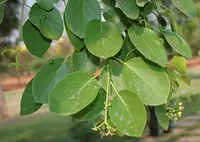
Large-leaved lime, Tilia platyphyllos, is a long-lived deciduous tree valued for its broad heart-shaped leaves and dense, rounded crown. It typically grows into a substantial shade tree in parks, large gardens, and along streets.
This species is native to much of Europe, where it occurs in mixed forests and along woodland edges, often on moist, fertile slopes. Its fragrant summer flowers attract many pollinators, which makes it useful for wildlife-friendly planting.
In cultivation it is generally robust and forgiving, provided it has enough space, moderately moist soil, and light from full sun to light shade. For most home gardeners, learning how to care for Large-leaved Lime mainly involves managing its size and providing suitable planting conditions.

Care Difficulty
Moderate Care

Light Preference
Full Sun

Water Requirements
Moderate Water

Temperature Preference
Cold Hardy

Hardiness Zone
3–7

Soil Texture
Loamy, Clay, Organic-rich

Soil pH
Acidic (5.5–6.5), Slightly acidic (6.5–7.0)

Soil Drainage
Moist but well-drained

Fertilization
Minimal (feed rarely)
Scan your plant to receive care tips personalized for your specific plant
Available on iOS and Android
This deciduous tree thrives in bright outdoor conditions with full sun to light shade.
This species prefers consistently moist, well-drained soil, especially while establishing.
This hardy temperate tree tolerates a wide range of outdoor temperatures.
Humidity is rarely a limiting factor for Large-leaved Lime grown outdoors.
Tilia platyphyllos prefers deep, moist, fertile mineral soils with steady structure.
This species is generally unsuited to long-term container growing, especially beyond juvenile stages.
Mature Tilia platyphyllos in the ground usually need little feeding if soil is reasonably fertile.
Pruning Tilia platyphyllos focuses on structural safety and clearance rather than heavy shaping.
Large-leaved linden is usually planted in the ground; transplanting young trees correctly is important for long-term health.
Propagation of Tilia platyphyllos is possible but relatively slow and mainly done by nurseries.
Established Tilia platyphyllos trees are cold hardy in most temperate climates and usually need minimal winter care.

Plant Health Check
Not sure what's wrong with your plant? Check your plant's health inside the app.
Large-leaved lime flowers in early summer, often earlier than many other European lime species, providing an important nectar and pollen source for bees and other pollinators when few other large trees are in bloom.
In its native European range, this species can regenerate under partial shade and form mixed deciduous forests, where its broad, soft leaves create a relatively cool, humid understory microclimate.
The inner bark of large-leaved lime is rich in long fibers that were historically used in Europe to produce cords, mats, and coarse textiles after soaking and separating the fibrous layers, a process known as retting.

Individual large-leaved lime trees can live for several centuries, and some historically managed pollarded trees in Europe are believed to be over 500 years old, making them long-term structural elements in traditional village landscapes and ancient wood-pastures.
This species is moderately fast-growing once established, typically adding 30–60 cm in height per year in good conditions. Growth is quicker in deep, moist, fertile soil and slows on compacted, dry, or nutrient-poor sites.
Keep your plants happy and healthy with plant identification, disease detection, and easy care guidance.