Early structural training
In the first 2–3 years, select 3–4 well-spaced primary branches and lightly tip-prune competing shoots to build a strong, open framework that can support future fruit loads without snapping.

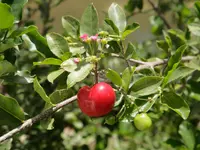
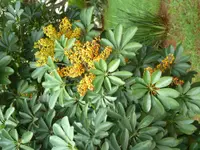
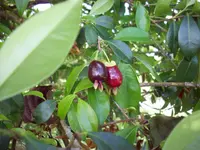
Pouteria juruana is a little-known tropical tree species from the Amazon region, belonging to the sapodilla family. It typically grows with a straight trunk, dense branching, and a rounded crown of firm, glossy green leaves. The plant is mainly found in lowland rainforest habitats, where it develops in warm, humid conditions and well-drained, organic-rich soils.
Due to its rainforest origin and limited cultivation history, it can be challenging to grow outside tropical climates. Understanding its preference for stable warmth, consistent moisture, and sheltered bright light is important for anyone who wants to care for Pouteria juruana.

Care Difficulty
Moderate Care

Light Preference
Partial Sun

Water Requirements
Moderate Water

Temperature Preference
Tropical / Frost Sensitive

Hardiness Zone
Unknown

Soil Texture
Loamy, Sandy, Organic-rich

Soil pH
Acidic (5.5–6.5)

Soil Drainage
Well-drained

Fertilization
Minimal (feed rarely)
Scan your plant to receive care tips personalized for your specific plant
Available on iOS and Android
This tropical fruit tree needs consistent bright light in warm, humid climates for healthy growth.
This species prefers evenly moist but never waterlogged soil, especially during active growth.
This lowland tropical tree is adapted to warm, frost-free conditions year-round.
This species prefers moderately humid air and reacts to very dry indoor conditions.
Pouteria juruana grows best in deep, well-aerated, moisture-retentive but freely draining soil.
This species can be grown in containers when young or kept permanently compact in large tubs.
This species grows in relatively lean soils, so fertilization for Pouteria juruana should be modest and targeted.
Pruning Pouteria juruana is mainly done to maintain structure and remove problem wood, rather than for heavy size control.
In cultivation, this tree is usually transplanted from nursery containers to the ground once established roots form.
Propagation of Pouteria juruana is usually done by seeds, with vegetative methods used less often.
This tropical tree is frost-sensitive and needs protection in climates with cool winters.

Plant Health Check
Not sure what's wrong with your plant? Check your plant's health inside the app.
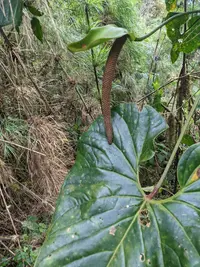
This species is a large canopy tree native to upland and flooded forests of the central and western Amazon, where it can reach the upper forest layer and contribute significantly to the closed canopy structure.
Like many members of Sapotaceae, it produces a white, milky latex in its bark and tissues, which helps seal wounds and protect against herbivores and pathogens.
Field records show it is associated mainly with well-preserved, humid lowland rainforest in Brazil and neighboring Amazonian regions, indicating a preference for relatively undisturbed forest ecosystems.
This tree grows at a moderate rate, adding noticeable height each year in consistently warm, frost-free climates. Growth slows in cooler or dry conditions, so stable warmth, moisture, and fertile soil are key for good development.
Keep your plants happy and healthy with plant identification, disease detection, and easy care guidance.