Ecklon spurflower Care (Plectranthus ecklonii)

Ecklon spurflower

About Ecklon spurflower

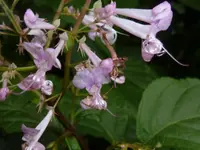
Ecklon spurflower (Plectranthus ecklonii) is a soft-woody, shrubby perennial grown for its upright habit and showy flower spikes. It typically forms a loose, bushy clump with aromatic, slightly textured foliage and tall stems carrying purple, blue, or white tubular flowers.

The species is native to South Africa, where it grows in forest margins and shaded slopes. It is generally considered easy to grow, provided it has protection from strong sun, regular moisture, and a reasonably well-drained soil.

Gardeners who learn how to care for Ecklon spurflower usually find it fast-growing and forgiving, though it can be sensitive to cold and prolonged drought.

Main Plant Requirements

Care Difficulty

Moderate Care

Light Preference

Partial Shade

Water Requirements

Moderate Water

Temperature Preference

Tropical / Frost Sensitive

Hardiness Zone

10–11

Soil Texture

Loamy, Sandy, Organic-rich

Soil pH

Acidic (5.5–6.5), Slightly acidic (6.5–7.0)

Soil Drainage

Moist but well-drained

Fertilization

Light (every 4–6 weeks)

Get Personalized Care Plan

Scan your plant to receive care tips personalized for your specific plant

Available on iOS and Android

How to Care for the Ecklon spurflower

This shrub prefers bright, indirect light with some gentle direct sun each day.

  • Provide 3–5 hours of morning sun or late-afternoon sun, with dappled or filtered light for the rest of the day to protect leaves from scorch.
  • Site Ecklon spurflower in partial shade outdoors, such as on the east or southeast side of a building or under high, open tree canopies.
  • Watch growth: long, weak stems and few flowers indicate too little light, while bleached, crispy leaf edges signal excessive sun exposure.

Watering should keep the soil lightly moist yet never saturated for healthy growth.

  • Before watering, check that the top 3–5 cm of soil feel dry; then water thoroughly so moisture reaches the root zone and excess drains away.
  • In active growth and flowering seasons, expect more frequent watering, but in cooler months allow the soil to dry a bit deeper to reduce root disease risk.
  • Monitor Plectranthus ecklonii for soft, yellowing leaves and a sour smell as signs of overwatering, and for drooping, thin leaves and dry stems as signs of underwatering.

This species grows best in mild, frost-free conditions throughout the year.

  • Aim for 60–75°F (16–24°C) for strong growth and flowering, with slightly cooler nights helping to keep the plant compact.
  • Protect from cold: growth slows below about 50°F (10°C) and tissue damage occurs near 32°F (0°C), so frost exposure should be avoided.
  • In hot weather above 85°F (29°C), provide extra shade and soil moisture to prevent leaf scorch and stress, especially during dry, windy periods.

This species handles typical indoor humidity but benefits from moderate moisture in the air.

  • Aim for 40–60% humidity to keep foliage lush and reduce leaf-edge browning.
  • Tolerates brief dry indoor air, but prolonged levels under 30% can cause curled, dull leaves.
  • Increase humidity with a nearby pebble tray or grouped plants rather than misting, which adds only short-lived moisture.

Plectranthus ecklonii prefers light, airy, moisture-retentive but free-draining soil.

  • Use a loose mix such as 2 parts peat- or coir-based potting mix, 1 part compost, and 1 part perlite or fine bark for structure and aeration.
  • Ensure water drains within a few seconds from the pot base; prolonged pooling indicates compaction that risks root rot.
  • Target a slightly acidic to neutral pH around 6.0–7.0, avoiding strongly alkaline soils that can reduce nutrient availability and cause pale foliage.
  • Avoid heavy clay or pure garden soil in containers, as dense texture limits oxygen around roots and encourages waterlogging.

This species grows well in containers when the pot supports its fast, bushy growth.

  • Choose a wide, stable pot to support the tall, somewhat top-heavy canopy and prevent tipping in wind or on balconies.
  • Select a breathable material such as terracotta if conditions are humid, to help excess moisture evaporate from the root zone.
  • Keep a saucer only for brief water collection and empty it within 10–15 minutes to avoid the roots sitting in standing water.

Plectranthus ecklonii responds well to modest, consistent feeding during its active growing season.

  • Use a balanced liquid fertilizer (around 10-10-10 or 20-20-20) diluted to 1/2 strength every 4–6 weeks in spring and summer.
  • Alternatively, mix a small amount of slow-release granular fertilizer into the topsoil at the start of the growing season.
  • In rich garden soil, supplement with a light layer of compost once per year instead of frequent liquid feeds.
  • Stop feeding in fall and winter, when growth slows, to avoid soft, weak growth.

Thoughtful pruning keeps Plectranthus ecklonii compact, bushy, and flowering well.

  • Carry out main pruning in late winter or early spring before strong new growth starts.
  • Remove dead, damaged, or crossing stems first, then thin congested shoots to improve light and air flow.
  • Shorten long, leggy stems by up to 1/3 to encourage branching and denser foliage.
  • Use clean, sharp hand pruners or snips, making cuts just above a node or branching point.

This shrub performs best when planted in the ground, with container-grown plants needing only occasional repotting.

  • Check containers for roots circling the pot, crowded drainage holes, or slowed growth as signs it needs fresh space.
  • Plan repotting or outdoor transplanting for spring, after frost risk has passed, to allow quick root re-establishment.
  • Move up only 1 pot size, using a well-drained mix, and keep the root ball at the same soil level as before.
  • Water thoroughly after moving, then keep soil lightly moist and shade the plant from harsh sun for 3–5 days to limit stress.

Plectranthus ecklonii is commonly multiplied from softwood cuttings taken during warm months.

  • Take 8–12 cm non-flowering stem cuttings in late spring or summer, trimming just below a node.
  • Remove lower leaves, leaving the top 2–3 pairs, and optionally dip the base in rooting hormone for faster rooting.
  • Insert cuttings into a moist, free-draining mix, then keep in bright, indirect light at 68–75°F.
  • Maintain evenly moist conditions and high humidity, and pot rooted cuttings individually once new growth appears.

This plant is frost tender and needs specific winter care in regions with cold winters.

  • In USDA zones colder than 9, grow Plectranthus ecklonii in containers so plants can be overwintered indoors.
  • Move pots indoors before temperatures drop near 32°F, placing them in bright, indirect light.
  • In mild climates, apply a 5–8 cm mulch layer around the base to insulate roots from brief chills.
  • Reduce watering in winter, keeping the soil just barely moist to prevent root rot in low light.

Care Tips

Pinch for Bushiness

Regularly pinch 1–2 cm from soft shoot tips in spring and early summer to encourage dense, multi-stemmed growth and more flower spikes instead of tall, bare stems.

Seasonal Hard Cutback

After the main flowering flush, cut stems back by 1/3–1/2 to just above healthy nodes to renew growth, keep the plant compact, and prevent it from becoming woody and sparse.

Easy Stem Propagation

Take 8–10 cm semi-softwood cuttings from non-flowering shoots, strip lower leaves, and root them in a coarse, slightly moist mix to maintain backup plants and quickly replace leggy specimens.

Wind-Smart Positioning

In outdoor containers, place the plant where it is sheltered from strong, drying winds to reduce stem breakage and moisture stress, especially when flower spikes are tall and top-heavy.

Mulch to Protect Roots

Apply a 3–5 cm layer of fine bark or composted mulch around the root zone (not touching the stems) to buffer soil temperature, conserve moisture, and support root health when growing Ecklon spurflower in the ground.

Common Pests and Diseases

Whiteflies

These insects often build up on the undersides of leaves, especially in warm, sheltered spots, and cause leaf yellowing and sticky honeydew. This pest is frequently reported on shrubby Plectranthus species grown outdoors or in bright porches.

Solution

Shake or tap stems to check for small white insects flying up, then reduce numbers by hosing down foliage or using a handheld shower to wash undersides of leaves. Follow with repeated applications of insecticidal soap or a ready-to-use horticultural oil every 5–7 days, and remove heavily infested leaves to keep the population low when growing Ecklon spurflower in protected areas.

Mealybugs

These insects appear as white, cottony clusters in leaf axils and on young stems, sucking sap and weakening plants over time. Symptoms include distorted new growth, sticky honeydew, and sooty mold on leaves.

Solution

Isolate affected plants, then dab visible mealybugs with cotton swabs dipped in isopropyl alcohol and wipe them away. For wider infestations, thoroughly spray all plant surfaces with insecticidal soap or a light horticultural oil, repeating weekly until no new clusters appear and improving light and airflow to discourage re-infestation.

Spider mites

These pests thrive in warm, dry conditions and can cause fine stippling, dull foliage, and delicate webbing between leaves and stems. Symptoms include bronzing and premature leaf drop on stressed plants.

Solution

Rinse foliage thoroughly, focusing on leaf undersides, to physically remove mites and webs, repeating every few days during outbreaks. Increase humidity around the plant, avoid hot dry air, and use insecticidal soap or a miticide labeled for ornamental plants if washing alone does not control the problem.

Botrytis blight

This disease causes soft, water-soaked spots on leaves, flowers, and young shoots that later develop gray, fuzzy mold, especially in cool, damp conditions. Symptoms include rapid collapse of tender growth and spotting on older foliage in dense canopies.

Solution

Promptly remove and discard all affected leaves, flowers, and stems, and avoid overhead watering so foliage dries quickly. Improve spacing and airflow, keep night temperatures from staying too cool and damp, and if needed apply a fungicide labeled for Botrytis, focusing on protecting healthy new growth.

Powdery mildew

This disease produces a white, powdery coating on leaves and young stems when air is humid but leaf surfaces stay relatively dry. Symptoms include yellowing, leaf distortion, and premature leaf drop if the infection is heavy.

Solution

Remove the worst-affected leaves, then improve light and airflow by thinning dense growth and avoiding overcrowding. Water at the base so leaves stay as dry as possible, and use a sulfur-based or other appropriate ornamental fungicide at the first sign of white patches to slow the spread.

Interesting Facts

South African forest origins

This species is native to the Eastern and Western Cape of South Africa, where it naturally grows along forest margins and in shaded ravines, often forming dense shrubby stands under taller trees.

Late-season pollinator resource

In its native range, it produces tall spikes of purple to violet flowers in late summer to autumn, providing nectar for bees and other insects at a time when many other shrubs have finished flowering.

Aromatic yet not culinary

The foliage is softly textured and aromatic when crushed, but unlike some other Plectranthus relatives used as herbs, this species is grown almost exclusively as an ornamental shrub rather than for flavoring food.

Botan icon

Did you know?

In mild, frost-free coastal climates, this shrub can become semi-woody and reach 1.5–2 m tall, forming large, showy drifts of purple bloom that are prominent enough to be used as seasonal landscape features in public gardens in South Africa and similar regions.

FAQs about Ecklon spurflower

Poor flowering usually comes from low light, heavy pruning at the wrong time, or nutrient imbalance. Avoid cutting stems hard in late summer, keep the plant slightly pot-bound, and use a balanced, not high-nitrogen, fertilizer.

Grow Healthy Plants with Botan Care

Keep your plants happy and healthy with plant identification, disease detection, and easy care guidance.

Botan plant care app — identify plants on mobile

Explore More Plants