Goeppertia warszewiczii Care

Goeppertia warszewiczii

About Goeppertia warszewiczii

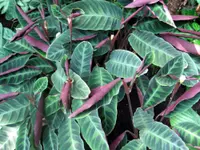
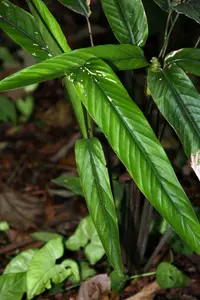
Goeppertia warszewiczii, often called a prayer plant relative, is a tropical evergreen grown mainly for its striking foliage. It forms a low, bushy clump of broad, velvety leaves with deep green tops, pale feathered patterns, and rich purple undersides. Leaves often lift and lower between day and night.

This species is native to humid forest understories of Central and South America, where it grows in warm, shaded, consistently moist conditions. Indoors it prefers soft, filtered light, stable warmth, and evenly moist but airy soil. It can be moderately demanding, as dry air, cold drafts, or irregular watering quickly affect its leaves, so learning how to care for Goeppertia warszewiczii is important for long-term success.

Main Plant Requirements

Care Difficulty

Moderate Care

Light Preference

Bright Indirect Light

Water Requirements

Keep Soil Moist

Temperature Preference

Tropical / Frost Sensitive

Hardiness Zone

11–12

Soil Texture

Loamy, Peaty, Organic-rich

Soil pH

Acidic (5.5–6.5)

Soil Drainage

Moist but well-drained

Fertilization

Light (every 4–6 weeks)

Get Personalized Care Plan

Scan your plant to receive care tips personalized for your specific plant

Available on iOS and Android

How to Care for the Goeppertia warszewiczii

This species prefers bright, filtered light that mimics a shaded forest floor.

  • Provide 6–8 hours of bright, indirect light each day, such as near an east or north window or under sheer curtains facing south or west.
  • Avoid direct midday and strong afternoon sun; it can scorch leaves, fade Goeppertia warszewiczii patterns, and cause crispy edges.
  • In winter, move the plant closer to bright windows or use supplemental grow lights to offset shorter days, but still screen any harsh rays.

Watering should keep the root zone evenly moist but never waterlogged.

  • Water when the top 2–3 cm of soil feels dry, allowing moisture to reach the root zone without leaving the pot standing in runoff.
  • Use a loose, well-draining mix; slow-draining soil or a pot without drainage holes increases risk of root rot, yellow leaves, and sour smell.
  • In cooler months reduce frequency as growth slows; watch for curling, dry leaves as a sign of underwatering and limp, mushy stems as overwatering.

Stable, warm conditions support healthy growth and leaf color.

  • Aim for 65–80°F (18–27°C) for active growth; short dips to 60°F (16°C) are usually tolerated but not ideal long term.
  • Protect from cold drafts, open windows in winter, and air-conditioning blasts; tissue damage can occur below 55°F (13°C).
  • High heat above 85°F (29°C) is tolerated if humidity is high and soil moisture is consistent, but avoid hot, dry air from heaters or full-sun patios.

This species needs consistently high humidity to maintain healthy foliage.

  • Aim for 60–75% humidity; levels below 50% often lead to leaf-edge browning and curling.
  • In drier homes, group plants, place the pot on a pebble tray with water, or use a small humidifier nearby.
  • Watch for crisp tips, dull leaves, and slowed growth as signs that Goeppertia warszewiczii is under humidity stress.

This plant prefers a loose, airy, organic-rich substrate that drains quickly yet holds even moisture.

  • Use a mix of roughly 40% peat or coco coir, 40% fine bark, and 20% perlite to balance moisture retention and aeration.
  • Choose a slightly acidic pH around 5.5–6.5, which supports nutrient availability for sensitive calathea-type roots.
  • Ensure water moves through the pot within seconds, not minutes; heavy, compacted, or clay-based substrates promote root rot.
  • Avoid mixes with large sand content or added limestone and break up any dense clumps to improve oxygen flow to roots.

This species is well suited to container growing when moisture and stability are managed carefully.

  • Select a pot that is wider than it is deep to accommodate its shallow, spreading root system without encouraging waterlogged lower layers.
  • Choose plastic or glazed ceramic over porous terracotta if the environment is dry, to slow moisture loss from the substrate.
  • Use a stable, heavier container or a cachepot to prevent tipping as foliage becomes denser and the plant leans toward light.

This tropical understory plant benefits from light, consistent feeding during active growth for balanced Goeppertia warszewiczii plant care.

  • Use a balanced liquid NPK fertilizer at 1/4–1/2 strength every 4–6 weeks from spring through early fall.
  • Alternatively, apply a gentle slow-release fertilizer at the start of the growing season, following label rates.
  • Avoid heavy or frequent feeding; excess salts can scorch roots and leaf edges.
  • Stop fertilizing in late fall and winter when growth slows, resuming only once new leaves appear.

Pruning Goeppertia warszewiczii focuses on hygiene and maintaining a neat, compact clump.

  • Best time is during active growth in spring or summer, when recovery is fastest.
  • Remove yellow, brown, or torn leaves at the base using clean, sharp scissors or pruning shears.
  • Thin out badly crowded or distorted stems to improve air circulation and overall symmetry.
  • Wipe tools with alcohol before and after use to reduce the risk of spreading disease.

This species prefers a stable environment, so repot Goeppertia warszewiczii only when clear stress signs appear.

  • Check for roots circling the pot, pushing through drainage holes, or noticeably slowed growth as cues to move up 1 pot size.
  • Plan repotting for spring, about every 2–3 years, when new growth is starting and conditions are mild.
  • Use a well-draining, airy mix (such as peat or coco coir with perlite) and a pot with drainage holes.
  • Handle roots gently, keep the root ball mostly intact, water thoroughly, then place in warm, shaded conditions for several days to limit transplant shock.

New Goeppertia warszewiczii plants are most reliably produced by careful division, not by stem cuttings.

  • Divide mature clumps in warm spring, when the plant is actively growing and can recover well.
  • Unpot the plant, gently tease the root ball apart, and separate sections with at least 2–3 healthy stems and roots.
  • Plant divisions into small pots with fresh, moist, well-draining mix and firm lightly around roots.
  • Maintain high humidity, warm temperatures, and shaded light until new growth confirms successful establishment.

This tropical species is frost-sensitive and needs indoor conditions for safe winter survival in most climates.

  • Move container plants indoors before temperatures drop below 55°F, choosing a bright, draft-free spot.
  • Maintain 65–75°F with high humidity; avoid cold windowsills and heater blasts.
  • Keep soil slightly moist but reduce watering compared with summer to prevent root rot.
  • In mild regions, add a light mulch layer around outdoor plantings and cover during rare cold snaps.

Care Tips

Rotate For Symmetry

Turn the pot 90° every 2–3 weeks so the foliage receives even light from all sides and the plant maintains a balanced, upright form instead of leaning toward one direction.

Use Bottom Watering

Once a month, place the pot in a shallow tray of water for 15–20 minutes so the root ball hydrates evenly and salts are less likely to accumulate near the surface, then let excess water drain fully.

Flush Substrate Periodically

Every 2–3 months, run lukewarm water through the potting mix for several minutes to leach out built‑up fertilizer salts that can cause leaf edge burn in this salt‑sensitive species.

Quarantine New Plants

Keep newly purchased or gifted plants in a separate room for 2–3 weeks and inspect leaves and stems every few days so potential spider mites, thrips, or mealybugs do not spread to an established collection when caring for Goeppertia warszewiczii.

Increase Air Movement

Position a small fan on a low, indirect setting nearby (not blowing directly on the plant) to keep air gently moving, which reduces fungal issues on the foliage while still maintaining high humidity.

Common Pests and Diseases

Spider mites

This pest thrives in warm, dry indoor air and causes tiny yellow speckling, dulling of the leaf surface, and fine webbing on the undersides of leaves. Symptoms include bronzing and premature curling or crisping of the delicate foliage.

Solution

Isolate the plant, then shower the foliage with lukewarm water to remove mites and webbing, focusing on leaf undersides. Increase humidity, avoid placing the plant near heat sources, and use repeated applications of insecticidal soap or a light horticultural oil every 5–7 days until new growth appears clean.

Fungus gnats

These insects are small, dark flies that hover around the pot and lay eggs in constantly moist, peat-rich soil mixes typical for this species. Larvae feed on organic matter and fine roots, leading to slow, weak growth and yellowing lower leaves.

Solution

Allow the top 2–3 cm of the potting mix to dry slightly between waterings, then water more deeply but less often. Use yellow sticky traps for adults and apply a biological control such as Bacillus thuringiensis israelensis (BTI) or beneficial nematodes to reduce larvae in the soil.

Leaf spot (fungal or bacterial)

This disease produces small water-soaked or brown spots that often start along leaf edges or between veins, which can merge into larger patches on the thin, patterned leaves. Symptoms include yellow halos around spots and premature leaf drop in high humidity with poor air movement.

Solution

Remove and discard affected leaves, avoid overhead watering, and water at the soil level so foliage stays dry. Improve air circulation around the plant and, if spotting continues to spread, apply a labeled indoor foliar fungicide according to directions while keeping the plant out of direct sun until leaves dry.

Mealybugs

These insects appear as small white cottony clusters in leaf axils, along midribs, and at the base of stems, where they suck sap and excrete sticky honeydew. Symptoms include distorted new growth, slowed development, and a dull, sticky film on leaves that can attract sooty mold.

Solution

Physically remove visible clusters with a cotton swab dipped in 70% isopropyl alcohol, then gently wipe leaf undersides and petioles. Repeat inspections weekly and, if needed, use insecticidal soap or a light horticultural oil, ensuring good coverage of all hiding spots while monitoring new growth closely as part of Goeppertia warszewiczii care instructions.

Interesting Facts

Velvet camouflage leaves

The upper leaf surface shows dark green, velvety tissue with a pale, feather-like central pattern that helps break up the leaf outline on the dim rainforest floor, likely offering some visual camouflage from herbivores.

Night-time leaf movement

Like many marantaceae, this species raises its leaves more upright at night through a joint-like structure called a pulvinus, but its large, thin blades make the daily movement visually pronounced compared with many related species.

Deep purple undersides

The strongly pigmented purple lower leaf surface is rich in anthocyanins, compounds that can help capture and re-direct low, scattered light back through the leaf, an advantage in the shaded understory where it naturally grows.

Botan icon

Did you know?

This species has undergone recent taxonomic reclassification based on molecular and morphological studies, being transferred from the genus Calathea to Goeppertia, making older literature, plant labels, and trade names under Calathea warszewiczii technically outdated but still commonly encountered.

FAQs about Goeppertia warszewiczii

Growth is generally moderate. In stable warm, humid indoor conditions, it may add several new leaves during the growing season, reaching near-mature size in 2–3 years. Poor humidity, temperature swings, or small pots noticeably slow development.

Grow Healthy Plants with Botan Care

Keep your plants happy and healthy with plant identification, disease detection, and easy care guidance.

Botan plant care app — identify plants on mobile

Explore More Plants