Pinch for Bushiness
Pinch out the soft tips of young stems every few weeks in spring and early summer to encourage branching and a fuller, arching habit rather than a few long, sparse shoots.

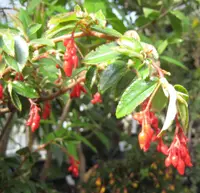
Begonia fuchsioides, often called fuchsia begonia, is a shrubby, evergreen begonia grown mainly for its arching stems and numerous small, pendulous flowers. Its habit and blooms resemble a miniature fuchsia, with narrow leaves and many dangling pink to red blossoms that create a light, airy look.
This species comes from cool, humid cloud forests of South America, where it grows under partial shade and consistent moisture. It can be grown indoors or in sheltered outdoor spaces, but needs protection from strong sun, cold, and drying winds.
Due to its thin stems and preference for stable moisture and humidity, it is moderately demanding and less forgiving of neglect. Understanding how to care for fuchsia begonia makes it easier to maintain a healthy, floriferous plant.

Care Difficulty
Moderate Care

Light Preference
Bright Indirect Light

Water Requirements
Keep Soil Moist

Temperature Preference
Tropical / Frost Sensitive

Hardiness Zone
10–11

Soil Texture
Loamy, Peaty, Organic-rich

Soil pH
Acidic (5.5–6.5), Slightly acidic (6.5–7.0)

Soil Drainage
Moist but well-drained

Fertilization
Light (every 4–6 weeks)
Scan your plant to receive care tips personalized for your specific plant
Available on iOS and Android
This species prefers bright, gentle light that mimics a forest understory.
This plant prefers evenly moist but not saturated soil around its fine roots.
This subtropical species grows best in mild, stable temperatures without extremes.
This species benefits from moderately high humidity and reacts quickly to very dry air.
Begonia fuchsioides grows best in a light, airy, organic-rich mix that drains quickly but stays slightly moist.
This species is well suited to container growing due to its fibrous root system and arching stems.
This shrub-like begonia responds well to modest, consistent feeding during active growth.
Thoughtful pruning keeps Begonia fuchsioides compact, branching well, and flowering more evenly.
Container-grown plants benefit from occasional repotting to maintain healthy, fibrous roots.
New Begonia fuchsioides plants are most often produced from softwood stem cuttings rather than seed.
This tender species needs protection from frost and cold drafts in most temperate climates.

Plant Health Check
Not sure what's wrong with your plant? Check your plant's health inside the app.
The long, pendulous, tubular flowers closely resemble those of many Fuchsia species, an example of convergent evolution that suits pollination by hummingbirds in its native range.
Unlike many begonias that remain low and bushy, this species develops a woody, arching, shrub-like framework that can reach over 1 m tall in suitable conditions.
It is native to cool, moist Andean cloud forests, where filtered light, high humidity, and mild temperatures shape its growth and flowering pattern.

This species has been widely used in breeding programs to create hybrid begonias with drooping, fuchsia-like flowers, influencing the development of many modern ornamental hanging and basket begonias.
Lack of blooms often comes from low light, excess nitrogen fertilizer, or old, woody stems. Remove spent flowers and lightly prune after flowering flushes. Consistent, moderate feeding and stable conditions usually restore regular blooming over time when growing fuchsia begonia.
Keep your plants happy and healthy with plant identification, disease detection, and easy care guidance.