Bee orchid Care (Ophrys apifera)

Bee orchid

About Bee orchid

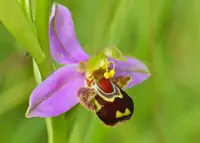
The bee orchid, Ophrys apifera, is a small terrestrial orchid native to grasslands, dunes, and open scrub across Europe, North Africa, and parts of the Middle East. It typically forms low rosettes of narrow leaves and sends up a slender flowering spike with pink sepals and a brown, velvety lip that mimics a female bee.

This mimicry helps attract pollinators in the wild, although in cooler regions the plant often self-pollinates. In gardens, it prefers sunny to lightly shaded, low-fertility, well-drained soil and does not like disturbance, which can make it slow to establish. Gardeners who learn how to care for Bee orchid usually find it long-lived and rewarding in naturalistic plantings.

Main Plant Requirements

Care Difficulty

Hard Care

Light Preference

Partial Sun

Water Requirements

Moderate Water

Temperature Preference

Cool Climate

Hardiness Zone

6–9

Soil Texture

Sandy, Loamy, Rocky

Soil pH

Slightly acidic (6.5–7.0), Neutral (7.0)

Soil Drainage

Well-drained

Fertilization

Minimal (feed rarely)

Get Personalized Care Plan

Scan your plant to receive care tips personalized for your specific plant

Available on iOS and Android

How to Care for the Bee orchid

This orchid naturally grows in open grasslands and needs bright conditions without intense midday scorch.

  • Provide 4–6 hours of gentle sun, ideally morning sun with light shade or filtered light from midday onward; Bee orchid foliage can scorch in strong afternoon sun.
  • Allow light partial shade, especially in summer; plants in too much shade grow tall and floppy and may produce fewer flowers.
  • In cool, cloudy climates, slightly more direct sun is useful; in hot regions, prioritize dappled light during June–August to prevent leaf burn.

This terrestrial orchid prefers moist but not saturated soil, especially during active growth.

  • Water when the top 2–4 cm of soil feel dry, focusing on the growing season; avoid daily watering unless conditions are very hot and windy.
  • Ensure sharply drained, gritty or chalky soil so excess water runs off; persistent puddling or a sour smell indicates poor drainage and overwatering risk.
  • In summer dormancy, reduce watering so the soil is only lightly moist; shriveling leaves suggest underwatering, while yellowing, limp growth suggests excess moisture around the roots of Ophrys apifera.

This hardy orchid experiences cool winters and mild summers in nature and copes best with similar outdoor conditions.

  • Optimal growth occurs around 55–70°F (13–21°C), with cool nights that help trigger strong flowering the following season.
  • Established plants tolerate short dips to about 20°F (-6°C) if soil drains well; prolonged freeze-thaw cycles in wet soil increase rot risk.
  • During hot spells above 85°F (29°C), provide light shade and ensure soil does not dry out completely, as combined heat and drought can stress the tubers.

This terrestrial orchid prefers moderate, outdoor-like humidity and usually tolerates typical garden air levels.

  • Aim for 40–60% humidity, which is common in many temperate outdoor environments during the growing season.
  • Plants tolerate short dry spells, but prolonged very dry air combined with strong sun can cause leaf tip browning and aborted flower spikes.
  • In unusually dry, exposed sites, increase local humidity by mulching lightly around the base and grouping plants with other low vegetation for shelter.

This species needs free-draining, mineral-rich soil that mimics its natural calcareous grassland habitat.

  • Use a lean, gritty mix such as 50–60% sand or fine gravel with the rest a low-nutrient loam; avoid heavy organic indoor potting mixes.
  • Ensure very sharp drainage to prevent tuber rot; the soil should drain within minutes after watering and never stay waterlogged.
  • Keep pH neutral to mildly alkaline (around pH 7–8) by incorporating crushed limestone chips or garden lime where natural soil is acidic.
  • For Ophrys apifera, avoid dense clay or compacted ground; improve aeration by working in coarse grit through the top 10–15 cm before planting.

This species can be grown in containers if drainage is excellent and the potting mix remains relatively dry in winter.

  • Choose a tall, narrow pot that allows tubers to sit deeply while keeping upper layers drier than the base.
  • Use an unglazed clay pot to allow moisture to evaporate more quickly, reducing the risk of tuber rot.
  • Raise the container on pot feet or bricks outdoors so excess water clears quickly after rain and the drainage holes never sit in a tray of water.

Ophrys apifera is adapted to low-nutrient soils and usually needs no fertilization in garden or container culture.

Pruning needs for Ophrys apifera are minimal and focus on hygiene rather than shaping.

  • Cut back the spent flowering stem at the base once seed capsules have dispersed or been removed, using clean, sharp scissors.
  • Gently remove only clearly dead, yellowed leaves, leaving any green tissue to continue feeding the tubers.
  • Avoid cutting green foliage in autumn and winter, as this rosette supports next season’s flowering.
  • Disinfect tools before and after use to reduce disease risk in the small growing crown.

This orchid is usually grown in the ground; any moving or dividing should be infrequent and carefully timed.

  • Transplant in late summer to early autumn, when foliage starts to die back and the plant is semi-dormant.
  • Move only if clumps are overcrowded, growth declines, or the position is unsuitable, typically every several years at most.
  • Lift gently with a fork, keeping tubers and fine roots intact, and replant at the same depth in a sharply drained, low-nutrient mix.
  • Water lightly after transplanting, then keep soil just barely moist to limit rot and reduce root stress.

Sexual reproduction in Bee orchid depends mainly on seed and is technically challenging for home growers.

This hardy terrestrial orchid tolerates typical outdoor winters in many temperate regions and needs little intervention once established.

  • In colder zones, apply a light, free-draining mulch over the root zone to buffer freeze–thaw cycles without smothering the crown.
  • Keep soil on the dry side in winter, especially in containers, to lower the risk of tuber rot in cold, wet conditions.
  • Container-grown plants in very cold climates can be overwintered in a cold, bright, frost-free space such as an unheated garage or porch.

Care Tips

Mimic native winter

Mark the first frost date and reduce watering sharply, allowing pots to stay barely moist over winter, as this cool, drier rest is essential to form healthy new tubers for the next season.

Use deep, narrow pots

Choose tall, narrow containers at least 15–20 cm deep so the tubers can sit low in the substrate, which improves drainage around the neck and reduces the risk of rot.

Avoid root disturbance

When re-potting or dividing, keep tuber clusters intact, handle them by the surrounding soil rather than bare roots, and complete the work quickly in late summer to avoid stressing new shoots.

Let seed pods ripen

If the plant sets seed, allow some pods to dry and split on the plant, then gently tap them over the pot or a nearby wildflower area to encourage naturalistic self-sowing when growing Bee orchid.

Prevent moss buildup

Check the surface regularly and gently remove dense moss or liverworts with tweezers, then top-dress with a fresh thin layer of gritty mix so fine orchid roots do not suffocate at the surface.

Common Pests and Diseases

Slugs and snails

These pests chew holes in leaves, flower spikes, and developing buds, especially in moist, cool conditions. Symptoms include ragged leaf edges, missing seedlings, and shiny slime trails around the plants.

Solution

Hand-pick at dusk or early morning, use wildlife-safe slug barriers or ferric phosphate pellets around but not on the rosettes, and keep dense ground cover slightly thinned to reduce hiding spots while maintaining enough moisture for the orchid. Protect emerging rosettes and flower spikes in late winter and spring with collars or rings placed in the soil around each plant.

Vine weevil

This pest damages plants at two stages: adults notch leaf edges, while larvae feed on roots and tuberoids, causing collapse of rosettes and flower spikes. Symptoms include irregular leaf margins, sudden wilting, and loose plants that lift easily from the soil.

Solution

Inspect at night and remove adult beetles by hand, and where damage is recurring, apply entomopathogenic nematodes (biological control worms) to the soil in late summer or early autumn when larvae are active. Avoid using peat-heavy, very loose mixes outdoors, since firmer mineral-based substrates make it harder for larvae to establish around the tuberoids when growing Bee orchid in managed beds or pots.

Aphids

These insects feed on sap from young shoots and flower spikes, sometimes deforming buds and carrying viral diseases. Symptoms include sticky honeydew, distorted growth, and small soft-bodied insects clustered on stems or under leaves.

Solution

Rinse infested parts with a firm stream of water, then use a dilute insecticidal soap spray directed only at the affected foliage and flower stems, avoiding runoff into surrounding wild vegetation. Encourage natural predators such as ladybird beetles and hoverflies by avoiding broad-spectrum insecticides in the area.

Fungal leaf spots

This disease appears as small brown, purple, or black lesions on leaves, sometimes with yellow halos, usually in prolonged wet or shaded conditions with poor air movement. Symptoms include cosmetic damage that can enlarge and weaken the leaf if many spots merge.

Solution

Remove and dispose of heavily spotted leaves to reduce spore spread, and improve light and airflow by gently clearing dense surrounding vegetation without exposing the plant to full, harsh sun. In cultivation, water at soil level rather than overhead and, if spots spread rapidly, use a targeted ornamental-orchid fungicide according to label directions and local regulations.

Viral mosaic and distortion

This disease causes mottled or streaked leaf patterns, distorted flower shapes, and reduced vigor, often introduced by sap-feeding insects or contaminated tools. Symptoms include irregular color breaking in flowers and uneven, twisted growth that persists over time.

Solution

Immediately isolate any plant showing persistent mosaic patterns or severe distortion and avoid using the same tools on healthy orchids without disinfecting them with a suitable disinfectant or 70% alcohol. Since viral infections cannot be cured, remove heavily affected plants from cultivation to protect nearby Bee orchids and control aphids and other sap-feeding insects to lower transmission risk.

Interesting Facts

Self-pollinating strategy

Unlike many other bee orchids, this species often self-pollinates before its flowers fully open, a process called autogamy, which helps it set seed even where suitable pollinators are absent.

Mimicry of female bees

The flower lip closely resembles a female solitary bee in color, pattern, and hair-like texture, and also releases scent compounds that imitate female bee pheromones to attract male bees in regions where the pollinator is still present.

Preference for lime-rich soils

This orchid typically grows in calcareous habitats such as chalk grasslands, limestone slopes, and other alkaline substrates, reflecting a strong ecological association with lime-rich, often low-nutrient soils.

Botan icon

Did you know?

This orchid is considered a classic example in evolutionary biology for how pollinator availability can drive rapid shifts in reproductive strategy, with some populations relying almost entirely on autogamy after losing their traditional bee pollinators in parts of its range.

FAQs about Bee orchid

Lack of flowering usually comes from insufficient winter chill, too much shade, or disturbance to its roots and soil fungi. Avoid frequent transplanting, maintain cool winters, and keep the plant in low-nutrient, well-drained ground.

Grow Healthy Plants with Botan Care

Keep your plants happy and healthy with plant identification, disease detection, and easy care guidance.

Botan plant care app — identify plants on mobile

Explore More Plants