


Mounted culture
Cultivate plants on cork or hardwood mounts with a thin layer of long-fiber sphagnum around the roots to mimic epiphytic growth and improve air flow, which helps prevent root rot and supports stronger root systems.

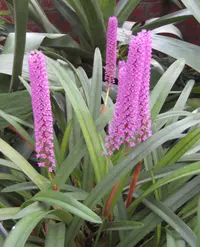
Arpophyllum giganteum is an epiphytic orchid, usually growing on trees, with dense cylindrical spikes packed with small purple to pink flowers. It forms tight clumps of narrow, upright leaves and produces showy blooms that give it a distinctive brush-like appearance.
This species is native to Mexico and Central America, where it grows in warm, humid forests at mid to higher elevations. It is moderately challenging, as it prefers stable warmth, high humidity, and good air movement. Those conditions influence how to care for Arpophyllum giganteum in home collections.
It generally prefers bright filtered light, regular moisture with quick drainage, and a coarse orchid substrate rather than standard potting soil.

Care Difficulty
Hard Care

Light Preference
Bright Indirect Light

Water Requirements
Keep Soil Moist

Temperature Preference
Tropical / Frost Sensitive

Hardiness Zone
11–12

Soil Texture
Organic-rich, Peaty, Loamy

Soil pH
Acidic (5.5–6.5)

Soil Drainage
Moist but well-drained

Fertilization
Light (every 4–6 weeks)
Scan your plant to receive care tips personalized for your specific plant
Available on iOS and Android
This orchid prefers bright, filtered light similar to bright forest shade.
This species prefers evenly moist conditions without staying waterlogged.
This orchid is a warm-growing species that dislikes cold and sudden temperature swings.
This orchid prefers consistently moist air and reacts quickly to dry indoor conditions.
This epiphytic orchid needs a very airy, fast-draining medium rather than conventional potting soil.
This species is suitable for container growing when placed in a stable, well-ventilated pot.
This orchid benefits from light, steady nutrition rather than heavy feeding.
Pruning needs for this species are minimal and focus on hygiene rather than shaping.
This orchid prefers stable conditions and benefits from infrequent but careful repotting.
Home propagation of this orchid is possible but slower than many common houseplants.
This tropical orchid is frost sensitive and needs mild, protected winter conditions.

Plant Health Check
Not sure what's wrong with your plant? Check your plant's health inside the app.
This species produces very tight, cylindrical flower spikes that can be packed with dozens of tiny individual blossoms, creating a distinctive candle-like appearance uncommon among many other orchids.
Flowers typically range from pale pink to deep magenta, and their color intensity often increases in brighter light, which is thought to enhance visibility to insect pollinators in its native habitats.
Arpophyllum giganteum forms compact clumps of spindle-shaped pseudobulbs that store water and nutrients, an adaptation that helps the plant survive short dry periods in its epiphytic or lithophytic niches.

In parts of its native range in Mexico and Central America, large, showy clumps of Arpophyllum giganteum have been traditionally collected and displayed during local festivities as ornamental symbols of the forest canopy, contributing to its long-standing popularity among regional orchid growers.
This orchid typically blooms once a year, mainly in late winter to spring. It produces dense, cylindrical flower spikes with many small blossoms. Flowering depends strongly on stable temperatures, bright filtered light, and a distinct drier rest period.
Keep your plants happy and healthy with plant identification, disease detection, and easy care guidance.

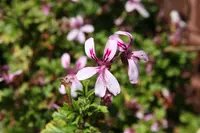
Pelargonium pseudoglutinosum
Pelargonium pseudoglutinosum
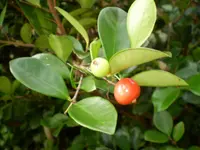
mountain stopper
Eugenia reinwardtiana
 POPULAR
English Ivy
Hedera helix

Giant Leopard Plant
Farfugium japonicum var. giganteum
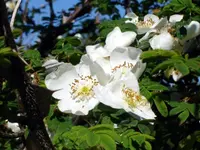
Silky Rose
Rosa sericea

Australian sheep's bur
Acaena agnipila
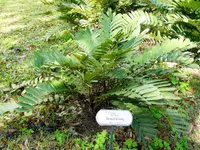
Cardboard palm
Zamia furfuracea
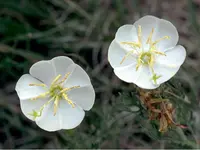
crownleaf evening primrose
Oenothera coronopifolia