


Regular stem pinching
Pinch back soft stem tips with clean fingers or scissors every 3–4 weeks to keep the plant compact and encourage dense, bushy growth instead of long, weak shoots.

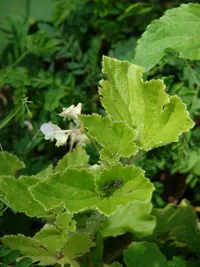
Brazilian begonia (Begonia hirtella) is a compact, shrubby begonia valued for its small, serrated green leaves and upright, branching stems. It often produces delicate clusters of pinkish or white flowers that add fine texture rather than bold color.
This species is native to tropical regions of Brazil, where it grows in warm, humid, partially shaded forest environments. It adapts moderately well indoors if given consistent moisture, good drainage, and protection from strong direct sun.
Its relatively fast growth and tolerance of regular pruning make it manageable for most indoor growers. Understanding how to care for Brazilian begonia mainly involves providing stable warmth, even moisture, and a loose, airy potting mix.

Care Difficulty
Moderate Care

Light Preference
Partial Shade

Water Requirements
Keep Soil Moist

Temperature Preference
Tropical / Frost Sensitive

Hardiness Zone
10–11

Soil Texture
Loamy, Organic-rich

Soil pH
Acidic (5.5–6.5)

Soil Drainage
Moist but well-drained

Fertilization
Light (every 4–6 weeks)
Scan your plant to receive care tips personalized for your specific plant
Available on iOS and Android
This species prefers bright, indirect light with some protection from strong midday sun.
Begonia hirtella prefers evenly moist but not saturated soil and reacts quickly to excess water.
This species thrives in stable, mild warmth without exposure to frost or extreme heat.
This species benefits from consistently moist air and reacts quickly to very dry indoor conditions.
Begonia hirtella prefers a loose, airy, organic-rich mix that drains fast yet holds steady, light moisture.
This species adapts well to container culture when the pot is chosen to support its shallow, fibrous root system.
Begonia hirtella benefits from light, consistent feeding during active growth but reacts poorly to strong fertilizer.
Begonia hirtella responds well to light pruning that maintains a compact, leafy shape.
This species prefers slightly snug conditions, so repot Begonia hirtella only when clear stress signs appear.
Begonia hirtella is commonly multiplied by stem cuttings under warm, humid conditions.
Begonia hirtella is frost-sensitive and needs protection in regions with cold winters.

Plant Health Check
Not sure what's wrong with your plant? Check your plant's health inside the app.
This species naturally grows along wet rocks and stream banks in the Atlantic rainforest of Brazil, often forming mats where water splashes but does not fully submerge the foliage.
The leaves are small, lance-shaped, and distinctly serrated at the margins, giving the plant a delicate, fern-like texture that differs from the broad, fleshy leaves of many ornamental begonias.
Instead of forming upright canes, this species spreads by slender, creeping stems that root as they go, helping it anchor to mossy rock and shallow forest soil in its native habitat.
Brown edges or tips usually result from low humidity, underwatering, or excess fertilizer salts. Large brown patches often follow direct sun scorch or cold drafts. Check roots for rot, flush the pot, trim damage, and stabilize conditions.
Keep your plants happy and healthy with plant identification, disease detection, and easy care guidance.


Elephant's Ear
Colocasia 'Black Ripple'
Gouritz Haworthia
Haworthia chloracantha
Epidendrum difforme
Epidendrum difforme
Fancy-leaf Caladium
Caladium 'Carolyn Whorton'
Lycaste virginalis
Lycaste virginalis
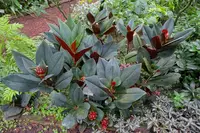
Costus erythrophyllus
Costus erythrophyllus
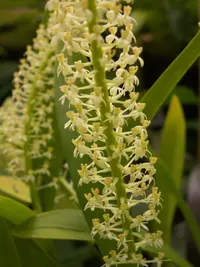
Tapered sphinx orchid
Liparis condylobulbon

Green Earthstar
Cryptanthus acaulis