Rotate For Symmetry
Turn the pot 90° every 2–3 weeks so the crown develops evenly and the trunk does not lean toward the main light source over time.

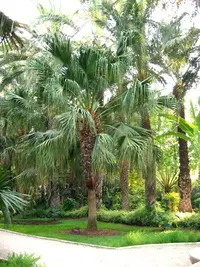
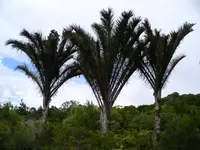
The Chinese fan palm, Livistona chinensis, is a slow-growing, evergreen palm valued for its rounded crown of stiff, fan-shaped leaves. Each leaf is deeply divided into narrow segments that droop slightly at the tips, giving the plant a soft, fountain-like look.
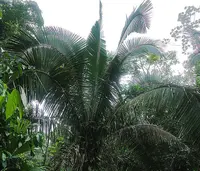
In nature it grows in subtropical and tropical regions of East Asia, often in coastal or lowland forests. As a landscape or container plant, it stays relatively tidy and forms a single, upright trunk over time.
Its sturdy foliage, moderate growth rate, and tolerance of varied light make it a reasonably forgiving choice, especially once established. Understanding how to care for Chinese fan palm mainly involves providing bright light, well-drained soil, and steady, not excessive, moisture.

Care Difficulty
Moderate Care

Light Preference
Partial Sun

Water Requirements
Moderate Water

Temperature Preference
Warm Climate

Hardiness Zone
9–11

Soil Texture
Sandy, Loamy, Organic-rich

Soil pH
Acidic (5.5–6.5), Slightly acidic (6.5–7.0)

Soil Drainage
Moist but well-drained

Fertilization
Light (every 4–6 weeks)
Scan your plant to receive care tips personalized for your specific plant
Available on iOS and Android
This palm prefers bright conditions that mimic dappled tropical sun.
This species prefers evenly moist but not saturated soil.
Stable warmth supports steady growth and prevents stress in this palm.
This palm prefers moderate humidity but adapts to typical home air if temperature and watering are stable.
This species grows best in deep, airy, fast-draining soil that still holds moderate moisture.
This species is well suited to large containers, especially in cooler climates where outdoor planting is limited.
Fertilizing supports steady growth of Chinese fan palm in containers or nutrient-poor soils.
Pruning Livistona chinensis focuses on removing only unhealthy or hazardous fronds.
Livistona chinensis prefers stable root conditions, so repot or transplant only when clear signs appear.
Propagation of Livistona chinensis is done almost exclusively from seed and is relatively slow.
This palm needs specific winter care in climates cooler than its preferred subtropical range.

Plant Health Check
Not sure what's wrong with your plant? Check your plant's health inside the app.
In parts of its native range in China and southern Japan, this palm grows on rocky sea cliffs and steep limestone slopes, where its long roots anchor into crevices and tolerate salt-laden winds.
Its fan-shaped leaves have many narrow, divided segments that naturally droop at the tips, creating the characteristic fountain-like, weeping outline that distinguishes it from most other fan palms.
This species grows slowly, often taking many years to form a visible trunk, but established specimens are known to live for many decades in mild, frost-free climates.

Mature trees can tolerate brief, light frosts close to 20°F when acclimated, which is unusually cold-hardy for a palm originating from subtropical East Asia.
Brown tips usually come from low humidity, underwatering, salt buildup from fertilizer, or exposure to hot or cold drafts. Flush the soil occasionally, water evenly, increase humidity slightly, and trim only completely dead tissue.
Keep your plants happy and healthy with plant identification, disease detection, and easy care guidance.