Abutilon x Hybridum Group Care (Abutilon × hybridum)

Also known as: Chinese lantern, parlour maple
Abutilon x Hybridum Group

About Abutilon x Hybridum Group

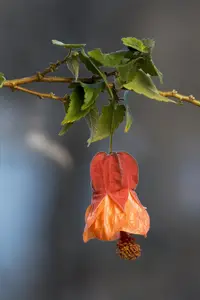
Abutilon x Hybridum Group, often called flowering maple or Chinese lantern, is a group of ornamental shrubs and small trees grown mainly for their hanging, bell-shaped blooms. The plants have soft, maple-like leaves and a branching, upright habit that suits containers, small gardens, and protected patios.

These hybrids do not occur naturally in the wild but were developed from several Abutilon species, many with South American origins. They flower over a long season in mild climates, offering colors from pale yellow to deep red.

Abutilon × hybridum is moderately easy to grow if given bright light, shelter from frost, and evenly moist, well-drained soil. Understanding how to care for Abutilon x Hybridum Group helps it stay compact, leafy, and floriferous over time.

Main Plant Requirements

Care Difficulty

Moderate Care

Light Preference

Partial Sun

Water Requirements

Regular Water

Temperature Preference

Tropical / Frost Sensitive

Hardiness Zone

9–11

Soil Texture

Loamy, Sandy, Organic-rich

Soil pH

Acidic (5.5–6.5), Slightly acidic (6.5–7.0)

Soil Drainage

Moist but well-drained

Fertilization

Moderate (every 2–4 weeks)

Get Personalized Care Plan

Scan your plant to receive care tips personalized for your specific plant

Available on iOS and Android

How to Care for the Abutilon x Hybridum Group

This shrub flowers best with bright light and some protection from harsh midday sun.

  • Provide 4–6 hours of direct morning sun with light afternoon shade; east or southeast exposure suits Abutilon x Hybridum Group well outdoors.
  • Tolerates bright dappled or filtered light under open trees; dense shade leads to weak, leggy growth and fewer blooms.
  • In hot summers, shield from strong sun between 11 a.m.–3 p.m. to prevent leaf scorch, especially in containers or against south-facing walls.

This plant prefers evenly moist but not saturated soil to maintain steady growth and flowering.

  • Water when the top 3–5 cm of soil feels dry, soaking the root zone deeply, then allow excess water to drain away fully.
  • Use well-drained soil; frequent shallow watering or poorly drained sites cause yellowing leaves, wilting despite wet soil, and root rot.
  • Increase watering during hot, windy periods and flowering; reduce in cool weather, watching for dull, drooping leaves as a sign the plant needs water.

This flowering shrub prefers mild, frost-free conditions with moderate summer heat.

  • Aim for 60–75°F (16–24°C) for best growth and flowering; plants stay active and produce buds steadily in this range.
  • Protect from temperatures below 30–32°F (-1–0°C); foliage and young shoots are damaged by frost, and roots may die if soil freezes deeply.
  • Tolerates short spells up to 86–90°F (30–32°C) if soil moisture is consistent and roots are mulched; prolonged heat with dry soil leads to bud drop.

This shrub prefers moderate humidity and copes reasonably well with typical indoor air.

  • Aim for 40–60% humidity to reduce leaf edge browning and flower drop in Abutilon x Hybridum Group.
  • Dry air may cause curled leaves, crispy tips, and buds that fail to open fully.
  • Increase humidity with a nearby pebble tray or grouped plants rather than misting, which raises humidity only briefly.

Abutilon × hybridum grows best in loose, moisture-retentive but free-draining soil.

  • Use a loamy mix with 40–50% compost or peat-free potting mix, plus coarse sand or perlite for structure and aeration.
  • Target a slightly acidic to neutral pH around 6.0–7.0 to support balanced nutrient uptake.
  • Ensure water drains within a few minutes; mix in extra perlite or fine bark if water lingers on the surface.
  • Avoid heavy clay, compacted ground, or purely sandy soil that either stays waterlogged or dries out within hours.

This species is well suited to container growing for patios, balconies, and small gardens.

  • Choose a broad, stable pot to prevent wind tipping, as the shrub becomes top-heavy when flowering heavily.
  • Select a slightly porous material like terracotta if overwatering is a risk, as it allows faster evaporation from the root zone.
  • Use a container deep enough to accommodate a developing woody root system, leaving 3–5 cm headroom for clean watering.

Balanced feeding supports strong growth and flowering in Abutilon × hybridum.

  • Use a balanced water-soluble fertilizer (around 10-10-10 or 20-20-20) at 1/2 strength every 2–4 weeks during the active growing season.
  • Alternatively, apply a slow-release fertilizer or a thin layer of well-rotted compost in spring for steady nutrients.
  • Reduce feeding in late fall and winter to once every 6–8 weeks or stop entirely if growth is very slow.
  • Always water before and after applying soluble fertilizer to limit root burn and nutrient salt buildup.

Thoughtful pruning keeps Abutilon × hybridum compact, healthy, and flowering well.

  • Carry out main pruning in late winter or very early spring before strong new growth starts.
  • Use clean, sharp bypass pruners to remove dead, damaged, or crossing stems back to healthy wood.
  • Shorten long, leggy shoots by 1/3–1/2 to encourage branching and more flower-bearing tips.
  • Lightly trim after main flushes of bloom to maintain shape, avoiding removal of all young flowering wood.

Container-grown Abutilon × hybridum benefits from periodic repotting to maintain vigor.

  • Check for roots circling the pot, growing through drainage holes, or slowed growth as signs it needs more space, typically every 2–3 years.
  • Plan repotting or outdoor transplanting for early spring, just as new growth begins but before hot weather.
  • Move into a pot 2–5 cm wider, using fresh, free-draining mix, and gently loosen circling roots without tearing heavily.
  • Water thoroughly after repotting, keep in bright but sheltered conditions for 7–10 days, and avoid heavy pruning at the same time to limit stress.

New Abutilon × hybridum plants are most often produced from softwood or semi-ripe cuttings.

  • Take 8–10 cm softwood or semi-ripe stem cuttings in late spring to summer, choosing non-flowering shoots.
  • Remove lower leaves, dip the cut end in rooting hormone, and insert into a moist, free-draining medium such as perlite and peat or coco mix.
  • Maintain high humidity and gentle bottom warmth around 70–75°F with bright, indirect light until roots form.
  • Seeds can be sown indoors in spring at similar temperatures, barely covered, with consistent moisture for steady germination.

Abutilon × hybridum is generally frost-tender and benefits from careful winter management.

  • In climates below about 25–30°F, grow in containers or treat as a tender shrub rather than fully hardy.
  • Before first hard frost, move potted plants indoors to a bright, cool room or greenhouse.
  • Outdoors in mild zones, apply 5–8 cm of mulch around the root zone, keeping it slightly away from the stems.
  • In very cold areas, overwinter as a cut-back plant indoors, watering sparingly while growth is slow.

Care Tips

Regular bud pinching

Pinch out the soft tips of young shoots with 2–3 leaf pairs in late spring to encourage branching and a denser canopy of flowers rather than tall, sparse growth.

Discreet staking support

Install thin bamboo canes or unobtrusive stakes early in the season and tie stems loosely with soft ties in a figure-eight loop to prevent wind damage and stem snapping when the plant is heavy with blooms.

Seasonal container shift

If grown in a pot, shift the container slightly every 2–3 weeks during the growing season so all sides receive similar light, reducing one-sided, leaning growth and producing a more symmetrical shrub.

Preventive pest scouting

Inspect the undersides of leaves and young shoot tips weekly for aphids, whiteflies, and spider mites, and at the first sign of activity use a strong water spray or horticultural soap so infestations never become established.

Cool-season flower extension

In mild climates, place container plants against a south- or west-facing wall in autumn to benefit from stored warmth and shelter, which often extends the flowering season for those growing Abutilon x Hybridum Group outdoors.

Common Pests and Diseases

Spider mites

This pest thrives on Abutilon foliage in warm, dry, sheltered conditions and causes fine stippling, leaf yellowing, and webbing on the undersides of leaves.

Solution

Shower the plant thoroughly, focusing on leaf undersides, then repeat every few days and increase humidity; for heavier infestations, use a horticultural soap or neem oil spray, applied in several rounds to break the life cycle while monitoring new growth closely as part of Abutilon × hybridum care instructions.

Whiteflies

These insects are attracted to the soft new growth and leaf undersides, where they suck sap, causing leaf yellowing, sticky honeydew, and reduced vigor.

Solution

Hang yellow sticky traps near the plant to reduce adult numbers, then regularly wash foliage with lukewarm water; follow with targeted applications of insecticidal soap to the leaf undersides every 5–7 days until no adults fly up when the plant is disturbed.

Aphids

These insects cluster on tender shoots, buds, and leaf undersides, leading to distorted new growth, sticky honeydew, and sometimes sooty mold on leaves.

Solution

Prune off heavily infested tips, rinse remaining shoots under a firm but gentle stream of water, then treat with insecticidal soap or neem oil, repeating weekly until new growth appears clean and natural predators can keep small populations in check.

Red spider mite scorch

Symptoms include bronzing, dulling, and eventual scorching of leaves caused by heavy mite feeding, especially under glasshouse or indoor conditions with low humidity.

Solution

Improve humidity and airflow around the plant, hose down foliage thoroughly, and apply a miticidal soap or oil to all leaf surfaces on a 5–7 day schedule, removing the most damaged leaves to encourage healthy new growth.

Leaf spot

This disease causes small brown to black spots on leaves that may merge into larger patches, leading to premature leaf drop, especially in dense, poorly ventilated canopies.

Solution

Remove and discard affected leaves, avoid wetting foliage late in the day, and improve spacing and airflow; if the problem recurs, use a copper-based or other labeled broad-spectrum fungicide according to directions, focusing on new foliage during humid periods.

Interesting Facts

Complex hybrid origin

Abutilon × hybridum is not a single wild species but a horticultural group of complex hybrids, mainly derived from crosses between South American species such as Abutilon darwinii, Abutilon striatum, and related taxa. This mixed parentage explains its wide variation in flower color, size, and plant form across different cultivars.

Continuous flowering habit

In mild climates or protected indoor settings, plants from the Abutilon × hybridum Group can flower repeatedly over many months rather than in a short seasonal window. Their pendant, bell-shaped blooms are produced on new growth, which is why light pruning can stimulate more flowers.

Genetic variability in foliage

Cultivars within this hybrid group show significant genetic variation in leaf shape and pattern, ranging from plain green maple-like leaves to variegated forms with creamy or yellow sectors. This diversity reflects selective breeding for ornamental foliage in addition to the showy flowers.

Botan icon

Did you know?

The hybrid group often called Abutilon × hybridum became especially popular in Victorian-era glasshouses, where breeders in Europe created numerous cultivars and marketed them as flowering maples, despite the plants being unrelated to true maples and instead belonging to the mallow family Malvaceae.

FAQs about Abutilon x Hybridum Group

This shrub can flower repeatedly from late spring into fall, sometimes almost continuously in mild climates. Regular deadheading, light pruning, and consistent feeding help maintain repeat flowering and prevent long gaps between flushes of blooms.

Grow Healthy Plants with Botan Care

Keep your plants happy and healthy with plant identification, disease detection, and easy care guidance.

Botan plant care app — identify plants on mobile

Explore More Plants