Spine-safe handling
Wear thick gloves and long sleeves when planting or pruning to avoid the sharp spines, and use long-handled tools so you can work from outside the canopy without tearing skin or clothing.

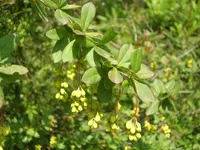
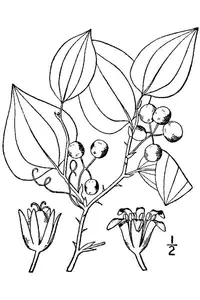
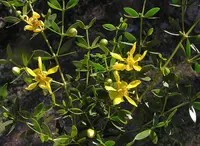
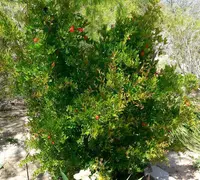
Indian barberry (Berberis aristata) is a thorny, deciduous shrub grown for its dense branching, small oval leaves, and bright yellow flowers followed by red berries. It usually forms a compact, upright to spreading shape that works well in hedges, borders, or as a barrier planting due to its spines.
This species is native to the Himalayan region, where it grows on sunny slopes and forest edges in well-drained, often rocky soils. It is generally a resilient plant that tolerates cold, pruning, and variable soil, so how to care for Indian barberry is mostly about giving it enough light and avoiding waterlogged conditions.

Care Difficulty
Easy Care

Light Preference
Full Sun

Water Requirements
Low Water

Temperature Preference
Cold Hardy

Hardiness Zone
6–9

Soil Texture
Sandy, Loamy, Clay

Soil pH
Slightly acidic (6.5–7.0), Neutral (7.0)

Soil Drainage
Well-drained

Fertilization
Minimal (feed rarely)
Scan your plant to receive care tips personalized for your specific plant
Available on iOS and Android
Berberis aristata grows best in open, bright conditions with direct sun exposure.
Berberis aristata prefers evenly moist, well-drained soil once established.
This shrub is quite hardy and tolerates a wide range of outdoor temperatures.
This shrub handles a wide humidity range and rarely needs special humidity management.
Berberis aristata prefers mineral, free-draining ground that does not stay wet after rain.
This species can be grown in containers if the pot provides enough volume and stability for its woody root system.
Berberis aristata is not a heavy feeder but benefits from light, balanced nutrition in the growing season.
Pruning Berberis aristata keeps the shrub dense, healthy, and within its desired shape.
Berberis aristata is usually grown in the ground, so focus on careful transplanting rather than frequent repotting.
Berberis aristata is commonly propagated from semi-ripe cuttings, seed, or simple layering.
Berberis aristata is generally cold hardy and needs only minimal winter care in most temperate climates.

Plant Health Check
Not sure what's wrong with your plant? Check your plant's health inside the app.
The root and stem bark contain high levels of the alkaloid berberine, which has been traditionally used as a stable yellow dye for wool, leather, and wood in Himalayan regions.
This species is naturally distributed in the montane zones of the western and central Himalayas, where it forms dense, spiny thickets that help stabilize soil on steep, erosion-prone slopes.
Its bright red berries, which ripen in late season, are an important food resource for many Himalayan birds, aiding long-distance seed dispersal and supporting local food webs.

In parts of the Indian Himalayas, long, thorny hedges of Berberis aristata have been traditionally planted as living fences around fields and house compounds, creating durable, low-maintenance barriers that last for decades without needing conventional fencing materials.
Yellowing leaves often result from water stress, compacted or poorly drained soil, root damage, or nutrient deficiency, especially iron. Check drainage, avoid waterlogging, lightly loosen soil surface, and consider a balanced, slow-release fertilizer if growth looks generally weak.
Keep your plants happy and healthy with plant identification, disease detection, and easy care guidance.