BotaN logo

banana yucca Care (Yucca baccata)

Also known as: Datil Yucca
banana yucca

About banana yucca

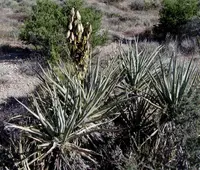
Banana yucca (Yucca baccata) is a slow-growing, evergreen desert shrub known for its stiff, blue-green, sword-shaped leaves arranged in dense rosettes. Mature plants produce tall flower stalks with creamy white blossoms followed by thick, banana-shaped fruits that inspired its common name.

This species is native to arid regions of the southwestern United States and northern Mexico, where it thrives in rocky, well-drained soils. It is naturally adapted to strong sun, heat, and drought, which makes it relatively low-maintenance in dry climates.

Its toughness, architectural form, and low water needs make it suitable for xeriscapes and other low-irrigation plantings. Understanding how to care for banana yucca mainly involves providing sharp drainage, plenty of light, and avoiding consistently wet soil.

Main Plant Requirements

Care Difficulty

Easy Care

Light Preference

Full Sun

Water Requirements

Low Water

Temperature Preference

Cold Hardy

Hardiness Zone

5–9

Soil Texture

Sandy, Loamy, Rocky

Soil pH

Slightly acidic (6.5–7.0), Slightly alkaline (7.0–7.5)

Soil Drainage

Well-drained

Fertilization

Minimal (feed rarely)

Get Personalized Care Plan

Scan your plant to receive care tips personalized for your specific plant

Available on iOS and Android

How to Care for the banana yucca

This desert shrub thrives in strong light and handles intense sun when established.

  • Provide 6–10 hours of direct sun daily; full sun is best, especially in dry climates, for compact, sturdy growth.
  • Young or newly planted banana yucca benefits from light afternoon shade or filtered light to reduce leaf scorch in very hot regions.
  • In cooler or overcast climates, choose the sunniest, south- or west-facing exposure and avoid dense shade, which leads to weak, floppy leaves.

This species is highly drought-tolerant and prefers infrequent, deep watering.

  • Allow the soil to dry at least 5–8 cm deep before watering; in native-like, well-drained ground this often means long gaps between waterings.
  • Water more during the first 1–2 growing seasons, using the same deep-and-dry approach, then reduce frequency once Yucca baccata is established.
  • Watch for overwatering signs such as yellowing, soft leaves and crown rot; underwatered plants show extreme leaf curling and dry, browning tips.

This hardy yucca tolerates wide temperature swings typical of arid regions.

  • Best active growth occurs around 65–85°F (18–29°C), with dry air and strong sun supporting compact form and healthy leaves.
  • Mature plants tolerate lows near 0°F (−18°C) in dry, well-drained soil; brief dips slightly below may be survived if roots do not sit wet.
  • Heat tolerance is high up to 100–110°F (38–43°C) if soil drainage is excellent; prolonged cold, wet conditions increase risk of root and crown rot.

Yucca baccata tolerates very dry air and does not need added humidity in typical indoor or outdoor conditions.

Yucca baccata needs very fast-draining, mineral, desert-style soil to prevent root rot.

  • Use a gritty mix such as 60–70% coarse sand or crushed granite with 30–40% sandy loam or cactus mix.
  • Ensure water drains through in seconds, not minutes, and never leaves the mix soggy or compacted.
  • Keep pH slightly acidic to slightly alkaline, around 6.5–8.0, which suits this desert species.
  • Avoid peat-heavy, clayey, or high-organic mixes that hold moisture and reduce air spaces around roots.

This species can be grown in containers if the pot and setup prevent tipping and waterlogging.

  • Choose a low, wide, heavy container to counter the top-heavy rosette and desert winds outdoors.
  • Select thick-walled clay or concrete to allow faster evaporation and improve root-zone aeration in dry climates.
  • Raise the pot on feet or bricks so drainage holes stay clear and runoff exits quickly after each watering.

Yucca baccata is adapted to nutrient-poor soils and needs only light feeding in cultivation.

  • Use a balanced, low-strength liquid fertilizer (around 10-10-10 NPK) diluted to 25–50% once in early spring and again in midsummer.
  • Alternatively, apply a small amount of slow-release granular fertilizer around the drip line, keeping it off the crown.
  • In very lean soils, a thin layer of well-aged compost can support growing banana yucca without creating soggy conditions.
  • Do not feed in late fall or winter, when growth is dormant, to prevent soft, frost-prone tissue.

Yucca baccata benefits from minimal, targeted pruning to maintain safety and appearance.

  • Late winter to early spring is the best time to remove dead, damaged, or diseased leaves before active growth starts.
  • Use clean, sharp hand pruners or a pruning saw to cut old leaves close to the trunk without damaging living tissue.
  • Removing lower, spent leaves tidies the outline and can improve air flow, but retain enough foliage for good photosynthesis.
  • Do not cut the main growing tip; removing it permanently alters height and form and can reduce flowering.

This species is usually grown in the ground, so focus on careful transplanting rather than frequent repotting.

  • Transplant in late spring when soil is warming and the risk of hard frost has passed, as this reduces shock.
  • Choose a very well-drained, sandy or gravelly site and set the root ball at the same depth as before.
  • Transplant only when clearly necessary, such as poor growth, heaving from soil, or roots circling in a rare container specimen.
  • Water thoroughly once after transplanting, then allow the soil to dry between light waterings to encourage new root establishment.

Yucca baccata is most commonly propagated from offsets and sometimes from seed under controlled conditions.

  • In late spring, detach offsets with a sharp, clean knife, keeping as many roots attached as possible.
  • Allow cut surfaces to dry and callus for several days in a shaded, airy place before planting in gritty, well-drained mix.
  • Keep newly planted offsets in bright, indirect light with very light, infrequent watering until strong rooting develops.
  • Seeds can be sown in warm (70–80°F), barely moist, sandy medium; germination may be slow and uneven.

This desert yucca is quite cold hardy but benefits from simple winter care in harsh climates.

  • Established plants tolerate significant frost and brief freezes, especially in dry conditions.
  • In colder regions, apply a light, dry mulch around the root zone, keeping material away from the crown.
  • Container plants are more vulnerable; move them to an unheated, bright, frost-free space for winter.
  • Avoid heavy winter watering to reduce risk of root and crown rot in cold, wet soil.

Care Tips

Winter root protection

In colder zones, apply a 5–8 cm layer of coarse gravel or small rocks around the root zone in late fall to improve drainage and reduce freeze–thaw stress on the crown without holding excess moisture.

Safe offset removal

To propagate or control clumping, remove offsets with a clean, sharp knife when they are 10–15 cm tall, dust the cut bases with dry sulfur or cinnamon to reduce rot risk, then air-dry for 1–2 days before replanting.

Spine management

In high-traffic areas, carefully clip only the sharp terminal spine of older leaves with clean scissors to reduce injury risk while leaving the rest of the leaf intact for photosynthesis.

Rock mulch use

Replace organic mulch with 3–5 cm of inorganic mulch such as gravel or decomposed granite around the plant to mimic its native habitat, discourage rot, and allow the lower leaves to stay dry and clean.

Container stabilization

For banana yucca indoor care or patio specimens, use a wide, heavy container and place 2–3 cm of gravel at the bottom (above drainage holes) to lower the center of gravity and prevent the top-heavy plant from tipping in strong winds.

Common Pests and Diseases

yucca weevil

This pest bores into the crown and upper stem, causing wilting, yellowing, and eventual collapse of the rosette, often with brown, mushy tissue at the base.

Solution

Remove and destroy heavily infested plants, cutting out and disposing of all soft, tunneled tissue; this is the most reliable way to stop spread. For remaining plants, keep crowns dry, inspect the base regularly for bore holes or frass, and in landscape settings consider using a systemic insecticide labeled for ornamental yuccas if early damage is detected.

yucca plant bug

These insects feed on the leaves, leaving pale stippling, small brown spots, and sometimes a rough, speckled surface that can make the foliage look scorched.

Solution

Spray foliage firmly with water to dislodge nymphs and adults, then remove and discard the most damaged leaves. If populations remain high, treat leaf surfaces with insecticidal soap or a light horticultural oil, applied in the cool part of the day and repeated as directed until new growth appears clean.

scale insects

This pest appears as small, fixed bumps on leaves or stems, often along the midrib, and may cause yellowing, reduced vigor, and sticky honeydew on nearby surfaces.

Solution

Gently scrape or wipe off visible scale with a soft cloth or brush dipped in soapy water or alcohol, focusing on midribs and leaf bases. For larger infestations, use horticultural oil to smother remaining scale, making sure to coat all sides of the leaves and repeating at label intervals until no new bumps appear; this approach is compatible with typical banana yucca indoor care when used with good ventilation.

leaf spot

This disease causes small, tan to dark brown spots with possible yellow halos on older leaves, which can coalesce into larger blotches under humid or poorly ventilated conditions.

Solution

Prune and discard affected leaves promptly to reduce spore spread, and keep foliage as dry as possible by watering at the soil level rather than overhead. Improve air circulation around the plant, avoid crowding, and if the problem persists outdoors, apply a copper-based or other ornamental fungicide labeled for leaf spots, following the product directions closely.

crown and stem rot

This disease begins with softening and browning at the crown or lower stem, often following prolonged wet or poorly drained conditions, and can lead to sudden collapse of the rosette.

Solution

At the first signs, reduce or stop watering and improve drainage by raising the planting area or using a grittier soil mix; remove all mushy tissue with a clean knife and allow remaining healthy tissue to dry and callus. Severely rotted plants are usually not salvageable, so discard affected material and replant only in fast-draining, dry conditions to prevent recurrence, which is central to effective Yucca baccata plant care.

Interesting Facts

Specialist yucca moth partner

In much of its range, this species is pollinated almost exclusively by the yucca moth Tegeticula yuccasella, which actively collects and packs pollen into the flowers. The moth also lays eggs in the ovary, and its larvae feed on some of the developing seeds, forming a tightly coevolved mutualism.

Starchy edible fruits

The thick, fleshy fruits are rich in starch and were traditionally eaten roasted or dried by many Indigenous peoples of the Southwestern United States and northern Mexico. The common name banana yucca comes from the shape and texture of these mature fruits rather than from any relation to true bananas.

Extreme desert tolerance

This species survives in hot, arid habitats through thick, waxy leaves, sunken stomata (tiny pores for gas exchange), and a dense rosette shape that reduces water loss. Its deep and wide-spreading root system allows access to limited soil moisture in deserts and semi-deserts.

Botan icon

Did you know?

Banana yucca often forms hybrid swarms with closely related yucca species, and this natural hybridization has been important evidence for botanists studying how pollinator sharing and gene flow shape species boundaries in arid North American ecosystems.

FAQs about banana yucca

The fleshy fruits are edible when fully ripe and traditionally roasted or baked. Young flower stalks and blossoms can also be eaten cooked. Leaves and raw seeds are not eaten and contain irritating compounds.

Grow Healthy Plants with Botan Care

Keep your plants happy and healthy with plant identification, disease detection, and easy care guidance.

Botan plant care app — identify plants on mobile

Explore More Plants