Windfirm training
In the first 3–5 years, lightly stake young trees in windy sites and gradually loosen ties each season so the trunk strengthens without rubbing damage or becoming dependent on support.

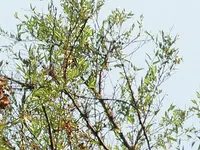
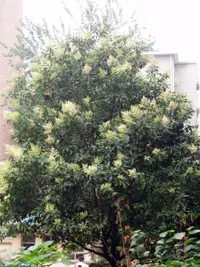
Tala, or Celtis tala, is a medium to large deciduous tree from South America, especially common in Argentina and Uruguay. It belongs to the hackberry group and is often used as a shade or windbreak tree.
The tree has a rounded to irregular crown, small serrated leaves, and small berry-like fruits that attract birds. Bark often shows warty or corky ridges.
Celtis tala tolerates wind, salt spray, and poor or dry soils, which makes it relatively easy to establish in tough landscapes. Understanding how to care for Tala mainly involves providing full sun and well-drained soil in mild to warm climates.

Care Difficulty
Easy Care

Light Preference
Full Sun

Water Requirements
Moderate Water

Temperature Preference
Warm Climate

Hardiness Zone
9–11

Soil Texture
Sandy, Loamy, Clay

Soil pH
Slightly acidic (6.5–7.0), Neutral (7.0)

Soil Drainage
Well-drained

Fertilization
Minimal (feed rarely)
Scan your plant to receive care tips personalized for your specific plant
Available on iOS and Android
This sun-tolerant tree performs best in open, bright sites with long daily exposure.
This drought-tolerant tree prefers deep, infrequent watering once established.
This warm-temperate tree handles a broad range of outdoor temperatures once established.
This species is tolerant of a wide humidity range and usually does not need special humidity management.
Celtis tala prefers moderately fertile, well-structured mineral soil with steady drainage.
This species is only moderately suited to container growing and usually performs better in open ground.
This tough, site-adapted tree usually needs little feeding once established, especially in the ground.
Celtis tala responds well to light structural pruning that maintains a strong, safe canopy.
This tree is usually grown in the landscape, so care focuses on correct transplanting rather than frequent repotting.
Propagation of Celtis tala is usually done from seed rather than vegetative methods in home settings.
Established trees are generally cold hardy in suitable climates and need minimal winter attention.

Plant Health Check
Not sure what's wrong with your plant? Check your plant's health inside the app.
This species is naturally concentrated around the Río de la Plata basin in Argentina and Uruguay, where it forms part of lowland woodlands and riverine forests on deep, often slightly saline or calcareous soils.
It shows notable tolerance to soil salinity and urban pollution, which is why it is sometimes used as a street and shelterbelt tree in coastal and suburban areas in its native range.
Its leaves serve as larval food for several South American butterflies, making it an important component of local insect biodiversity and a useful tree for ecological restoration plantings.

In parts of the Pampas region, this tree often establishes dense, almost monospecific stands on abandoned grazing land, significantly changing local plant composition and providing new perching and nesting sites for birds that then further spread its seeds.
This species grows moderately, usually 20–40 cm per year once established. In suitable outdoor conditions it can eventually reach 6–12 m tall with a broad, rounded crown and strong main trunk.
Keep your plants happy and healthy with plant identification, disease detection, and easy care guidance.