Mountain Hemlock Care (Tsuga mertensiana)

Also known as: alpine hemlock
Mountain Hemlock

About Mountain Hemlock

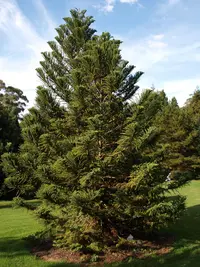
Mountain hemlock, Tsuga mertensiana, is a slow-growing coniferous tree valued for its graceful, narrow form and soft, blue‑green needles. It typically develops a tall, slender outline with slightly drooping branch tips that create a refined, layered look.

In nature it occurs in cool, high-elevation forests of the Pacific Northwest and western mountains, often growing in rocky, snowy sites. The species is long-lived but establishes slowly, so it is best suited to patient gardeners and larger landscapes.

It prefers cool summers, consistent moisture, and well-drained, slightly acidic soil, which can make how to care for Mountain Hemlock more demanding in hot or very dry regions.

Main Plant Requirements

Care Difficulty

Moderate Care

Light Preference

Full Sun

Water Requirements

Regular Water

Temperature Preference

Cold Hardy

Hardiness Zone

4–7

Soil Texture

Loamy, Sandy, Rocky

Soil pH

Strongly acidic (4.5–5.5), Acidic (5.5–6.5)

Soil Drainage

Moist but well-drained

Fertilization

Minimal (feed rarely)

Get Personalized Care Plan

Scan your plant to receive care tips personalized for your specific plant

Available on iOS and Android

How to Care for the Mountain Hemlock

This high-elevation conifer prefers cool, bright conditions with protection from harsh midday sun.

  • Provide 4–6 hours of sun per day, ideally morning sun with light afternoon shade, especially in warmer lowland sites when caring for Mountain Hemlock.
  • Allow dappled or filtered light under taller trees; it tolerates partial shade but becomes thin and sparse in deep shade.
  • In hot summers, protect from intense afternoon sun to prevent needle scorch and excessive drying, while in winter full sun is usually safe in cold climates.

This species prefers consistently moist, cool soil that never stays saturated for long periods.

  • Aim for soil that feels evenly moist at 5–8 cm depth; water when the upper 2–3 cm start to dry, especially during the first 2–3 establishment years.
  • Use well-drained, slightly acidic soil; avoid standing water or heavy clay that stays wet, which can cause root rot and yellowing needles.
  • In hot, dry summers, increase watering and watch for drooping or browning needle tips, while in cool, wet seasons reduce added water and monitor for fungal issues.

This cold-adapted conifer thrives in cool climates and tolerates significant winter lows.

  • Optimal growth occurs around 45–70°F (7–21°C), typical of cool coastal or montane conditions with mild summers.
  • Established trees tolerate at least 0°F (−18°C) and often much colder with good snow cover, showing strong cold hardiness and low frost sensitivity.
  • Heat above 80–85°F (27–29°C) can stress Tsuga mertensiana, so provide shade, mulch, and adequate moisture during heatwaves, especially at lower elevations.

This conifer prefers cool, consistently moist air but adapts to typical outdoor humidity in temperate regions.

  • Aim for 50–70% humidity in sheltered garden spots, avoiding hot, exposed, windy sites that dry foliage quickly.
  • Tolerates short dry spells, but prolonged very dry air leads to browning needle tips and increased spider mite activity.
  • Increase local humidity by mulching the root zone 5–8 cm deep and using nearby shrubs or windbreaks to reduce drying winds.

Tsuga mertensiana grows best in cool, moist, well‑aerated soil with high organic content.

  • Use a deep, loamy soil rich in leaf mold or compost, with some coarse sand or fine bark to keep the structure open.
  • Ensure free drainage; the soil should hold moisture but never stay waterlogged, especially in lower landscape spots.
  • Target slightly acidic conditions, roughly pH 5.0–6.5, by incorporating pine bark fines or acid‑forming composts.
  • On heavy clay sites, raise the planting area 15–20 cm and blend in sharp sand and fine gravel to improve aeration and percolation.

This species is only marginally suitable for containers and usually performs best in the ground.

  • Choose a tall, heavy container to counter the tree’s eventual height and prevent tipping in strong winds.
  • Use a coarse, bark‑based potting mix that drains quickly yet stays evenly moist to protect fine feeder roots.
  • Position the container where sides are shaded but the crown gets full light, reducing root‑zone overheating and moisture loss.

This high-elevation conifer usually needs minimal feeding in the ground; focus on soil quality rather than heavy fertilizer use for Mountain Hemlock.

  • On poor soils, apply a light layer of well-rotted compost over the root zone in early spring.
  • If using synthetic fertilizer, choose a balanced slow-release NPK (such as 10-10-10) formulated for conifers.
  • Feed only once per growing season and skip fertilization in winter dormancy.
  • Use at half the label strength to avoid excess salts that can damage fine roots.

Pruning Tsuga mertensiana is usually light and corrective, aimed at maintaining structure and removing problem growth.

  • Carry out any structural pruning in late winter to very early spring before new growth starts.
  • Remove dead, diseased, or storm-damaged branches back to healthy wood using clean, sharp bypass pruners or a pruning saw.
  • Thin crowded interior branches slightly to improve air flow without cutting into the central leader.
  • Avoid heavy cutting into old, bare wood, as regrowth is slow and natural form may be lost.

This species is rarely kept long term in containers; focus on careful transplanting of young Tsuga mertensiana into permanent sites.

  • Transplant in early spring or early fall when temperatures are mild and soil is moist but not waterlogged.
  • Look for signs like roots circling the pot, slow growth, or quick drying soil as cues a container seedling needs a larger space.
  • Move up only 1–2 pot sizes or into a well-prepared ground hole, keeping the root ball intact and at the same soil level.
  • Water deeply after transplanting and maintain even moisture for the first 1–2 growing seasons to reduce transplant shock.

Propagation of Tsuga mertensiana is possible but slow, and is most often done by seed in professional or nursery settings.

  • Collect ripe cones in late summer to early fall and extract seeds once scales open.
  • Provide cold stratification at 34–41°F for 2–3 months to break seed dormancy before sowing.
  • Sow in a well-drained, slightly acidic medium and keep evenly moist with bright, indirect light.
  • Semi-hardwood cuttings taken in late summer may root under high humidity and bottom heat, but success rates are often low.

This cold-hardy conifer usually needs little special winter care when planted in suitable climates.

  • Established ground-grown trees tolerate deep frost and snow typical of mountain and northern regions.
  • Apply 5–8 cm of mulch around, but not touching, the trunk base to moderate soil temperature swings.
  • For young or container plants, shield roots from extreme freeze-thaw by heeling pots into the ground or using insulated covers.

Care Tips

Wind exposure management

Site young trees where they receive some protection from prevailing winter winds, or use a temporary windbreak fabric on the windward side for the first 3–5 years to reduce desiccation and leader dieback.


Mulch for cool roots

Apply a 5–8 cm layer of coarse, bark-based mulch over the root zone, keeping it a few cm away from the trunk, to keep roots cool, reduce soil moisture swings, and limit weed competition.

Snow load protection

In areas with heavy, wet snow, gently shake accumulated snow off the branches after storms and stake or guy young trees if needed to prevent bending or breakage of the flexible leader.

Gentle root competition control

Avoid planting directly under shallow‑rooted, aggressive trees and, if turf is present, remove it in a 60–120 cm radius around the trunk so the hemlock does not compete with grass for water and nutrients while growing Mountain Hemlock.

Regular health monitoring

Inspect needles and twigs every 4–6 weeks for early signs of pests, discoloration, or tip dieback, and address problems promptly with targeted treatments to maintain long-term vigor.

Common Pests and Diseases

Hemlock woolly adelgid

This pest feeds on needles and twigs, causing needle yellowing, thinning foliage, and branch dieback; white cottony masses are visible at the base of needles. Infestations can weaken trees over several seasons, especially in stressed or planted specimens.

Solution

Prune and destroy heavily infested small branches, then treat remaining foliage with horticultural oil or insecticidal soap in late winter to early spring, ensuring thorough coverage of the undersides of branches. Maintain good plant vigor through proper watering and mulch, and avoid high-nitrogen fertilization that increases susceptibility.

Hemlock looper

These insects are caterpillars that chew needles, causing noticeable defoliation and thin crowns, especially on stressed or exposed trees. Severe outbreaks can strip foliage and predispose the tree to further decline or secondary pests.

Solution

Monitor for young larvae in spring and early summer and, where feasible, handpick or shake caterpillars from small trees onto a tarp for removal. For significant infestations, a targeted biological product containing Bacillus thuringiensis (Bt) can be applied to foliage according to label directions, focusing on early larval stages while also supporting overall Tsuga mertensiana care with proper site and moisture management.

Needle cast

This disease causes older needles to yellow or redden, then drop prematurely, leading to thin foliage and bare inner branches. Symptoms include spotted or banded needles and small dark fruiting bodies under close inspection.

Solution

Improve air circulation by avoiding crowding, pruning for better light penetration, and not wetting foliage with overhead irrigation. Remove and discard fallen needles and severely affected twigs, and in persistent cases use a labeled fungicide in spring to protect new growth, timing applications just before bud break and after heavy rains.

Cytospora canker

This disease infects stressed branches, causing localized sunken lesions, resin flow, and progressive dieback from the tip inward. Symptoms include scattered dead branches in the crown while other parts of the tree remain green.

Solution

Prune out infected branches during dry weather, cutting back into healthy wood and disinfecting tools between cuts with alcohol or a 10% bleach solution. Reduce plant stress by maintaining even soil moisture, protecting roots from compaction, and avoiding mechanical damage to the trunk and lower branches.

Interesting Facts

High-elevation specialist

Mountain hemlock naturally dominates harsh subalpine zones in the Pacific Northwest, forming krummholz, or stunted, wind-sculpted forms near treeline where few other conifers can persist.

Snowpack stabilizer

Its dense, narrow crown structure and flexible branches intercept and hold deep winter snow, helping to slow snowmelt and stabilize mountain snowpacks that feed streams into late summer.

Unusual cone orientation

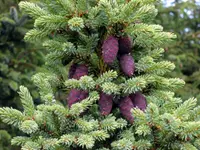
Unlike most hemlocks, its seed cones are often nearly cylindrical and can appear more upright and robust, which historically led botanists to debate its relationships with spruces and other high-elevation conifers.

Botan icon

Did you know?

Mountain hemlock can live for several centuries and often forms the core of old-growth subalpine forests, where tree rings from individual specimens have been used to reconstruct past climate patterns in the coastal and Cascade mountain ranges.

FAQs about Mountain Hemlock

This species grows slowly, typically 15–30 cm per year in good conditions. Growth is slower in poor, dry, or hot sites. It often takes several decades to form a medium to large landscape tree.

Grow Healthy Plants with Botan Care

Keep your plants happy and healthy with plant identification, disease detection, and easy care guidance.


Botan plant care app — identify plants on mobile

Explore More Plants