Celery-top Pine Care (Phyllocladus aspleniifolius)

Also known as: celery pine
Celery-top Pine

About Celery-top Pine

Celery-top pine (Phyllocladus aspleniifolius) is an evergreen conifer native to cool, moist forests of Tasmania and parts of southeastern Australia. It has a dense, upright habit with flattened, leaf-like cladodes that give a soft, ferny appearance.

In gardens it is usually grown as a small tree or large shrub, valued for its refined texture and slow, manageable growth. The species prefers cool summers, consistent moisture, and well-drained, slightly acidic soils.

Shelter from harsh, drying winds helps maintain healthy foliage and good form. With the right climate and soil, it is relatively straightforward to care for Celery-top Pine for long-term structure and interest.

Main Plant Requirements

Care Difficulty

Moderate Care

Light Preference

Partial Shade

Water Requirements

Regular Water

Temperature Preference

Cool Climate

Hardiness Zone

8–10

Soil Texture

Loamy, Peaty, Organic-rich

Soil pH

Strongly acidic (4.5–5.5), Acidic (5.5–6.5)

Soil Drainage

Moist but well-drained

Fertilization

Minimal (feed rarely)

Get Personalized Care Plan

Scan your plant to receive care tips personalized for your specific plant

Available on iOS and Android

How to Care for the Celery-top Pine

This cool-climate conifer prefers bright, gentle light that mimics a light woodland edge.

  • Provide 3–5 hours of morning sun with light shade or dappled light in the afternoon to protect foliage of Celery-top Pine from scorch.
  • Site in partial shade, especially in hotter regions, avoiding intense midday sun; filtered light under taller trees works well.
  • In summer, watch for yellowing or crisp leaf-like cladodes as a sign of too much sun, and in deep shade expect slower growth and sparse branching.

This species prefers consistently moist, cool soil without staying waterlogged.

  • Water when the top 3–5 cm of soil feel slightly dry but deeper soil still feels moist, aiming to keep the root zone evenly damp.
  • In cool, rainy seasons, rely mostly on natural rainfall if soil drains well; in dry or windy periods, increase watering to prevent wilting or browning tips.
  • Use deep, infrequent soaking rather than light sprinkling, and ensure free-draining, organic-rich soil to avoid root rot and sour, foul-smelling soil around Phyllocladus aspleniifolius.

This plant is adapted to cool, moist climates with mild summers and frost-tolerant winters.

  • Optimal growth occurs around 50–68°F (10–20°C), with steady, moderate temperatures supporting dense, healthy foliage.
  • Mature plants tolerate brief drops to about 15–20°F (-9 to -6°C), but young specimens benefit from protection during hard freezes and cold, drying winds.
  • In hotter areas, avoid prolonged exposure above 86°F (30°C); provide shade, mulch, and consistent soil moisture during heat waves to limit stress and leaf scorch.

This species prefers moderate, steady humidity and usually adapts well to outdoor conditions in temperate climates.

  • Aim for 40–60% humidity; in very dry inland areas, shelter young Celery-top Pine plants from hot, drying winds.
  • Leaf-clads turning brown at tips or edges and unusually rapid needle drop indicate chronic low humidity stress.
  • Increase humidity outdoors by mulching the root zone 5–8 cm deep and using nearby shrubs or windbreaks to reduce moisture loss.

Soil for Phyllocladus aspleniifolius should be cool, moist, and well drained, mimicking its native forest habitats.

  • Use a deep, loamy mix with plenty of organic matter, such as composted bark and leaf mold, to hold moisture without becoming heavy.
  • Ensure free drainage; on compact or clay sites, build a raised bed and blend in coarse sand or fine pine bark to improve aeration.
  • Keep soil slightly acidic, roughly pH 5.5–6.5, avoiding lime or alkaline amendments that can restrict nutrient uptake.
  • Avoid waterlogged positions, shallow chalky soils, or very thin, drought-prone sand where roots dry or overheat quickly.

This species can be grown in containers for some years, particularly in cooler, moist climates.

  • Choose a tall, heavy pot to give the developing root system depth and to prevent the plant from becoming wind-rocked as it gains height.
  • Use a peat-free, bark-based potting mix that drains freely yet stays evenly moist to avoid root stress between waterings.
  • Position the container where it will not overheat in full summer sun, since dark pots can raise root-zone temperatures above safe levels.

This slow-growing conifer needs only modest feeding under most garden conditions.

  • Apply a light dressing of well-rotted compost around the root zone in early spring to support steady growth.
  • In poorer soils, use a balanced slow-release fertilizer (around 10-10-10) at label rates once in spring for caring for Celery-top Pine.
  • Avoid high-nitrogen lawn fertilizers near the root area, which can promote weak, overly lush growth.
  • Do not feed in late fall or winter, as the plant is semi-dormant and excess nutrients are not used effectively.

Pruning needs for Phyllocladus aspleniifolius are low and mainly structural.

  • Carry out light pruning in late winter or early spring before new growth starts.
  • Remove dead, damaged, or crossing branches first to maintain a healthy framework.
  • Thin crowded interior shoots slightly to improve light penetration and air flow without altering the natural habit.
  • Use clean, sharp bypass pruners and make cuts just above a side shoot or branch junction.

This species is usually grown in the ground, so focus on careful transplanting rather than frequent repotting.

  • Transplant young trees in late winter or early spring while still dormant, avoiding hot or dry periods.
  • Choose a site with well-drained, slightly acidic soil and move the root ball intact to limit disturbance.
  • Indications a container-grown plant needs shifting include roots circling the pot, water running off quickly, and slowed growth.
  • Water thoroughly after planting, apply a 5–8 cm mulch layer, and shade lightly for 1–2 weeks to reduce transplant stress.

Phyllocladus aspleniifolius is propagated mainly by seed, with cuttings used less often and with variable success.

  • Collect ripe seeds from cones and sow in late winter to early spring in a free-draining, slightly acidic mix.
  • Provide cool conditions and even moisture, as germination can be slow and sometimes spread over many weeks.
  • Semi-ripe cuttings taken in late summer may root under high humidity and gentle bottom heat, though success rates can be low.
  • Keep all propagation material shaded from harsh sun and avoid waterlogging to prevent rot.

This conifer is moderately cold hardy and usually needs minimal winter care in mild to cool climates.

  • In colder regions, apply a 5–8 cm mulch layer around the root zone to moderate freeze–thaw cycles.
  • Shelter young plants from drying winter winds using a windbreak or temporary screen.
  • For container specimens in zones with severe freezes, move pots into an unheated garage or sheltered porch to avoid root damage.

Care Tips

Shelter From Wind

Plant in a position with protection from strong, drying winds or use a temporary windbreak for young trees, as the flattened cladodes can tear and deform in exposed sites.

Establish Structural Leader

In the first 3–5 years, lightly stake and guide a single central leader and remove competing upright shoots to build a strong, straight trunk for long-term landscape stability.

Understory Companion Planting

Use low, non-competitive understory plants rather than turf directly under the canopy to reduce root disturbance, maintain more even soil moisture, and keep mowers away from the trunk.

Mulch Collar Management

Maintain a 5–8 cm deep organic mulch ring, but pull it 5–8 cm back from the trunk to protect surface feeder roots while preventing bark rot at the base.

Gradual Site Transition

When transplanting from container to open ground, harden the plant off over 10–14 days by gradually increasing light and exposure, which reduces transplant shock when growing Celery-top Pine.

Common Pests and Diseases

Armillaria root disease

This disease is caused by Armillaria fungi in poorly drained or previously forested sites and can slowly kill celery-top pine over several years. Symptoms include thinning foliage, yellowing cladodes, dieback of branch tips, and white fungal sheets under the bark near the base.

Solution

Remove and destroy severely affected plants and as much infected root material as possible, and avoid replanting celery-top pine or other susceptible conifers in the same spot. Improve drainage, reduce soil compaction, and keep mulch and organic debris slightly away from the trunk base to limit fungal spread when growing Celery-top Pine.

Phytophthora collar rot

This disease develops in wet, waterlogged soils where Phytophthora fungi infect the lower stem and roots. Symptoms include sudden wilting, browning of cladodes, dark sunken lesions at the root collar, and poor new growth.

Solution

Improve drainage, avoid overwatering, and never allow water to pool around the base of the plant. Remove affected plants if collar tissue is extensively damaged and consider using a phosphite-based drench as a preventative treatment in high-risk, poorly drained sites, following label instructions.

Scale insects

These insects attach to stems and cladodes, sucking sap and weakening the plant over time. Symptoms include small raised bumps on stems, sticky honeydew, sooty mold growth, and general loss of vigor.

Solution

Prune out and discard heavily infested twigs, then wipe or gently scrub remaining scales with a soft cloth or brush dipped in soapy water. For persistent infestations, apply a horticultural oil spray during mild weather, ensuring thorough coverage of stems and the undersides of cladodes while avoiding application during high heat.

Cypress aphids

These insects feed on soft new growth, causing distortion, yellowing, and in heavy cases dieback of fine branchlets. This pest may also attract ants and promote sooty mold through honeydew production.

Solution

Hose down affected foliage with a firm stream of water to remove aphids, then repeat as needed. Encourage natural predators such as lady beetles, and if populations remain high, use an insecticidal soap or a low-toxicity systemic product labeled for conifers, applying only according to directions and avoiding application in very hot or very cold conditions.

Sooty mold

This disease is a secondary fungal growth that develops on the sugary honeydew left by sap-sucking insects such as scale or aphids. Symptoms include black, sooty coating on cladodes and stems, which can reduce photosynthesis and make the plant look dirty or dull.

Solution

Control the underlying insect problem first by managing scale or aphids. Once honeydew production is reduced, gently wash affected foliage with water, possibly with a small amount of mild soap, and prune off heavily coated sections to restore light penetration and normal growth.

Interesting Facts

Leaves that are not leaves

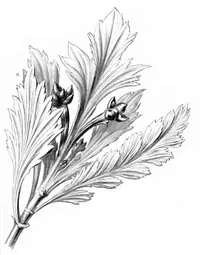
This species has flattened, leaf-like stems called phylloclades that carry out photosynthesis, while its true leaves are tiny and short-lived on young shoots.

Tasmanian cool-climate specialist

It is naturally restricted mainly to cool, high-rainfall areas of Tasmania, where it forms part of wet sclerophyll forests and rainforest margins on nutrient-poor, often acidic soils.

Ancient Gondwanan lineage

Genetic and fossil evidence indicates that this conifer represents a relict Gondwanan lineage, with close relatives once widespread across the ancient southern supercontinent.

Botan icon

Did you know?

The wood of this species is unusually durable and fine-textured for a slow-growing conifer, and has been valued in Tasmania for specialty uses such as boat building and high-quality joinery due to its stability and resistance to decay in moist conditions.

FAQs about Celery-top Pine

This species grows slowly, typically adding 10–25 cm per year in cultivation. Growth is faster in cool, moist, sheltered sites with deep, acidic soil and slower in exposed, dry, or compacted conditions.

Grow Healthy Plants with Botan Care

Keep your plants happy and healthy with plant identification, disease detection, and easy care guidance.


Botan plant care app — identify plants on mobile

Explore More Plants