Early structural training
In the first 3–5 years, select 1 strong central leader and 4–6 well-spaced scaffold branches, removing steep, crossing, or co-dominant shoots to build a stable, storm-resistant canopy.

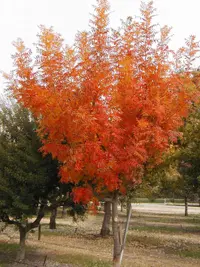
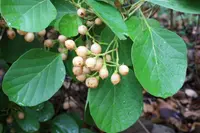
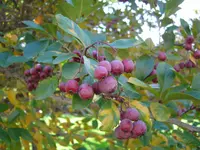
Chinese pistache, Pistacia chinensis, is a deciduous shade tree valued for its strong structure and reliable fall color. It develops a rounded crown, fine-textured foliage, and often attractive red to blue fruit on female trees.
This species is native to China and nearby regions but is widely planted in warm-temperate and semi-arid climates. It adapts well to urban conditions, including heat, air pollution, and compacted soils.
The tree is generally easy to grow once established due to its drought tolerance and resilience to many pests and diseases. Those who want to learn how to care for Chinese pistache mainly need to provide full sun, well-drained soil, and space for its mature canopy.

Care Difficulty
Easy Care

Light Preference
Full Sun

Water Requirements
Low Water

Temperature Preference
Cold Hardy

Hardiness Zone
6–9

Soil Texture
Sandy, Loamy, Clay

Soil pH
Slightly acidic (6.5–7.0), Slightly alkaline (7.0–7.5)

Soil Drainage
Well-drained

Fertilization
Minimal (feed rarely)
Scan your plant to receive care tips personalized for your specific plant
Available on iOS and Android
This deciduous tree develops best color and structure with strong, direct light exposure.
This species prefers deep, infrequent watering once established, supported by well-drained soil.
This hardy tree tolerates a wide temperature range but still benefits from stable seasonal conditions.
Pistacia chinensis tolerates a wide humidity range and usually does not need special humidity management outdoors.
Pistacia chinensis prefers moderately fertile, well-structured mineral soils that drain freely.
This species can be grown in large outdoor containers for several years, mainly in its juvenile stage.
This drought-tolerant tree usually needs minimal feeding once established in the landscape.
Pruning supports strong structure and clearance while keeping Pistacia chinensis safe and manageable in landscapes.
This species is usually grown as a landscape tree, so guidance focuses on transplanting rather than long-term container culture.
Propagation of Pistacia chinensis is usually done from seed, with some use of semi-hardwood cuttings in professional settings.
Mature trees are quite cold hardy and often require little specific winter care in suitable climates.

Plant Health Check
Not sure what's wrong with your plant? Check your plant's health inside the app.
Pistacia chinensis has separate male and female trees. Only female trees produce the ornamental red fruit clusters, but they need pollen from a nearby male tree.
Unlike many drought-tolerant trees, this species develops reliable red, orange, and sometimes yellow foliage in autumn, especially in regions with hot summers and cool falls.
The tree is widely planted in cities because it tolerates heat, air pollution, reflected light from pavement, and compacted soils better than many comparable ornamental trees.
Pistacia chinensis has been used as a rootstock for commercial pistachio (Pistacia vera) orchards in some regions, because its strong, adaptable root system can improve drought and soil tolerance for the grafted nut-producing variety.
Brown leaf edges usually indicate drought stress, hot drying winds, or salt buildup from fertilizers. Deep, infrequent watering, a 5–8 cm mulch layer, and avoiding excess fertilizer typically improve new foliage over the following season.
Keep your plants happy and healthy with plant identification, disease detection, and easy care guidance.