Wind-firm training
In windy sites, stake young trees for the first 1–2 years and gradually loosen ties so the trunk flexes slightly and develops stronger wood without rubbing damage.


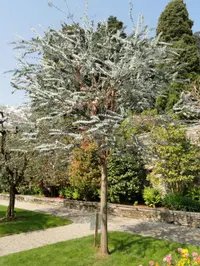
Cedar wattle (Acacia elata) is a fast-growing evergreen tree known for its feathery, fern-like foliage and clusters of creamy yellow, fragrant flowers. It often forms a tall, upright canopy that provides light, filtered shade rather than deep darkness.
This species is native to southeastern Australia, where it grows in forests and along gullies, often in well-drained but reasonably moist soils. In suitable climates, it is considered relatively easy to establish, thanks to its vigor and tolerance of mild drought once mature.
Good site selection is important to care for cedar wattle, as it prefers full sun, protection from severe frost, and soil that drains well but does not stay bone dry for long periods.

Care Difficulty
Moderate Care

Light Preference
Full Sun

Water Requirements
Moderate Water

Temperature Preference
Warm Climate

Hardiness Zone
9–11

Soil Texture
Sandy, Loamy, Clay

Soil pH
Slightly acidic (6.5–7.0), Neutral (7.0)

Soil Drainage
Well-drained

Fertilization
Minimal (feed rarely)
Scan your plant to receive care tips personalized for your specific plant
Available on iOS and Android
This fast-growing Australian tree prefers bright, direct light for strong, upright growth when growing cedar wattle outdoors.
This species prefers deep, infrequent watering once established, with soil allowed to dry partially between soakings.
This tall wattle prefers mild, frost-free to light-frost climates for reliable long-term growth.
This species handles a wide humidity range and usually does not need special humidity management outdoors.
Acacia elata grows best in loose, well-drained, moderately fertile soil.
This species can be grown in containers when given enough root space and stability.
This nitrogen-fixing tree needs only light feeding in most garden soils, so cedar wattle care instructions focus on avoiding excess fertilizer.
Pruning Acacia elata is mainly done to maintain a safe, well-structured canopy and remove problem wood.
This species is usually grown in the ground, so guidance focuses on transplanting young Acacia elata safely.
Propagation of Acacia elata is commonly carried out from seed, with some use of semi-hardwood cuttings.
Winter care for Acacia elata depends strongly on local climate, as this species is only lightly frost tolerant.

Plant Health Check
Not sure what's wrong with your plant? Check your plant's health inside the app.
In suitable conditions this species can grow from a young plant to a small tree in a few years, often quickly overtopping shrubs and smaller trees in its native range in southeastern Australia.
This species is well adapted to recovering after fire and soil disturbance, using its short-lived but abundant seeds and vigorous growth to re-establish rapidly in regenerating forest and woodland.
In many mild climates this tree can produce its pale yellow, scented flower clusters over an extended period from late winter into spring, providing a long-lasting nectar and pollen source for insects.

Acacia elata has become naturalized in several regions outside its native Australian range, including parts of New Zealand and South Africa, where its rapid growth and prolific seeding have led to concern about its potential as an invasive species in some habitats.
This species is generally fast-growing, often adding 60–120 cm of height per year in favorable conditions. Growth slows in poor soil, drought, or exposed, windy sites, so shelter and good establishment significantly improve early performance when you grow Acacia elata.
Keep your plants happy and healthy with plant identification, disease detection, and easy care guidance.