Early leader training
In the first 3–5 years, select a single strong central leader and remove competing upright shoots during the dormant season to build a tall, straight trunk suitable for long-term structural strength.

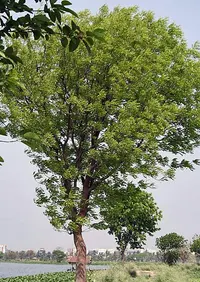
West Indian mahogany, Swietenia mahagoni, is a broadleaf evergreen tree valued for its dense, fine-grained timber and neat, oval crown. It is native to the Caribbean and south Florida, where it grows in coastal forests and limestone-based soils.
Mature trees develop smooth gray-brown bark, glossy dark green leaflets, and small, unobtrusive flowers followed by dry, woody seed capsules. In suitable climates it grows into a medium to large shade tree, so it is not practical for most indoor settings.
It prefers warm temperatures, full sun, and well-drained soil, and young plants need consistent moisture but dislike waterlogged roots. Understanding these natural conditions helps guide how to care for West Indian mahogany in gardens and landscape projects.

Care Difficulty
Moderate Care

Light Preference
Full Sun

Water Requirements
Moderate Water

Temperature Preference
Tropical / Frost Sensitive

Hardiness Zone
10–11

Soil Texture
Sandy, Loamy, Organic-rich

Soil pH
Slightly acidic (6.5–7.0), Neutral (7.0)

Soil Drainage
Well-drained

Fertilization
Minimal (feed rarely)
Scan your plant to receive care tips personalized for your specific plant
Available on iOS and Android
Swietenia mahagoni grows best in strong light typical of tropical to subtropical climates.
This species prefers evenly moist but well-drained soil, especially during establishment.
This tropical tree thrives in consistently warm, frost-free conditions.
Swietenia mahagoni handles a fairly wide humidity range and usually does not need special humidity management.
Swietenia mahagoni prefers well-drained, slightly dry-leaning substrates that still hold some moisture around the roots.
This species can grow in containers for several years, mainly as a juvenile tree or bonsai-style specimen.
Swietenia mahagoni benefits from light, balanced nutrition but matures well even in relatively lean soils.
Pruning Swietenia mahagoni focuses on structural strength, clearance, and removal of damaged wood.
This species is usually field-grown; container plants of Swietenia mahagoni are temporary and should be transplanted once established.
Swietenia mahagoni is most commonly propagated from seed under warm, bright conditions.
This tropical tree is frost-sensitive and needs protection in climates cooler than USDA zone 10.

Plant Health Check
Not sure what's wrong with your plant? Check your plant's health inside the app.
This species is native to the northern Caribbean, especially the Bahamas, Cuba, and southern Florida Keys, where it evolved in coastal hammocks and limestone soils exposed to salt-laden winds.
The tree was so valued for shipbuilding and high-end furniture that intense logging in the 18th–19th centuries led to major population declines in its native range and contributed to its listing as Vulnerable on the IUCN Red List.
In Florida it is classified as threatened, and natural populations are safeguarded by state and local regulations that restrict cutting and habitat destruction.

The wood of this species was historically preferred for building the hulls of sailing ships because its density, dimensional stability, and resistance to rot and marine borers reduced hull warping and prolonged a vessel’s service life.
Growth is moderate rather than extremely fast. Young trees often add 30–60 cm in height per year under warm, moist, open conditions. Growth slows with age, poor soil fertility, restricted root space, or repeated pruning.
Keep your plants happy and healthy with plant identification, disease detection, and easy care guidance.