spearwood Care (Acacia doratoxylon)

spearwood

About spearwood

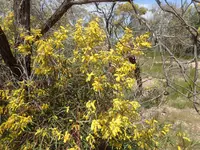
Spearwood, Acacia doratoxylon, is an evergreen shrub or small tree known for its slender, often multi-stemmed habit and fine, needle-like foliage. It typically has pale yellow, puffball flowers along the stems. This species is native to dry inland regions of Australia, where it grows in poor, sandy or rocky soils and copes with heat and drought. These origins make it a relatively tough plant in cultivation, though young plants can be sensitive to waterlogging and frost. Those who want to care for spearwood should provide strong light, well-drained soil, and infrequent but deep watering once established.

Main Plant Requirements

Care Difficulty

Moderate Care

Light Preference

Full Sun

Water Requirements

Low Water

Temperature Preference

Warm Climate

Hardiness Zone

8–10

Soil Texture

Sandy, Loamy, Rocky

Soil pH

Slightly acidic (6.5–7.0), Slightly alkaline (7.0–7.5)

Soil Drainage

Well-drained

Fertilization

Minimal (feed rarely)

Get Personalized Care Plan

Scan your plant to receive care tips personalized for your specific plant

Available on iOS and Android

How to Care for the spearwood

Acacia doratoxylon needs high light levels to form dense, healthy foliage and flowers.

  • Provide 6–8 hours of direct sun daily; full sun is ideal, especially in open, exposed sites.
  • Plant where it receives morning sun and tolerates light afternoon shade; spearwood copes with bright, dry positions once established.
  • Too little sun causes sparse, leggy growth, while extreme reflected heat in mid-summer can scorch young plants, so use temporary shade cloth in the first 1–2 summers if leaves pale or curl.

This drought-tolerant shrub prefers infrequent, deep watering over light, frequent applications.

  • In the first 1–2 growing seasons, water when the top 5–7 cm of soil is dry, soaking the root zone thoroughly, then allow the soil to dry again.
  • Ensure sharply drained soil; waterlogging causes yellowing foliage, soft stems, and root rot, especially on heavy clay sites.
  • Once established, Acacia doratoxylon usually needs only occasional deep watering during extended dry periods; grey, curled, or shedding leaves signal prolonged drought stress.

This species is adapted to hot, dry climates but still has clear temperature limits.

  • Best growth occurs around 65–85°F (18–29°C), with steady warmth and low to moderate humidity.
  • Mature plants tolerate heat spikes up to about 100–105°F (38–41°C) if soil is not waterlogged and roots are shaded by mulch.
  • It generally survives brief light frosts down to about 23–25°F (-5 to -4°C), but young plants benefit from frost cloth or a sheltered microclimate in cold winters.

Humidity is rarely critical for this arid-adapted species when grown in typical indoor or outdoor household conditions.

Acacia doratoxylon prefers lean, well-drained mineral soils that mimic its dry native habitats.

  • Use sandy or gravelly loam with low to moderate organic matter to avoid holding excess moisture.
  • Ensure very fast drainage; combine roughly 50–60% coarse sand or fine gravel with 40–50% loam-based mix.
  • Keep pH slightly acidic to neutral (pH 6.0–7.5); avoid strongly acidic peat-heavy mixes.
  • Do not use compacted or clay-rich soils, which restrict aeration and sharply increase root rot risk.

This species can be grown in containers short to medium term if the pot is chosen carefully for stability and drainage.

  • Choose a deep, heavy pot (such as thick-walled clay or concrete) to counter the tall, woody top growth and prevent tipping in wind.
  • Select a container slightly wider than the root mass so the soil column dries evenly instead of staying wet at the center.
  • Raise the pot on feet or blocks so drainage holes stay clear and runoff leaves the container area quickly after watering.

This drought-adapted Australian tree needs only light feeding in poor soils, so caring for spearwood focuses more on suitable site and watering than on fertilizer.

  • Use a low-phosphorus, balanced NPK granular or slow-release fertilizer in early spring only if growth is weak or soil is very poor.
  • Apply a light dose around the drip line, keeping granules away from the trunk and watering in thoroughly after application.
  • On richer or amended soils, use a thin layer of well-aged compost once in spring instead of synthetic products.
  • Do not feed in late fall or winter, and avoid high-strength or frequent applications that can damage this nutrient-efficient species.

Acacia doratoxylon responds well to light, targeted pruning that maintains structure and safety without heavy cutting.

  • Carry out main pruning in late winter to very early spring before active growth begins.
  • Remove dead, diseased, crossing, or storm-damaged branches first, cutting back to healthy wood with clean, sharp bypass pruners or a saw.
  • Thin congested interior shoots to improve airflow and light penetration while keeping the tree’s natural habit.
  • Limit tip reductions to moderate cuts that guide height and spread rather than severe heading cuts, which can cause weak regrowth.

This species is usually grown in the ground, so transplanting young plants at the right stage is more important than frequent repotting.

  • Shift seedlings or young container plants when roots just begin circling the pot or growth slows despite good care.
  • Plan outdoor transplanting for late winter to early spring, allowing roots to establish before summer heat or prolonged drought.
  • Handle the root ball gently, disturbing it as little as possible and planting at the same depth in a free-draining, low-phosphorus soil.
  • Water deeply after transplanting, then reduce frequency as the plant settles, avoiding waterlogging that stresses sensitive roots.

This acacia is most often propagated from seed, as cuttings root less reliably and require controlled conditions.

  • Collect ripe seed in late summer to fall and store dry and cool until sowing in late winter or early spring.
  • Scarify hard seed by pouring hot (not boiling) water over it and soaking 12–24 hours to break dormancy.
  • Sow into a fast-draining, low-nutrient mix, keeping medium just moist and warm, around 65–75°F, for even germination.
  • Grow seedlings on in bright light with good airflow, potting up carefully once roots fill the small container.

This tree is moderately cold hardy in many mild to warm regions and usually needs only basic winter attention once established.

  • In areas with occasional frost, a 5–8 cm mulch around the root zone helps buffer soil temperature while keeping it away from the trunk.
  • Young or container-grown plants benefit from a sheltered position out of harsh wind that can desiccate foliage.
  • Move potted specimens under cover or indoors to a bright, cool, frost-free space whenever extended freezes are forecast.

Care Tips

Root establishment focus

During the first 1–2 years, reduce any competing vegetation in a 30–60 cm radius and avoid cultivating the soil near the base so fine feeder roots can establish without disturbance.

Wind-hardening young plants

In windy sites, stake only loosely and for a short period, then gradually remove support over 1–2 growing seasons so the trunk can strengthen naturally rather than relying on permanent ties.

Low-phosphorus inoculation

When planting into poor, sandy soils, mix a small amount of native legume inoculant into the backfill to support nitrogen-fixing root nodules, but avoid any fertilizers labeled as high in phosphorus.

Firewise canopy management

In fire-prone areas, prune lower branches over several seasons to raise the canopy and remove accumulated dry material beneath the plant to reduce fuel load while maintaining its natural form.

Drought conditioning regime

After the first establishment year, gradually extend the interval between deep waterings during mild seasons to encourage deeper root growth and improve resilience when growing spearwood in dry climates.

Common Pests and Diseases

Acacia leaf miner

This pest tunnels inside young leaflets and phyllodes, creating pale winding mines that can cause distortion and premature leaf drop. Symptoms include thinning foliage and reduced vigor in stressed or recently transplanted plants.

Solution

Prune and dispose of heavily mined shoots to remove larvae, and encourage natural predators by avoiding broad-spectrum insecticides. For young or high-value plants, use a systemic insecticide labeled for leaf miners during active growth, and reduce plant stress through proper watering and mulching as part of general Acacia doratoxylon plant care.

Acacia psyllid

These insects feed on sap from young shoots, causing cupped or distorted new growth, sticky honeydew, and sometimes sooty mold on the foliage. Infestations are often more severe on plants growing in hot, dry, exposed sites.

Solution

Prune and destroy badly infested shoot tips and increase air movement around the canopy. For ongoing problems, wash foliage with a strong but controlled stream of water, and if needed apply a horticultural oil or insecticidal soap to the undersides of leaves, repeating as label directions allow until populations decline.

Scale insects

This pest attaches firmly to stems and leaf midribs as small bumps, sucking sap and producing honeydew that may lead to sooty mold. Symptoms include dull, sticky foliage, reduced growth, and branch dieback when populations are high.

Solution

Gently scrape off accessible scales or prune heavily infested twigs, then dispose of debris. Follow up with horticultural oil coverage during mild weather to smother remaining scales, and support plant resilience with appropriate watering and avoidance of high-nitrogen fertiliser, which can encourage outbreaks.

Armillaria root disease

This disease, caused by Armillaria fungi in the soil, leads to gradual decline, yellowing foliage, branch dieback, and eventual death, especially in poorly drained or previously treed sites. Symptoms include white fungal sheets under the bark near the base and dark rhizomorphs on roots in advanced cases.

Solution

Remove and destroy severely affected plants, including as much root material as possible, and avoid replanting susceptible woody species in the same spot. Improve drainage, avoid overwatering, and keep mulch and organic debris away from the trunk to reduce conditions favorable for the fungus.

Phytophthora dieback

This disease is caused by water-mould pathogens in poorly drained or seasonally waterlogged soils, leading to root decay, sudden wilting, leaf bronzing, and progressive branch dieback. Symptoms include plants that fail to respond to watering and gradually collapse despite otherwise suitable conditions.

Solution

Improve drainage, reduce irrigation frequency, and avoid standing water around the root zone to limit pathogen activity. Remove and discard severely affected plants and surrounding infected soil where feasible, disinfect tools after use, and consider using fosetyl-Al (phosphite) treatments if allowed locally to protect nearby healthy trees when growing spearwood in high-risk sites.

Interesting Facts

Desert nitrogen fixer

This species hosts nitrogen-fixing bacteria in its root nodules, allowing it to enrich very poor, sandy and skeletal soils in inland Australia and help stabilise degraded sites.

Highly flammable foliage

The fine, resinous foliage and slender branches are notably flammable, and the species is often cited in Australian fire ecology literature as a shrub that can carry and intensify bushfire fronts.

Dense hard timber

Its wood is very dense, hard and close-grained, and has been traditionally used in Australia for durable items such as fence posts, tool handles and small turned objects where high wear resistance is needed.

Botan icon

Did you know?

Acacia doratoxylon is one of the characteristic shrubs of the Australian mallee and semi-arid woodland ecosystems, where its dense structure and persistent foliage provide critical shelter for small birds and reptiles in landscapes otherwise dominated by open eucalypt canopies and sparse groundcover.

FAQs about spearwood

This species is moderately fast-growing in its youth, often adding 30–60 cm per year under warm, sunny, low-frost conditions. Growth slows as it matures, especially in dry, nutrient-poor sites or where roots are restricted.

Grow Healthy Plants with Botan Care

Keep your plants happy and healthy with plant identification, disease detection, and easy care guidance.

Botan plant care app — identify plants on mobile

Explore More Plants