Encourage Strong Leader
In the first 3–5 years, select one straight central stem and remove or shorten competing upright shoots in late winter to build a single strong leader that resists storm damage as the tree matures.

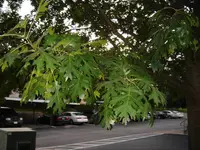
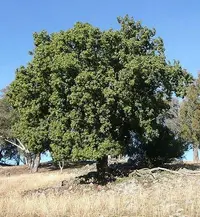
Shumard's oak, Quercus shumardii, is a large, long-lived deciduous tree native to the central and southeastern United States. It typically grows with a broad, rounded crown and strong, upright branching.
Leaves are deeply lobed and turn attractive red to reddish-brown in fall, while acorns provide food for wildlife. Bark shifts from smooth and gray on young trees to dark and ridged with age.
This species usually occurs in bottomlands, river terraces, and moist upland sites with good drainage. It is considered relatively easy to grow in suitable climates, provided it has full sun, moderate soil moisture, and room to develop a deep root system, which helps explain how to care for Shumard's oak.

Care Difficulty
Moderate Care

Light Preference
Full Sun

Water Requirements
Moderate Water

Temperature Preference
Cold Hardy

Hardiness Zone
5–9

Soil Texture
Sandy, Loamy, Clay

Soil pH
Acidic (5.5–6.5), Slightly acidic (6.5–7.0)

Soil Drainage
Moist but well-drained

Fertilization
Minimal (feed rarely)
Scan your plant to receive care tips personalized for your specific plant
Available on iOS and Android
This large deciduous tree performs best with strong outdoor light exposure from an early age.
This deep-rooted oak prefers infrequent, thorough watering that encourages strong drought tolerance once established.
This species is a hardy North American oak that tolerates a wide range of outdoor temperatures once established.
This species is adapted to outdoor conditions and does not have special humidity requirements.
Quercus shumardii prefers deep, well-draining, moderately fertile mineral soils.
This large tree is only moderately suitable for short-term container growing, mainly as a juvenile plant.
This native oak usually needs minimal feeding when grown in decent soil, but light, targeted fertilization can support young trees.
Pruning focuses on structural safety and removal of weak tissue rather than heavy shaping for Quercus shumardii.
This oak is almost always grown in the ground, so guidance centers on transplanting young trees from containers or nursery rows.
New plants are usually raised from acorns, as vegetative propagation of Quercus shumardii is technically demanding and uncommon at home scale.
Established Shumard oak trees are cold hardy in much of their range and usually require minimal winter care once well rooted.

Plant Health Check
Not sure what's wrong with your plant? Check your plant's health inside the app.
This oak is naturally common on seasonally flooded bottomlands and stream terraces in the south-central US, tolerating periodic inundation better than many other upland oak species.
Its large acorns are an important autumn and winter food source for deer, wild turkey, wood ducks, and many small mammals, making it a key mast-producing tree in its native range.
Compared with several other red oaks, this species shows relatively good tolerance to urban stresses such as compacted soils and air pollution, which makes it useful for long-lived shade in large parks and wide streetscapes.

Genetic and field studies indicate that this species frequently hybridizes with other red oaks such as Quercus nigra and Quercus falcata, creating intermediate forms that can make field identification challenging even for experienced botanists.
This species has a moderate to fast growth rate, often adding 30–60 cm per year once established. Growth is quicker in deep, well-drained soil with regular moisture and slower in compacted, dry, or nutrient-poor conditions.
Keep your plants happy and healthy with plant identification, disease detection, and easy care guidance.