Controlled root restriction
Use a slightly undersized, heavy clay pot and avoid frequent repotting to keep the root zone tight, which encourages compact, woody growth and more resin production when growing frankincense.

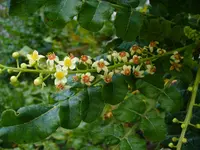
Frankincense, Boswellia sacra, is a small, slow-growing tree or shrub valued for its aromatic resin. It has a gnarled trunk, peeling bark, and sparse gray-green leaves. In nature it grows on rocky, arid slopes in Oman, Yemen, and parts of East Africa, where it tolerates intense sun and poor, very well-drained soils.
The plant suits growers who can provide bright light, low to moderate moisture, and a gritty mineral substrate. It dislikes overwatering and heavy, compacted media. For those conditions, it is moderately challenging, and learning how to care for frankincense usually takes some patience and observation.

Care Difficulty
Hard Care

Light Preference
Full Sun

Water Requirements
Low Water

Temperature Preference
Tropical / Frost Sensitive

Hardiness Zone
10–12

Soil Texture
Sandy, Rocky, Loamy

Soil pH
Neutral (7.0), Slightly alkaline (7.0–7.5)

Soil Drainage
Well-drained

Fertilization
Minimal (feed rarely)
Scan your plant to receive care tips personalized for your specific plant
Available on iOS and Android
This desert tree needs strong light that mimics its native arid habitat for healthy growth and resin production in frankincense.
Boswellia sacra prefers infrequent, deep watering and fast-drying soil that mimics rocky desert slopes.
This species thrives in hot, arid conditions and reacts poorly to cold, damp environments.
This species prefers very dry air and rarely suffers from low household humidity.
Soil must be extremely fast-draining and mineral-based to keep roots dry and aerated.
This species is suitable for container growing when drainage and root conditions mimic its rocky native sites.
This drought-adapted species needs only light feeding when grown in containers or poor substrates.
Pruning Boswellia sacra is mainly done to maintain structure and remove problem growth.
Container-grown plants benefit from infrequent but careful repotting or transplanting to avoid root stress.
Multiplying this species is possible but slow and best suited to patient growers with controlled conditions.
Cold-season management focuses on avoiding freezing damage and excess moisture around roots and stems.

Plant Health Check
Not sure what's wrong with your plant? Check your plant's health inside the app.
This species naturally grows on steep limestone and gypsum cliffs in Oman and Yemen, often rooted in cracks with very little soil, which limits competition from other plants.
Its aromatic frankincense resin is produced when the bark is deliberately wounded; the tree seals the injury with resin droplets that harden into the familiar yellowish tears over several weeks.
The resin of this species has a characteristic balance of volatile oils and boswellic acids, which is one reason it is often preferred for high-grade incense and research on Boswellia sacra plant care and use.

Some wild populations form low, contorted trees on nearly bare rock faces where roots penetrate deep fissures, allowing the plant to survive intense heat, drought, and salt-laden coastal winds that many other tree species cannot tolerate.
Brown leaf tips or edges usually come from overwatering, poor drainage, or cold drafts. Less often, strong fertilizer, low light, or sudden humidity changes cause damage. Check roots for rot, improve drainage, and adjust watering frequency.
Keep your plants happy and healthy with plant identification, disease detection, and easy care guidance.