Cantharellus xanthopus Care (Cantharellus lutescens)

Also known as: Yellow Foot
Cantharellus xanthopus

About Cantharellus xanthopus

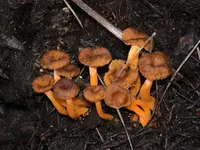
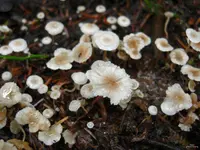
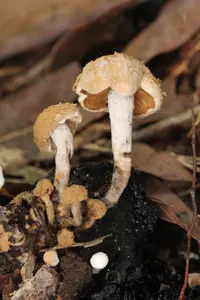
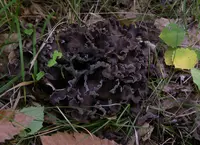
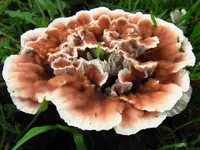
Cantharellus xanthopus, also known as Cantharellus lutescens or yellow-foot chanterelle, is a mycorrhizal fungus, not a true plant. It forms a mutual partnership with trees, helping roots absorb nutrients while receiving sugars in return. The fruiting bodies are small, trumpet-shaped mushrooms with a yellow to orange stem and a grayish to brown, often wavy cap.

This species naturally occurs in mossy coniferous forests, especially in temperate regions with cool, humid conditions and undisturbed soil. It cannot be grown like a typical houseplant, since successful cultivation depends on establishing the right tree-fungus relationship, so most people do not attempt to care for Cantharellus xanthopus at home.


Main Plant Requirements

Care Difficulty

Hard Care

Light Preference

Partial Shade

Water Requirements

Keep Soil Moist

Temperature Preference

Cool Climate

Hardiness Zone

5–9

Soil Texture

Loamy, Peaty, Organic-rich

Soil pH

Strongly acidic (4.5–5.5), Acidic (5.5–6.5)

Soil Drainage

Moist but well-drained

Fertilization

Minimal (feed rarely)

Get Personalized Care Plan

Scan your plant to receive care tips personalized for your specific plant

Available on iOS and Android

How to Care for the Cantharellus xanthopus

Cantharellus lutescens is a forest-dwelling fungus that fruits best in soft, filtered woodland light rather than direct sun.

  • Provide dappled or filtered light under conifers or mixed woodland, with 2–4 hours of gentle morning sun and full shade by afternoon.
  • Avoid strong midday or afternoon sun, which dries leaf litter and moss, reducing fruiting; excessive exposure can desiccate primordia and caps.
  • Maintain partial shade throughout summer; stands that fruit with Cantharellus xanthopus often perform best where tree canopy blocks at least 60–80% of direct light.

Cantharellus lutescens depends on consistently moist, not saturated, forest soil with a stable supply of organic matter.

  • Aim for evenly moist leaf litter and upper soil; when the top 2–3 cm feel dry and crumbly, recent rainfall or supplemental irrigation is usually needed.
  • Use well-drained, humus-rich, slightly acidic soil; avoid standing water or compacted clay, which encourages root and mycelial rot.
  • During dry, warm periods, mimic steady rainfall with light, repeated soakings rather than one heavy drench, watching for shriveling caps as a sign of moisture stress.

This chanterelle favors cool to mild conditions and declines when exposed to hard frost or prolonged heat.

  • Optimal fruiting usually occurs around 55–68°F (13–20°C), with the mycelium active in a broader range when soil moisture stays stable.
  • Tolerates short drops near 32°F (0°C) but hard, persistent frost damages fruiting bodies and can halt visible production until conditions soften.
  • Sustained heat above 77–82°F (25–28°C) combined with dry soil quickly suppresses fruiting; in hot seasons, adequate shade and moisture buffer temperature swings.

This fungus requires consistently moist, humid forest conditions and does poorly in dry air.

  • Aim for 70–90% humidity by maintaining a damp, leaf-litter-like substrate around the mycelium.
  • Dry air leads to shriveling, pale or cracked fruiting bodies and slowed or aborted chanterelle formation.
  • Use frequent fine misting of the surrounding environment and moist organic mulch rather than direct soaking to raise humidity, similar to caring for Cantharellus xanthopus.

Cantharellus lutescens fruiting depends on a loose, well-aerated forest-type substrate rather than compact garden soil.

  • Use a mix mimicking conifer forest floor: fine bark, well-rotted leaf litter, and coarse sand or grit for structure.
  • Ensure rapid drainage so water passes through within seconds yet the organic layer stays lightly moist, not waterlogged.
  • Target slightly acidic conditions around pH 4.5–6.0, often achieved naturally under pine or spruce litter.
  • Avoid dense clay, peat-only mixes, or heavily fertilized media that stay soggy and restrict oxygen around the mycelium.

This species is generally unsuitable for container cultivation because it relies on a mycorrhizal partnership with living trees that containers rarely support long term.

Cantharellus lutescens is a wild mycorrhizal fungus that normally grows without added fertilizer in forest soil.

Cantharellus lutescens does not require pruning, since only the mushroom fruiting bodies are harvested, not long‑lived shoots or foliage.

Transplanting Cantharellus lutescens is not practical, since it depends on a stable mycorrhizal partnership with host tree roots.

  • Avoid digging or moving clumps; disturbance usually disrupts the fine fungal network around tree roots.
  • If attempting cultivation, choose a permanent shaded site with suitable host trees and leave undisturbed for many years.
  • Focus on maintaining leaf litter, moisture, and soil structure rather than transplanting existing patches.

Propagation of Cantharellus lutescens is specialized and usually left to forest managers or researchers rather than home growers.

Cantharellus lutescens is naturally cold hardy in its native forests and requires no active winter care in the ground.

Care Tips

Mycelium-friendly ground

In forest cultivation, avoid deep tilling or compacting the soil around host trees, since a lightly disturbed, well-aerated litter layer allows the Cantharellus lutescens mycelium to spread more effectively through roots, needles, and leaf debris.

Leaf-litter management

Maintain a consistent layer of natural leaf litter or conifer needles over the fruiting area, topping up gently each year instead of raking clean, to protect the mycelium from drying and to mimic the stable forest floor it requires.

Careful foot traffic

Mark out and use narrow access paths and harvest lanes so that repeated foot traffic does not crush the mycelium or compact the soil where fruiting bodies are expected.

Selective harvesting

Cut mushrooms at the base with a clean knife instead of pulling, and leave small, clustered, or damaged fruiting bodies in place, which reduces physical disturbance and supports ongoing spore production.

Microclimate conservation

Retain understory shrubs, fallen branches, and partial canopy cover around the fruiting zone to stabilize shade and moisture, which is more important for long-term productivity than trying to directly fertilize or irrigate the patch.

Common Pests and Diseases

Mycophagous springtails

These insects feed on developing mushroom tissue and mycelium, especially in damp, organic-rich substrates. Symptoms include pitted, scarred, or collapsing chanterelle caps and visible tiny white or gray jumping insects in the litter layer.

Solution

Reduce excess surface moisture by improving drainage and slightly increasing ventilation around the fruiting zone, then remove heavily damaged mushrooms. For cultivation beds, use fine mesh barriers, keep nearby decaying piles tidy, and, if needed, apply a targeted, labeled biological control such as products containing Beauveria bassiana to the surrounding litter rather than directly on harvestable fruitbodies.

Fungus gnat larvae

This pest lives in moist, organic substrates and chews on mycelium and young primordia, leading to deformed or aborted fruiting bodies. Symptoms include soft tunnels in stems, small entry holes, and clouds of tiny black gnats when the litter is disturbed.

Solution

Allow the upper litter layer to dry slightly between irrigations, remove any overly wet or algae-covered surfaces, and use yellow sticky cards to trap adult gnats. In managed beds, apply Bacillus thuringiensis israelensis (BTI) to the substrate water to target larvae while avoiding broad-spectrum insecticides that can disturb the wider soil ecosystem when growing Cantharellus xanthopus and related species outdoors.

Slug and snail damage

These mollusks rasp away soft fungal tissue, often overnight, leaving irregular holes and slime trails on caps and stems. Symptoms include missing sections of fruitbodies, ragged edges, and shiny mucus residues on nearby leaves and litter.

Solution

Hand-pick slugs and snails at dusk or after rain and use physical barriers such as copper tape, rough gravel bands, or low profile collars around managed chanterelle beds. Limit use of broad-spectrum slug pellets in forest settings; if necessary, choose iron phosphate baits placed away from the immediate harvest area to reduce non-target impacts.

Trichoderma green mold

This disease is caused by aggressive Trichoderma species that colonize the same substrate as the chanterelle mycelium and can outcompete it. Symptoms include fast-spreading, bright to dark green patches of mold on organic debris and a decline in new fruitbody formation in the affected section.

Solution

In managed or experimental cultivation plots, remove and destroy heavily colonized substrate and avoid moving contaminated tools or litter to clean areas. Improve airflow, prevent chronic overwatering, and avoid high-nitrogen amendments that favor competitor molds, allowing the ectomycorrhizal partnership between C. lutescens and host trees to stabilize.

Bacterial soft rot

This disease develops in very wet, warm conditions when opportunistic bacteria invade damaged chanterelle tissue. Symptoms include a water-soaked, slimy texture, off odors, and rapid collapse of caps, especially in dense, poorly ventilated patches.

Solution

Harvest carefully to avoid bruising, remove and discard any rotting mushrooms promptly, and reduce moisture around the fruiting zone by adjusting irrigation timing and improving air movement through the understory. Avoid leaving cut or damaged fruitbodies on the ground, since decaying tissue can act as a reservoir for bacteria that spread to nearby mushrooms.

Interesting Facts

Bog and moss specialist

This chanterelle strongly prefers wet, acidic habitats such as Sphagnum bogs and waterlogged coniferous forests, often fruiting directly among mosses and decaying needles rather than on bare soil.

Bright yellow stem contrast

The species is easily recognized in the field by its thin, often funnel-shaped, orange to brownish cap contrasted with a distinctly bright yellow to orange-yellow stem that stands out against dark forest litter.

Blunt ridges instead of gills

Instead of true gills, it has pale, blunt, vein-like ridges running down the underside of the cap and along the stem, a key feature that helps distinguish it from superficially similar but unrelated gilled mushrooms.

Botan icon

Did you know?

This species forms ectomycorrhizal associations with conifers such as pine and spruce, creating mutualistic root partnerships that improve the trees’ nutrient and water uptake while receiving sugars produced by the host through photosynthesis.

FAQs about Cantharellus xanthopus

This fungus is considered a good edible species when correctly identified and harvested from clean environments. Always confirm identification with an experienced mycologist, as some orange or yellow mushrooms look similar but are unsafe to eat.

Grow Healthy Plants with Botan Care

Keep your plants happy and healthy with plant identification, disease detection, and easy care guidance.

Botan plant care app — identify plants on mobile

Explore More Plants