Rotate Host Wood
When cultivating this fungus on hardwood logs or buried stumps, rotate or slightly shift the wood every 3–4 months to expose new surfaces and micro-cracks that the mycelium can colonize more efficiently.

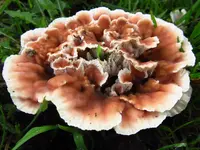
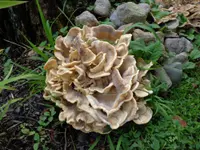
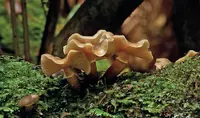
Blushing rosette, Abortiporus biennis, is a wood-decay fungus rather than a typical leafy plant. It usually appears as layered, rosette-like clusters with pink, red, or cream tones, often on or near buried tree roots or stumps.
This species is found in temperate regions, including parts of North America and Europe, where it helps break down dead wood. It is mainly appreciated for its unusual appearance rather than culinary or ornamental use, and it is not considered a beginner-friendly species to cultivate.
Those who want to care for Blushing Rosette should know it prefers consistently moist, organic-rich substrates and shaded conditions similar to a forest floor.

Care Difficulty
Moderate Care

Light Preference
Partial Shade

Water Requirements
Keep Soil Moist

Temperature Preference
Cool Climate

Hardiness Zone
Unknown

Soil Texture
Loamy, Silty, Organic-rich

Soil pH
Acidic (5.5–6.5), Slightly acidic (6.5–7.0)

Soil Drainage
Moist but well-drained

Fertilization
Minimal (feed rarely)
Scan your plant to receive care tips personalized for your specific plant
Available on iOS and Android
Abortiporus biennis prefers stable, shaded forest conditions rather than direct open sun.
This wood-decay fungus needs consistently moist, not waterlogged, conditions around its substrate.
This species is adapted to temperate climates with cool to mild conditions across the year.
This fungus tolerates a wide humidity range and usually does not need targeted humidity management outdoors.
This wood-decaying fungus grows best in consistently moist, organic-rich ground rather than a defined potting substrate.
This species is not well suited to long-term container growing, as it naturally colonizes soil and buried wood in the ground.
Abortiporus biennis, often called Blushing Rosette, usually needs no fertilization when growing on nutrient-rich wood or soil.
Pruning Abortiporus biennis is generally not part of standard care, since it is a wood-decaying fungus rather than a garden ornamental.
This fungus is not suited to normal repotting and is better managed by relocating or removing colonized wood or substrate when necessary.
Propagation of Abortiporus biennis is specialized and usually left to mycologists or advanced hobbyists rather than typical home growers.
In most temperate climates, this hardy wood-decay fungus survives winter without intervention and produces new fruiting bodies in suitable seasons.

Plant Health Check
Not sure what's wrong with your plant? Check your plant's health inside the app.
The fruiting body often exudes droplets of pink to red liquid from its pores, a process called guttation where excess fluid is pushed out of the tissue under high internal pressure.
Unlike many perennial bracket fungi, this species forms annual fruiting bodies that decay and collapse within a single season, often leaving a soft, radially cracked mass in the soil.
It causes a white root and butt rot on hardwoods such as maple, beech, and plane trees, decomposing lignin and cellulose and sometimes contributing to tree decline in urban plantings.

Abortiporus biennis often fruits partially buried in soil rather than on exposed wood, forming irregular rosettes that can merge into large, fused masses, which historically led to frequent misidentification with several other soil-inhabiting polypores.
This fungus can spread locally through spores and mycelium in moist, organic-rich soils, especially around buried wood or stumps. It is not usually classed as aggressively invasive, but it can gradually colonize suitable substrate patches.
Keep your plants happy and healthy with plant identification, disease detection, and easy care guidance.